


Probolinggo, JurnalPost.com – Universitas Negeri Surabaya (Unesa) continues to strengthen its contribution to regional science talent development. One of the steps taken is through a Community Service (PKM) program providing Physics Olympiad (OSN) coaching for high school students from several schools in Probolinggo.
The activity was held on 20 July 2026 at SMAK Mater Dei Probolinggo with the theme “Strengthening the Capacity of High School Students within the Probolinggo Physics MGMP for the Physics Olympiad through Structured Coaching and Problem Solving.”
The coaching program was conducted by a team of Unesa lecturers led by Dr. Rohim Aminullah Firdaus, S.Pd., M.Si., alongside Prof. Dr. Frida Ulfah Ermawati, M.Sc., Dr. Nugrahani Primary Putri, S.Si., M.Si., and Dr. Fitriana, S.Si. Several students were also involved as technical assistants throughout the event.
The program was designed to meet the need for more directed and systematic Physics Olympiad coaching. The PKM team emphasized that facing competition problems requires more than just memorizing formulas.
Students also need a strong conceptual understanding, the ability to model problems, mathematical reasoning, and structured problem-solving strategies.
Students Enthusiastic About Coaching
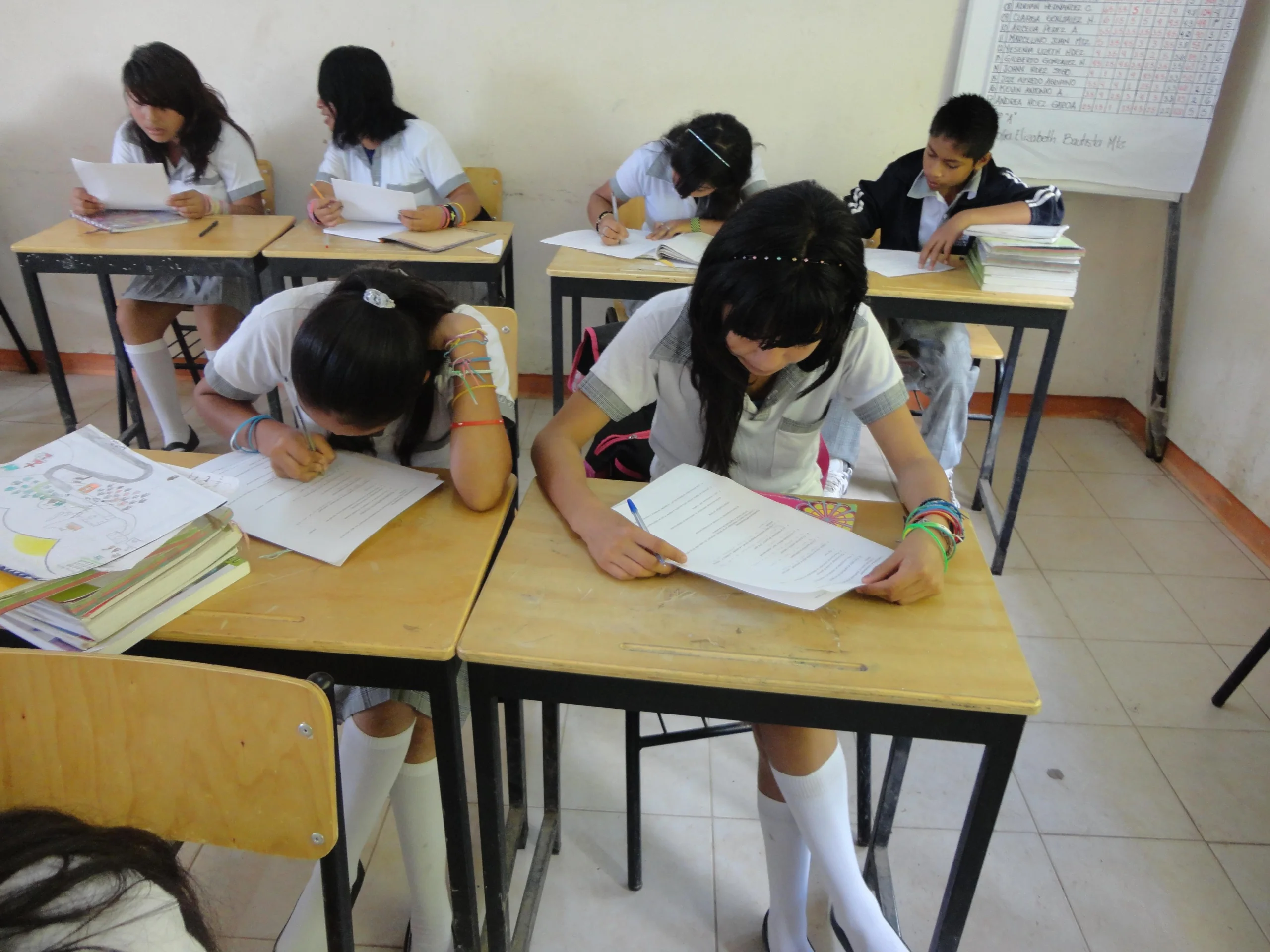
The participants' enthusiasm was evident throughout the event. Students did not just listen to material presentations but also actively engaged in discussions and attempted to solve various Physics problems with differing levels of difficulty and characteristics.
Through a coaching problem solvingapproach, participants were trained not to immediately search for formulas when faced with a problem.
Students were first guided to understand the problem, identify available information, create sketches or physical representations, determine important variables, select appropriate physical concepts or laws, and then develop a solution strategy.
“We want students to not only know how to get the answer but also understand why that step is used. So, we are building their way of thinking,” said the PKM Team Leader, Dr. Rohim Aminullah Firdaus.
This approach also habituates students to re-check their obtained answers, starting from checking units and the reasonableness of values to analyzing errors during the problem-solving process.
According to the implementation team, the habit of performing error analysis is an important part of coaching potential Olympiad participants. By evaluating mistakes, students are expected to recognize error patterns and correct them when facing other problems.
From Concept Strengthening to Olympiad Problems
The coaching was conducted in stages, starting from strengthening basic concepts to practicing Olympiad-style problems.
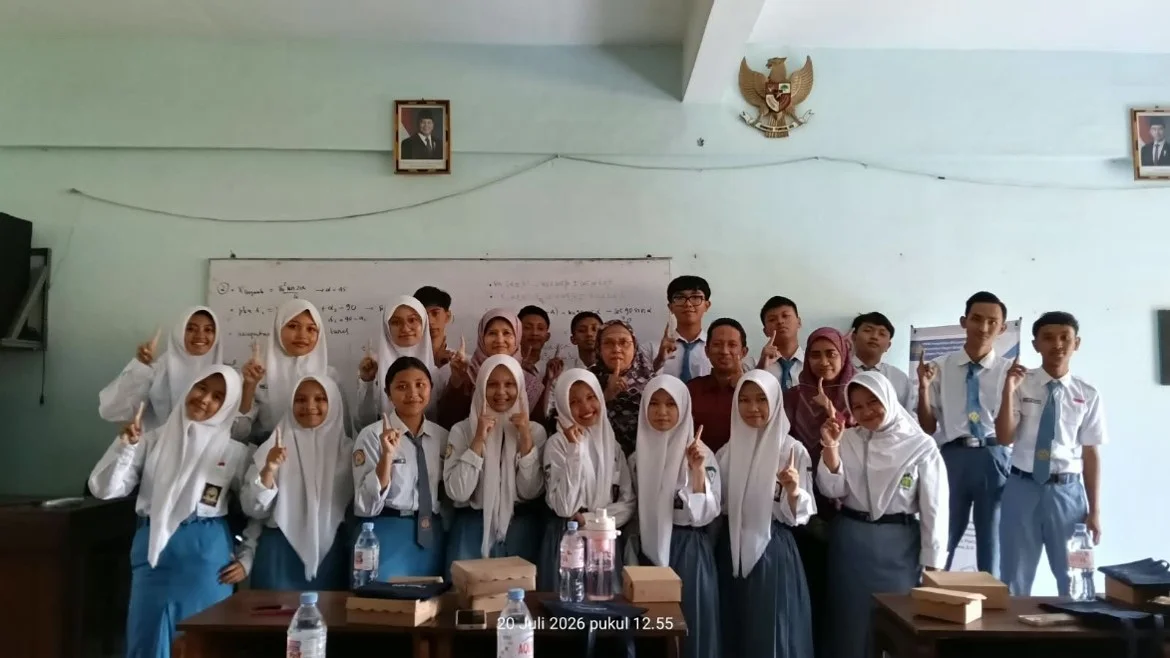
The material provided covered several fields of Physics relevant to the OSN, such as mechanics, oscillations and waves, electricity and magnetism, thermodynamics, and mathematical modeling.
In addition to receiving material, students also worked on tiered practice problems. The discussion process focused on solution strategies and the thought process, rather than just obtaining the final answer.
This coaching model is expected to help students when facing non-routine problems that require higher analytical skills.
The activity also served as a space for collaboration between universities, schools, teachers, and the Subject Teacher Forum (MGMP).
The Probolinggo Physics MGMP and SMAN 1 Probolinggo supported the implementation of the activity, including providing facilities, coordinating participants, and assisting students during the coaching process.
Supporting SDG 4 Quality Education
The PKM S2 Physics Unesa activity is also linked to the Sustainable Development Goals (SDGs), specifically SDG 4 regarding Quality Education or Quality Education.
Through structured Physics coaching, students have the opportunity to strengthen their academic competence while developing critical, analytical, and systematic thinking skills, as well as problem-solving abilities.
This effort is in line with the spirit of SDG 4 in encouraging the availability of quality education and improving learning outcomes.
This contribution is also relevant to Unesa's Key Performance Indicators (IKU) related to the role of higher education in supporting the achievement of SDG 4.
This community service activity is a form of Unesa's involvement in expanding the impact of quality education outside the campus environment, particularly through strengthening science learning at the secondary school level.
Thus, Physics Olympiad coaching is not only aimed at preparing students for competitions but also serves as part of an effort to strengthen the quality of human resources and the science education ecosystem in the region.
Program Does Not Stop at Training
The Unesa PKM team aims for the program to continue after the training sessions conclude.
This activity also produced several coaching tools that can be utilized by schools and the MGMP, including Physics Olympiad coaching modules, tiered problem banks, strategy-based discussions, worksheets, and evaluation tools.
These tools are expected to help teachers continue the coaching process independently and more systematically.
The sustainability of the program is designed through periodic practice, the use of problem banks, try outs, student progress evaluations, and the integration of the coaching problem solving pattern into OSN coaching programs in schools and the MGMP.
For Unesa, this activity is part of the university's effort to be closer to schools while helping to strengthen the regional science education ecosystem.
“The hope is that the students' excellent spirit can be maintained. OSN coaching is not just about chasing competitions, but also about forming scientific, critical, systematic, and independent thinking skills that will be useful for students in their further education,” the implementation team expressed.
Through collaboration between Unesa, the Probolinggo Physics MGMP, and participating schools, Physics talent coaching is expected to be sustainable and open up more opportunities for regional students to develop their academic potential.



Comments 0
Write a Comment Share your response