

The author is the Head of the Payment System and Regional Financial Management Team at the Bank Indonesia Representative Office for North Sulawesi Province.
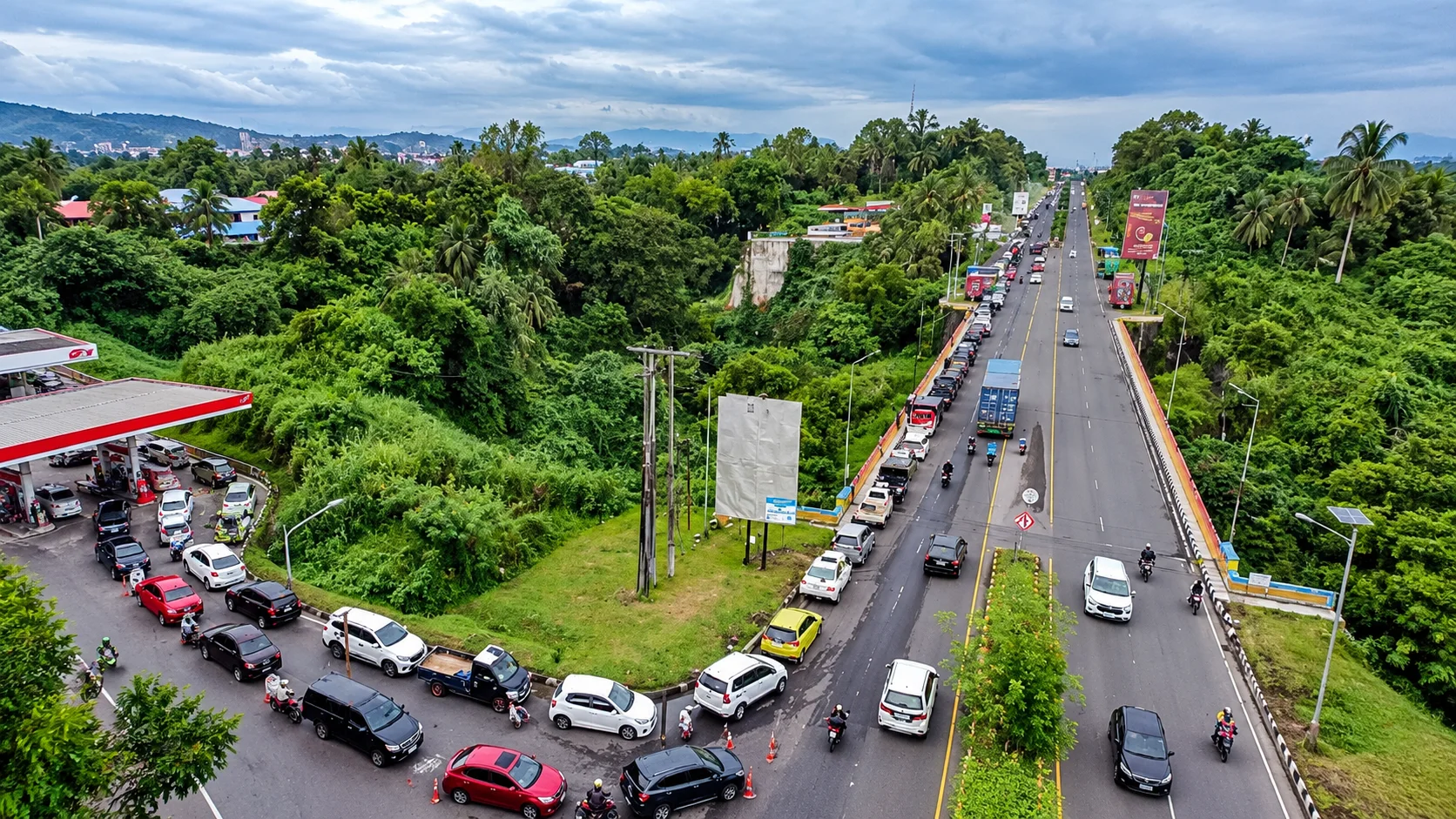
JurnalPost.com -- At five in the morning, Joshua is already at a gas station in Manado. The young employee arrives an hour before the station begins operations. It is not because of a discount or promotion, but because he wants to ensure his vehicle has enough fuel to get to work.
The price of the Pertalite he intends to buy has not changed. However, that morning, Joshua has to pay a higher price in time.
Such experiences are not isolated cases. In October, the Indonesian Ombudsman found long fuel queues in 17 provinces and stock shortages at several gas stations across six provinces. At nearly the same time, the government stated that national Pertalite reserves remained safe at a range of 16–18 days.
This is where the paradox lies. Goods are available in aggregate, but they are not necessarily accessible to the public. When access is disrupted, economic costs can rise even before prices move.
Price and Time
Economics has long recognized these types of costs. Gary Becker, in A Theory of the Allocation of Time in 1965, introduced the concept of full price, which is the cost of consumption consisting not only of the price of the good but also the value of the time required to obtain or use it.
Lost time carries an opportunity cost because it is no longer available for working, resting, or engaging in other activities.
Joshua's story is a simple example of this concept. The price of a liter of gasoline remains the same, but he must spend more time to obtain it. Therefore, Joshua pays a higher cost even though the fuel price has not changed.
Research by Valerie Ramey and Daniel Vine on oil crises in the United States demonstrates the magnitude of these invisible costs. During several gasoline queue episodes throughout the 1970s, the value of lost time was estimated to add approximately 8–67 percent to the economic cost of a gallon of gasoline.
The price displayed on the gas station sign did not change by that amount, but the cost borne by consumers was significantly higher.
On the other hand, this does not mean that inflation calculations are incorrect. The Consumer Price Index (CPI) is indeed designed to measure changes in the prices of consumer goods and services, not the entirety of changes in public welfare.
The problem lies not in what inflation measures, but in our tendency to read inflation figures as if they describe the entire cost of living.
Before Prices Move
There are two types of pressures that need to be distinguished. Some costs may never enter the CPI, such as time lost due to queuing. Others are not yet reflected in today's prices but may be passed on to future prices, for instance, when production or distribution disruptions persist for a long time.
The fuel case shows a more complex mechanism. Distribution disruptions can trigger queues. Queues then create consumer anxiety.
This anxiety encourages early purchasing or shifts in consumption, which can ultimately increase pressure on local supply.
In other words, under certain conditions, the public's response to distribution disruptions can actually exacerbate the disruption itself.
Similar risks arise from weather factors. Toward the end of October, the Meteorology, Climatology, and Geophysics Agency (BMKG) still recorded hot and dry conditions strengthened by a very strong El Niño phenomenon, accompanied by a concentration of hotspots in several regions.
At the same time, the chance of rain began to increase as November approached.
For food supply chains, both conditions can have an impact. Drought has the potential to suppress production, while increased rainfall in certain regions can disrupt harvesting and distribution processes.
These signals become important when food inflation begins to require greater vigilance.
National inflation in September 2026 was within the target range, at 3.28 percent year-on-year. However, inflation for the volatile food group (volatile food) reached 5.03 percent, increasing from 4.06 percent the previous month.
Bank Indonesia noted that this increase was related, among other things, to production declines in several centers due to weather disruptions.
National figures can also hide differences in experiences between regions.
In the same month, North Sulawesi Province recorded inflation of 7.59 percent, the highest among all provinces. Meanwhile, North Minahasa Regency experienced inflation of up to 9.05 percent.
These differences show that controlled national inflation can occur simultaneously with much heavier price pressures in specific areas.
A Second Alarm
In response to this phenomenon, inflation control efforts can be supplemented with two types of alarms or early warning indicators.
The first alarm continues to refer to consumer prices. The CPI shows price pressures already reflected in consumer transactions.
Meanwhile, the second alarm serves to capture pressures that have not yet reached consumer prices.
The signals used can include the duration of fuel queues, the frequency of stockouts (stockout), distribution delays, hotspots around production centers, changes in market supply, and disruptions to logistics routes.
The second alarm becomes more meaningful when several signals move simultaneously, such as thinning stocks, delayed distribution, longer queues, and reduced production.
Of course, not every queue or hotspot should be read as an inflation threat. Such signals can produce false alarms.
Therefore, what needs attention is pressure that is persistent, widespread, and affects the supply chains of goods that play an important role in public consumption.
This data does not have to be included in the CPI calculation. However, such data and information can serve as a complement for the Central Inflation Control Team (TPIP) and Regional Inflation Control Teams (TPID) to take anticipatory steps before these pressures impact consumer prices.
This approach also changes how we formulate policy questions.
It is not just about how much stock is available, but also how easily the public can access it. It is not just about the price of food today, but also what factors might affect its supply tomorrow.
Returning to Joshua's story.
When he arrived at the gas station at five in the morning, the inflation figure did not change just because he had to queue. The price of gasoline remained the same.
However, the economic cost he experienced had become slightly more expensive.
Not because the price of fuel rose, but because to obtain it, he had to pay with something that might be far more valuable, namely time.








Comments 0
Write a Comment Share your response