


JurnalPost.com While public attention is often consumed by political polemics and governmental dynamics, communities in several regions of Kalimantan and Sumatra are facing issues concerning the most basic necessity of life: clean air. Haze resulting from forest and land fires (karhutla) is once again threatening public health, disrupting education, and paralyzing parts of the economy.
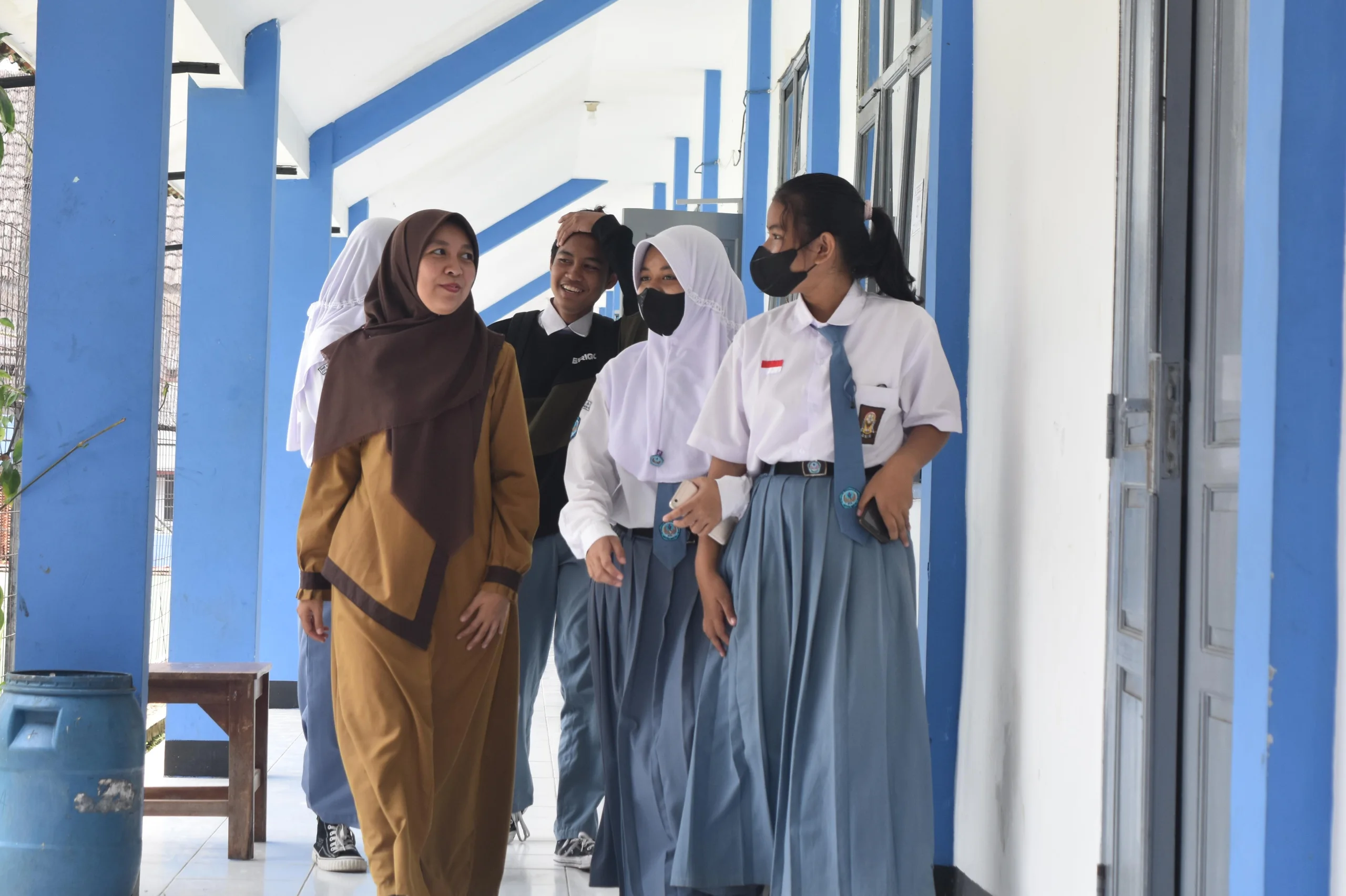
According to data from the Riau Provincial Health Office in October 2026, 27,250 cases of acute respiratory infections (ARI) were recorded across 12 regencies and cities amidst deteriorating air quality. Meanwhile, the haze in Palangka Raya, Central Kalimantan, forced face-to-face learning to be shifted to remote learning to protect the health of students.
The widespread forest and land fires throughout 2026 have even been described as some of the worst in the last 11 years. This condition demonstrates that the issue of forest fires is no longer just an environmental disaster, but has evolved into a matter of public health, social inequality, and political responsibility.
On October 7, 2026, this issue entered a critical phase when a lawsuit filed by West Kalimantan residents regarding the handling of forest fires began at the Pontianak District Court. This event shows that what is being tested is not only the government's ability to extinguish fires, but also the legitimacy of the state in the eyes of its people.
From Complaints to Lawsuits
The people of West Kalimantan, through the Nafas Kalbar Legal Team, filed a class action lawsuit class action with the Pontianak District Court. The lawsuit, registered in September 2026, is recorded under case number 292/Pdt.G/2026/PN Ptk.
The lawsuit was filed on behalf of several civil society organizations and affected residents, including the West Kalimantan Regional Board of the Indigenous Peoples Alliance of the Archipelago (AMAN), the West Kalimantan Regional Commissariat of Catholic Youth, and the Laman Punyung Indonesia Association.
Through this lawsuit, the community is demanding government accountability for alleged negligence in preventing and handling forest and land fires, as well as the resulting prolonged haze.
Interestingly, the Nafas Kalbar Alliance frames the haze issue not merely as a natural disaster, but as a problem with a dimension of policy responsibility.
This view forms the basis for broader demands, including the declaration of a national disaster status, the use of emergency budgets, public health protection, and environmental restoration.
From a political perspective, the citizens' move to bring environmental issues to court shows that the public is not merely an object of policy, but a political subject with the right to demand state accountability.
Empty Chairs in the Courtroom
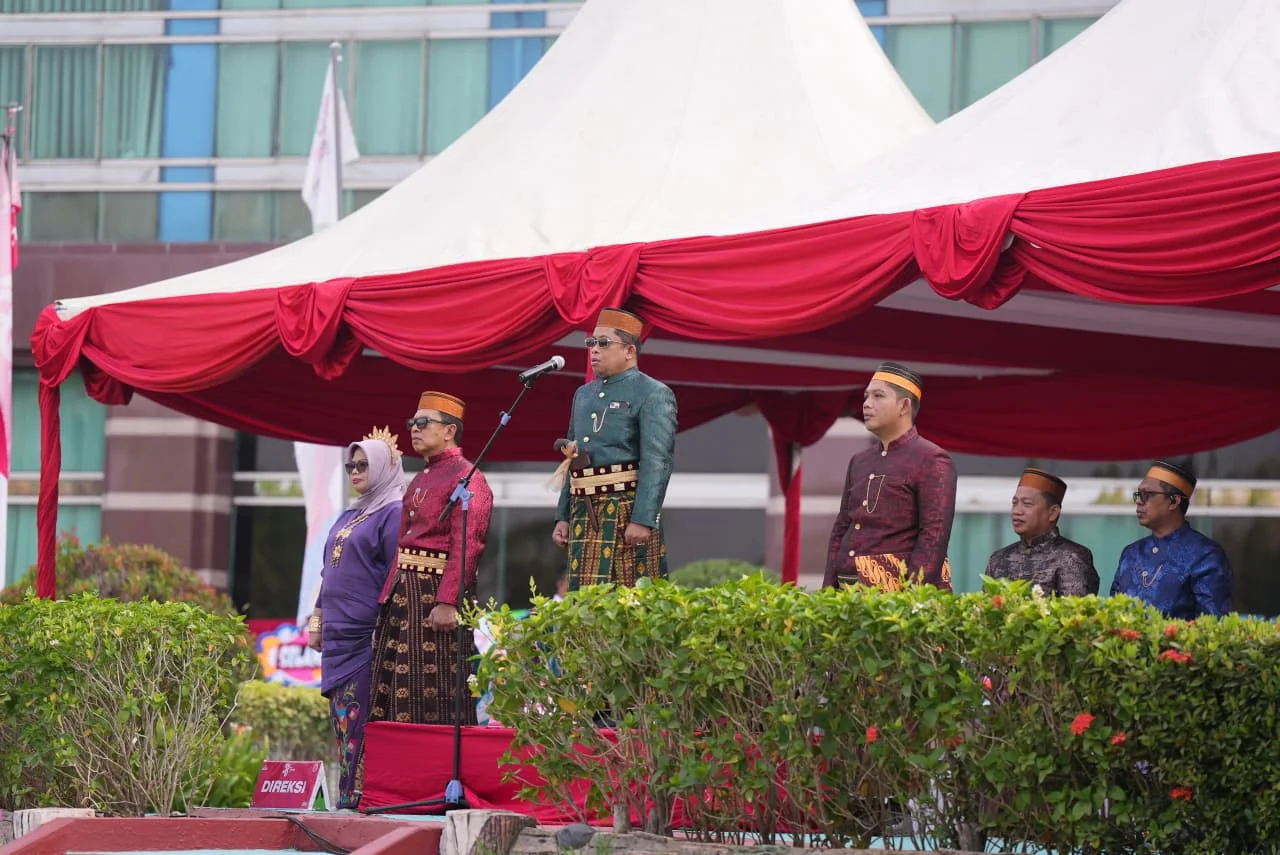
The inaugural hearing on October 7, 2026, left a lingering issue. Several defendants from the central government, including the President and Vice President, were absent. Meanwhile, the West Kalimantan Provincial Government was represented by its legal bureau.
The absence of the central government defendants drew criticism from the plaintiffs' legal team. This case concerns not only an administrative dispute but also the safety and health of the public, who have been facing the impacts of the haze for months.
In Max Weber's thought, the state claims a monopoly on the legitimate use of physical force within a territory. However, the existence of formal authority does not automatically guarantee public trust in the exercise of power.
Meanwhile, Robert A. Dahl's thoughts on power highlight the importance of a political actor's ability to influence the actions of others. In the context of governance, power should also be reflected through the ability to make decisions and implement policies that protect the public interest.
The state indeed possesses the authority, legal instruments, budget, and institutions to handle environmental crises. However, political legitimacy is not built solely through the possession of such authority.
Legitimacy also requires the public's belief that the government is willing to listen to complaints, fulfill its responsibilities, and be held accountable for its policies.
When citizens must go to court to fight for their right to clean air, a fundamental question arises: to what extent has the state fulfilled its obligation to protect its citizens?
Clean Air as a Resource of Power
In a haze situation, clean air becomes a resource that is increasingly difficult to obtain. Children, the elderly, pregnant women, and people with respiratory problems are the groups most vulnerable to the impacts.
However, the risks experienced by the public are not always distributed evenly.
Those with better economic means may be able to purchase air purifiers, use adequate health facilities, or temporarily relocate to areas with better air quality.
Conversely, field workers, daily wage drivers, small traders, and low-income communities often have to continue working outdoors to meet their daily needs.
This condition reveals the relationship between environmental crises and social inequality.
In Max Weber's concept of social stratification, a person's position in society is influenced by dimensions of class, status, and power. These differences can determine an individual's ability to obtain resources and face life's risks.
For low-income communities, the haze is not just a health issue. This crisis can also lead to loss of income, increased medical costs, and added psychological pressure.
Furthermore, to fight for rights through legal channels, the community requires organizational support, legal counsel, funding, and collective solidarity.
This means that obtaining the protection that should be a basic right of citizens can present its own challenges.
A Culture That Also Burns
The forest fire crisis does not only concern environmental damage but also threatens the continuity of the social and cultural life of local communities.
The involvement of AMAN West Kalimantan as one of the plaintiffs shows that indigenous peoples have a major stake in this issue.
For indigenous peoples who live in harmony with forests and peatlands, the environment is not just an economic space. The forest is also part of their identity, a source of local knowledge, and a place where various social and cultural practices take place.
When the forest burns, the losses do not stop at the loss of trees or damaged land. The fires also have the potential to disrupt the community's relationship with the living space that has been passed down through generations.
This issue is increasingly complex because forest and land fires are related to various factors, ranging from climate conditions, land governance, and land-use changes, to human activity.
Unfortunately, the knowledge of local communities and indigenous peoples has not always been given adequate space in the policy-making process.
In my opinion, involving indigenous peoples in the prevention and management of forest fires is not just about meeting the demands of public participation.
Such involvement is a strategic step because communities living closest to forest areas have experience and knowledge regarding their environmental conditions.
Prevention that involves the community from the start is certainly more logical than policies that continuously rely on suppression after fires have spread.
Normalization of Annual Disasters
One issue that deserves criticism is the tendency of the public and the government to view the haze as a seasonal event that is almost inevitable.
Every year, forest and land fires recur. When the dry season arrives, the community seems to have prepared themselves for the same possibility: skies covered in smoke, school activities disrupted, and increased risks of health problems.
In social psychology studies, the system justification theory system justification theory developed by John T. Jost and Mahzarin R. Banaji in 1994, explains the tendency of individuals to accept and justify the existing social order, even when those conditions do not always benefit them.
In the context of forest fires, this tendency can help explain why recurring problems risk being considered a normal state of affairs.
The haze is slowly accepted as a consequence of the dry season, while questions regarding prevention, land governance, and policy responsibility may lose attention.
Indeed, natural factors cannot be ignored. The Meteorology, Climatology, and Geophysics Agency (BMKG) identified an El Niño phenomenon with very strong intensity in 2026, which increased the risk of drought and forest fires.
However, climate conditions should be a reason to strengthen preparedness, not a justification for fires that keep recurring.
The government has the authority to strengthen supervision of fire-prone areas, restore peat ecosystems, improve land governance, and take legal action against violations.
Therefore, the fundamental issue is not just why fires occur, but why prevention efforts have not been able to eliminate the recurring pattern of crisis.
Recommended Solutions
In my opinion, there are several steps that need the government's attention so that the forest fire issue does not continue to develop into a crisis of public trust.
First, the government needs to explain transparently the basis and criteria for declaring a national disaster status. Citizens' demands must be answered through an open, measurable, and accountable explanation.
Second, public health protection must be prioritized. The government needs to ensure the availability of easily accessible health services, including medical assistance for affected residents, distribution of masks, and the provision of clean-air spaces for vulnerable groups.
Third, law enforcement against parties proven responsible for forest and land fires must be carried out consistently. Transparency of information regarding land ownership and management is also important so that the public can help monitor potential violations.
Fourth, the government needs to strengthen the involvement of local and indigenous communities in forest fire prevention policies. Community-based monitoring, peatland protection, and ecosystem restoration must be part of a long-term strategy.
Fifth, the parties being sued need to respect the legal process by attending the follow-up hearings scheduled for October 21, 2026. This attendance is important to show respect for the judiciary and the rights of citizens in seeking justice.
Ultimately, power is not just a matter of who has the authority to rule, but how that authority is used to protect the lives of the people.
The people of West Kalimantan have shown that they have the courage to use legal channels as a means to fight for their rights.
Now, the state faces a test to prove that the power it holds is truly exercised for the benefit of the people.
Because clean air is not a luxury that only some people deserve to enjoy. Clean air is a basic necessity that every citizen should be able to experience without having to fight for it in a courtroom first.
Smoke is not a destiny that must be accepted just like that. The state has a responsibility to ensure that the public's right to breathe safely is not continuously sacrificed by failures in prevention and weak environmental governance.







Comments 0
Write a Comment Share your response