

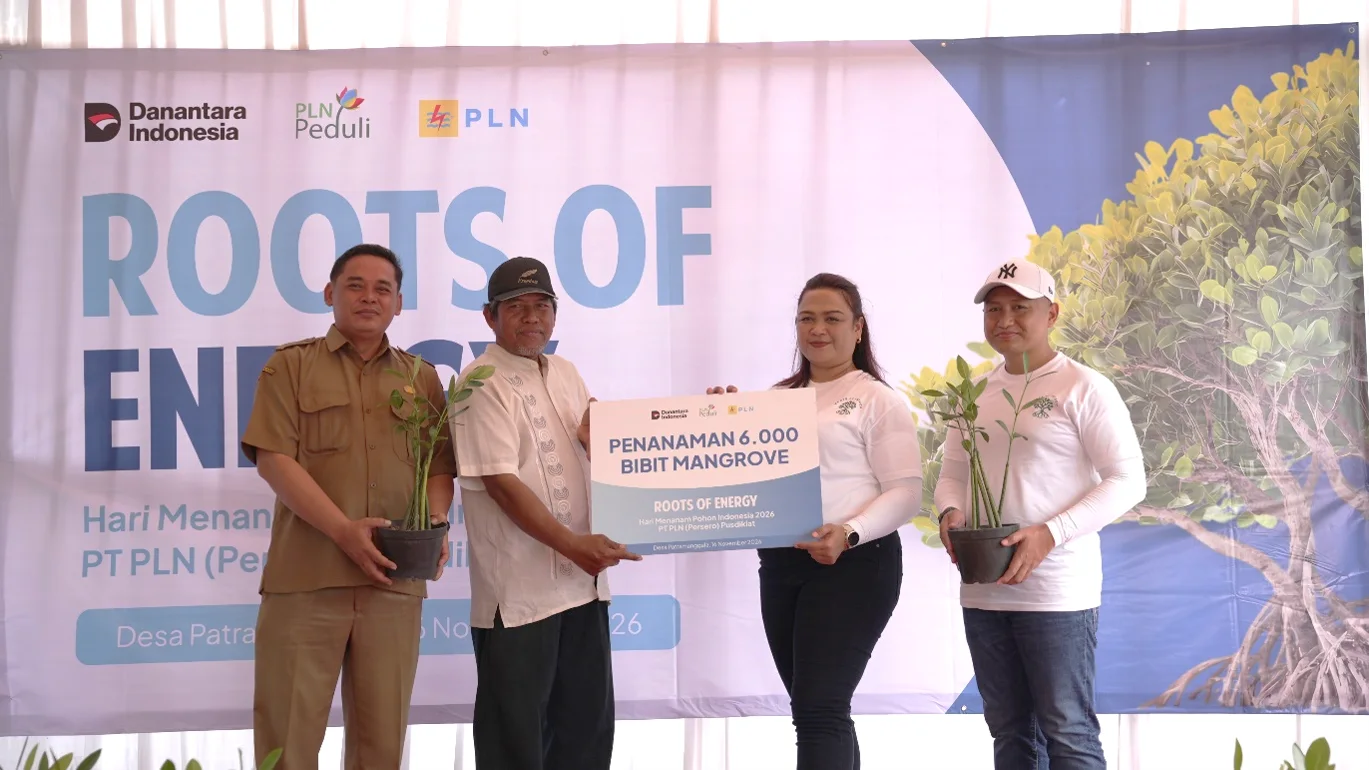
TANGERANG, JurnalPost.com — Efforts to protect the coastal area of Tangerang Regency from the threat of erosion were carried out through the planting of 6,000 mangrove seedlings by PT PLN (Persero) Education and Training Center (Pusdiklat) in Patramanggala Village, Kemiri District, Banten, on Monday (16/11/2026).
The thousands of mangrove seedlings were planted on a 700-square-meter plot through a program titled “Roots of Energy” in commemoration of Indonesian Tree Planting Day (HMPI) 2026.
In addition to strengthening the natural protection of the coastal area, the mangrove planting is expected to restore the marine ecosystem that serves as a pillar for the local community's livelihood.
The activity is part of PLN's Social and Environmental Responsibility (TJSL) program in the field of environmental conservation.
General Manager of PLN Pusdiklat, Y. Endah Cahyaningrum, officially opened the event, which was also attended by Perum Perhutani KPH Banten Forestry Extension Officer Heri, Patramanggala Village Secretary Ade Sugandi, Head of the Mangrove Forest Farmer Group (KTH) Tunas Harapan Mulyana, and several PLN Pusdiklat volunteers.
Strengthening Natural Coastal Defenses Against Erosion
Mangroves play a vital role in maintaining the balance of the coastal environment. Their root systems help dampen ocean wave energy, retain sedimentation, and reduce the risk of shoreline erosion.
Mangroves also serve as a habitat for various types of marine life, including fish, crabs, and shrimp, which hold economic value for coastal communities.
In her remarks, Endah Cahyaningrum stated that the Roots of Energy program has three main objectives: to restore coastal ecosystems, protect land from the threat of erosion, and rehabilitate natural habitats around power plant areas.
The planting of these thousands of mangrove seedlings is expected to be part of a long-term effort to maintain environmental sustainability while supporting the lives of people who rely on coastal resources for their income.
Mangrove Maintenance Continues until May 2027
The Roots of Energy program does not focus solely on planting. PLN Pusdiklat, together with the Tunas Harapan Mangrove KTH and the local community, will carry out maintenance and monitor the growth of the seedlings for six months until May 2027.
Maintenance includes plant care, replanting or replacing dead seedlings, and periodic monitoring of the mangrove's condition.
The program targets a survival rate of at least 80 percent of all planted seedlings.
Maintenance steps are a crucial part of mangrove rehabilitation. Tidal conditions, waves, and the characteristics of the coastal environment can influence the success rate of plant growth.
The involvement of forest farmer groups and local residents is expected to ensure the sustainability of the program after the planting activity concludes.
Coastal Community Welcomes Mangrove Planting
Patramanggala Village Secretary, Ade Sugandi, welcomed the collaboration between PLN Pusdiklat and the community in preserving the coastal area.
According to him, the presence of mangroves provides not only ecological benefits but also the potential to support the economic activities of the community, who work as fishermen and fish farmers.
“PLN Pusdiklat's support is very meaningful to us. These mangroves are not just a natural barrier against erosion, but they can also restore the marine ecosystem that sustains the livelihoods of fishermen and farmers in our village,” said Ade Sugandi, Secretary of Patramanggala Village.
Meanwhile, the Head of the Tunas Harapan Mangrove KTH, Mulyana, hopes that the community will participate in protecting and caring for the thousands of mangrove seedlings that have been planted.
“Hopefully, these mangroves will grow lushly and their benefits will be directly felt by the environment and the coastal community of Patramanggala,” said Mulyana, Head of the Tunas Harapan Mangrove KTH.
Mangroves Play a Role in Climate Change Mitigation
In addition to helping reduce the risk of erosion, mangrove ecosystems have the ability to absorb and store carbon through both vegetation and soil sediment.
This capability makes mangroves one of the most important ecosystems in climate change mitigation efforts.
The Roots of Energy program is also in line with the Sustainable Development Goals (SDGs), particularly Goal 13 on Climate Action, Goal 14 on Life Below Water, and Goal 15 on Life on Land.
The success of the rehabilitation of the Patramanggala Village coastal area will not only be determined by the number of seedlings planted, but also by the survival rate of the plants and the community's involvement in maintaining the ecosystem.
Monitoring until May 2027 will be an important part of evaluating the success of the planting program of 6,000 mangrove seedlings on the Tangerang coast.




Comments 0
Write a Comment Share your response