

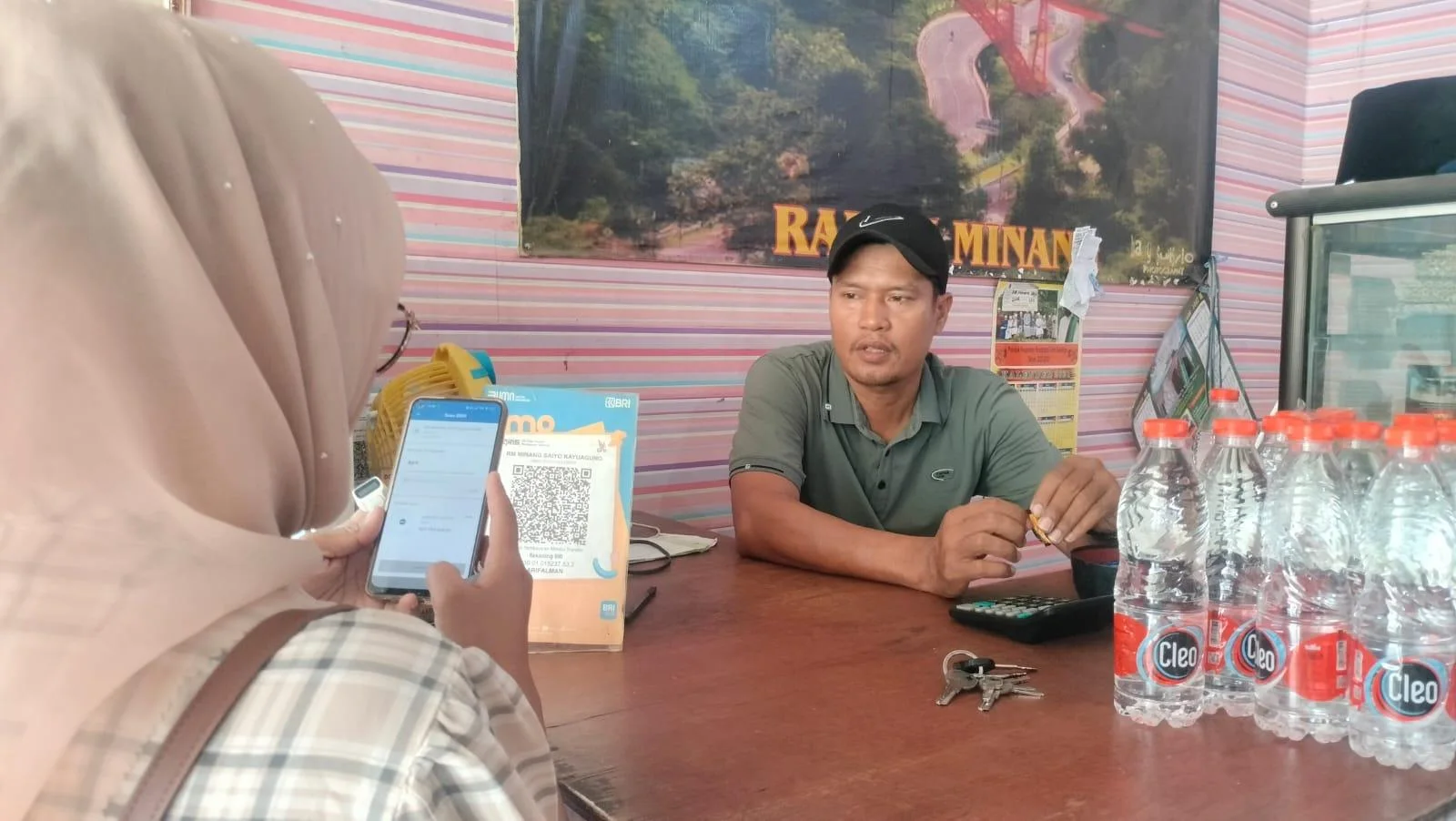
BOJONEGORO, JurnalPost.com — Digital payments are becoming increasingly integrated into daily life, even when purchasing meals at modest eateries. In Bojonegoro Regency, East Java, customers at local Padang-style restaurants now have the option to pay using the Quick Response Code Indonesian Standard (QRIS) via facilities provided by BRI.
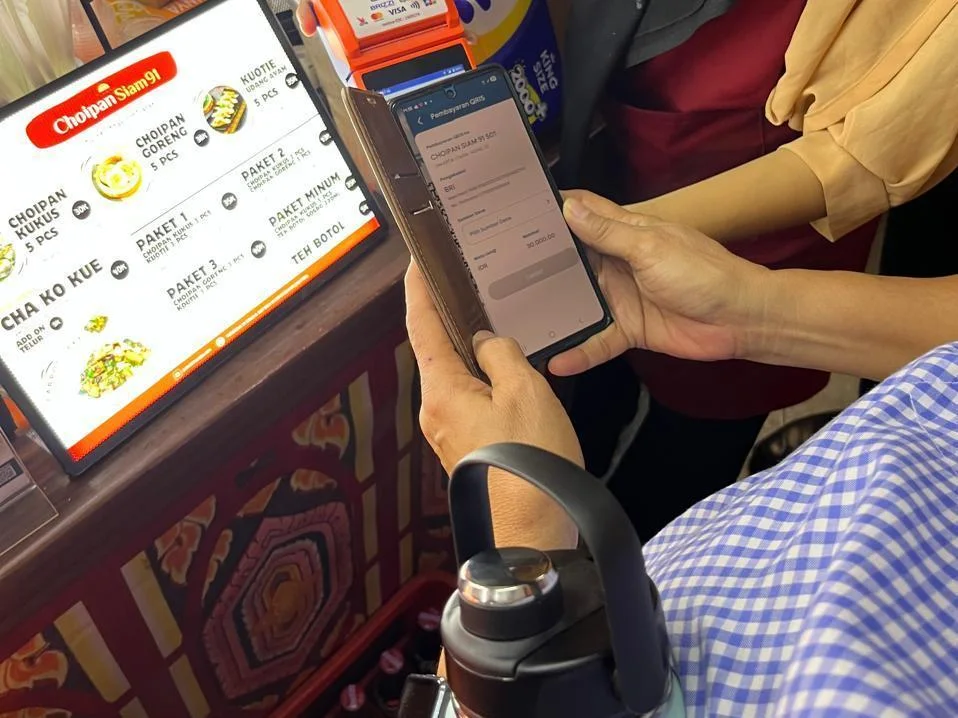
The introduction of this cashless payment method offers convenience for both merchants and customers. Transactions that previously relied on physical cash can now be completed simply by scanning a QR code through a mobile payment application.
One merchant utilizing this facility is Afandi, the owner of a Padang restaurant in Bojonegoro. He provides BRI QRIS as an alternative payment method for customers dining at his establishment.
For Afandi, the presence of QRIS is not just about keeping up with technological trends. The facility is part of his commitment to improving service and accommodating customers who are accustomed to digital payments.
"Nowadays, customers have a choice. They can pay with cash or use QRIS. It is much easier, especially if the customer does not have any cash on hand," said Afandi.
According to him, using QRIS also helps streamline transactions at the restaurant. Merchants no longer need to constantly keep small denominations of cash on hand to provide change to customers.
Customers No Longer Need to Carry Cash
The convenience of digital payments is also felt by Fina, a regular customer at a Padang restaurant in Bojonegoro.
She noted that the availability of QRIS is quite helpful, especially when traveling without carrying sufficient cash.
For Fina, buying food is a daily necessity that should be easy to manage. However, simple issues like not having small change can sometimes make the payment process less practical.
"Sometimes I have already ordered food, only to realize I don't have enough cash in my wallet or I lack small change. Now, I just scan the QRIS, and the payment is done instantly," Fina explained.
She believes that paying via QRIS provides a practical alternative. Customers no longer need to hunt for an ATM just to withdraw cash when they want to buy a meal.
The availability of this facility also allows customers to choose a payment method that suits their individual needs and habits.
Fina believes the use of QRIS at local eateries serves as an example that digital financial services are no longer limited to shopping malls, large restaurants, or high-volume businesses.
Even small-scale food vendors can utilize the same payment system to serve their customers.
BRI QRIS Becomes a Payment Alternative for MSMEs
The use of QRIS at Afandi's Padang restaurant demonstrates how payment technology is beginning to be integrated into daily business operations.
For micro, small, and medium enterprises (MSMEs), offering more than one payment method is a way to tailor services to consumer needs.
Customers who have cash can still pay directly, while those more accustomed to digital banking or e-wallets have the option to transact via QRIS.
QRIS is a QR code-based payment standard developed by Bank Indonesia in collaboration with the payment system industry. With this standard, a single QR code can be used to accept payments from various payment service provider applications that support QRIS.
This means that the presence of BRI QRIS at a business does not require every customer to use a BRI banking application. Customers can also make payments through other applications that support the QRIS standard.
For merchants, digital transactions can help reduce the need to provide change. However, the use of such services still depends on device readiness, internet connectivity, and the terms set by the payment service provider.
Therefore, maintaining the option of cash payments remains relevant for customers who are not yet accustomed to using digital services.
Digitalization Reaches Modest Eateries
Afandi's use of QRIS shows that adapting to technological developments does not always require major changes in business management.
A simple step, such as providing a payment QR code, can already offer additional choices for customers.
On the other hand, changing consumer habits are influencing how business owners provide service. People who are increasingly accustomed to using their phones for various needs are starting to expect similar convenience when transacting at food establishments.
This condition opens opportunities for MSMEs to utilize digital payment services according to their business needs and capabilities.
Nevertheless, the use of QRIS does not mean that cash transactions must be abandoned. Both payment methods can coexist so that consumers retain the freedom of choice.
For Afandi, the most important thing is that customers can complete their payments easily after enjoying their meal. For Fina, the availability of QRIS makes the act of buying food more practical without having to rely solely on cash.
The change may seem simple, but the presence of BRI QRIS at a Padang restaurant in Bojonegoro is a snapshot of how digital payment services are beginning to enter the community's economic activities, even for everyday transactions like buying a plate of Nasi Padang.








Comments 0
Write a Comment Share your response