

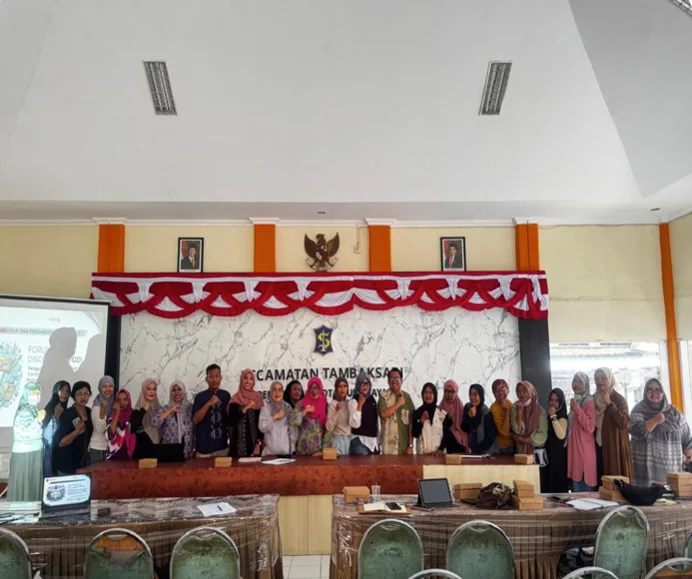
SURABAYA, JurnalPost.com — A team of lecturers from the Universitas Pembangunan Nasional (UPN) "Veteran" East Java is assisting the Manggarsari MSME Association in the Tambaksari District of Surabaya with their transition from manual financial recording to digital bookkeeping.
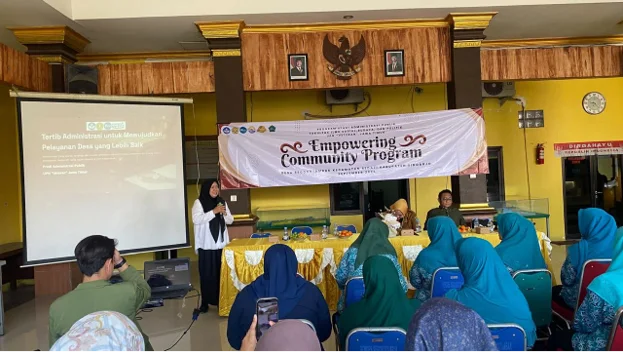
Through a program titled "Strengthening the Creative Economy through Digital Transformation and Pentahelix Collaboration," business owners are receiving training on how to record financial transactions directly via their mobile phones and independently compile simple financial reports.
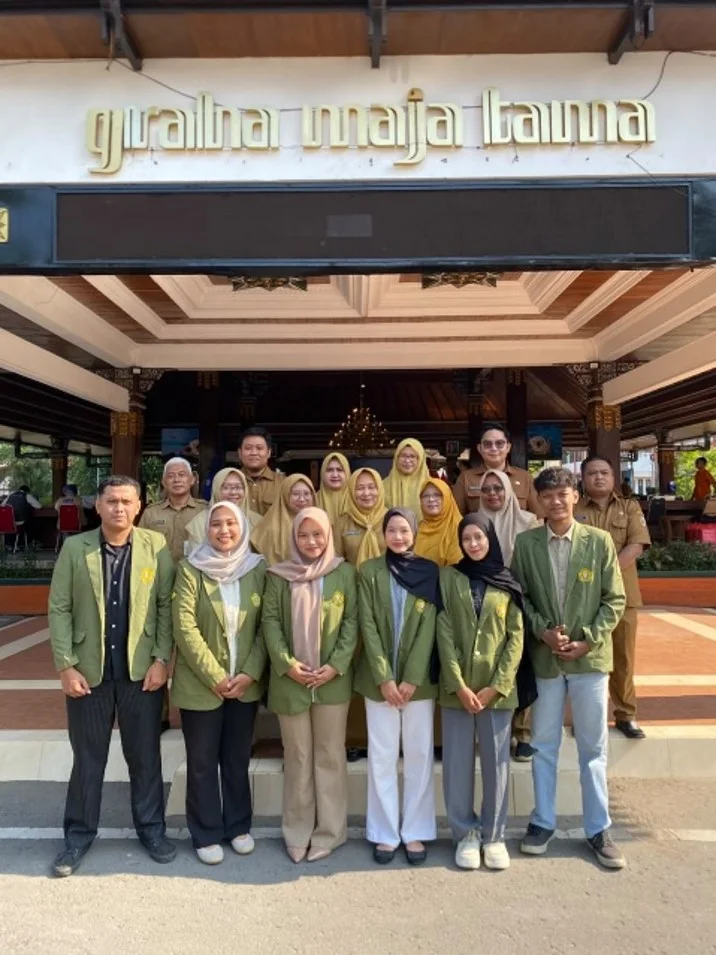
This community service program is led by Prof. Dr. Diana Hertati, M.Si. from the Public Administration Study Program, alongside Eka Prakarsa Mandyartha, S.T., M.Kom. from the Informatics Engineering Study Program and Indira Arundinasari, S.AP., M.AP. from the Public Administration Science Study Program.
Two students, Dinda Maharani and Jesica Erin Ariani, were also involved in providing on-site assistance.
The Manggarsari MSME Association currently supports 121 business owners, consisting of 89 culinary businesses and 32 non-food businesses, such as handicrafts and eco-printingproducts.
Despite having significant economic potential, many business owners still rely on manual financial recording. This situation creates several obstacles, ranging from the risk of losing transaction receipts and the commingling of personal and business funds to difficulties in accurately calculating profits and losses.
Icha, the head of the Manggarsari MSME Association, revealed that many business owners are productive but have yet to demonstrate their business financial health systematically.
"Many MSME players are actually productive, but they struggle to show their financial condition. Yet, banks and financial institutions require neat reports. Therefore, we are starting with the basics: separating personal and business funds, and recording them daily," said Icha.
Simple Mobile-Based Financial Application
To address these issues, the service team introduced a simple accounting application designed for ease of use, even on mobile phones with relatively low specifications.
Through this application, MSMEs can record various business transactions, from raw material purchases and operational expenses to sales revenue, in real-time.
With a digital recording system, business owners no longer need to collect all transaction receipts to be manually recapped at the end of the month.
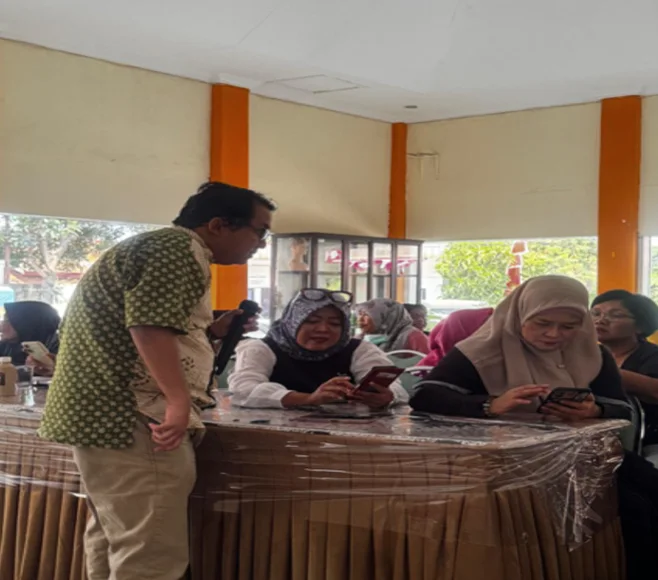
The application is also equipped with supporting features, such as daily cash flow displays in graph form, debt and receivable reminders, and online data storage to reduce the risk of data loss if a device is damaged.
Furthermore, basic financial reports—such as income statements, simple balance sheets, and statements of changes in equity—can be generated automatically based on the transactions entered by the user.
More organized financial reporting is expected to help MSMEs grow their businesses while increasing their readiness to access formal financing, including the People's Business Credit (KUR).
Eka Prakarsa Mandyartha explained that ease of use was a primary consideration in selecting the application introduced to the participants.
"We intentionally chose a simple interface. The goal is that even business owners who have never studied accounting can use it immediately," Eka explained.
Pentahelix Collaboration Involves Five Elements
In addition to providing training on the use of financial applications, this program develops a Pentahelix collaboration approach involving five elements: universities, government, the private sector, the community, and the media.
Universities act as the drivers of the activity, providing training and developing digital financial literacy materials for MSMEs.
Meanwhile, the government, through the Department of Cooperatives and local sub-districts, is directed to support business licensing facilitation, including the Business Identification Number (NIB), internet access, and information regarding KUR financing.
From the private sector, financial application developers and banking institutions are expected to support the provision of technology while opening opportunities for capital access supported by digital financial records.
The Manggarsari MSME Association itself serves as a hub for mutual learning. Through this mechanism, members who have mastered the application are expected to share their knowledge and assist other members.
The media plays a role in disseminating information about community economic empowerment practices so that similar approaches can serve as a reference for MSMEs in other regions.
The assistance is carried out using a participatory action research approach through four main stages: problem identification, activity planning, training and mentoring implementation, and joint evaluation.
In its implementation, the team also held three focus group discussions or focus group discussion (FGD) involving association board members, MSME owners, the Surabaya City Department of Cooperatives, and representatives from the private sector.
Encouraging MSMEs to be More Independent in Financial Management
Entering the program's progress stage of approximately 70 percent, the mentoring activities are directed at improving the ability of business owners to manage finances more orderly and independently.
Through this training, participants are expected to be able to separate personal finances from business finances, calculate the cost of goods sold more accurately, and compile daily cash reports consistently.
This capability is an important asset for MSMEs to understand their business condition, evaluate expenses, and make business decisions based on more structured transaction records.
Digital transformation in financial recording is also expected to help business owners reduce their dependence on manual bookkeeping, which has the potential to cause recording errors.
This community service program also supports the achievement of the Sustainable Development Goals or Sustainable Development Goals (SDGs), specifically SDG 8 on decent work and economic growth, SDG 9 on industry, innovation, and infrastructure, SDG 11 on sustainable cities and communities, and SDG 17 on partnerships for the goals.
Through collaboration between universities, government, the private sector, the community, and the media, this program is expected to not only increase digital financial literacy but also strengthen the independence and competitiveness of Manggarsari MSMEs.
With more practical and organized financial recording, business owners are expected to be more focused on developing products, expanding markets, and maintaining the sustainability of their businesses.




Comments 0
Write a Comment Share your response