

JurnalPost.com, Cepu – The high level of occupational safety risks in the energy and mineral resources (ESDM) sector demands that human resources be prepared to face various emergency situations, including potential fires in the workplace.
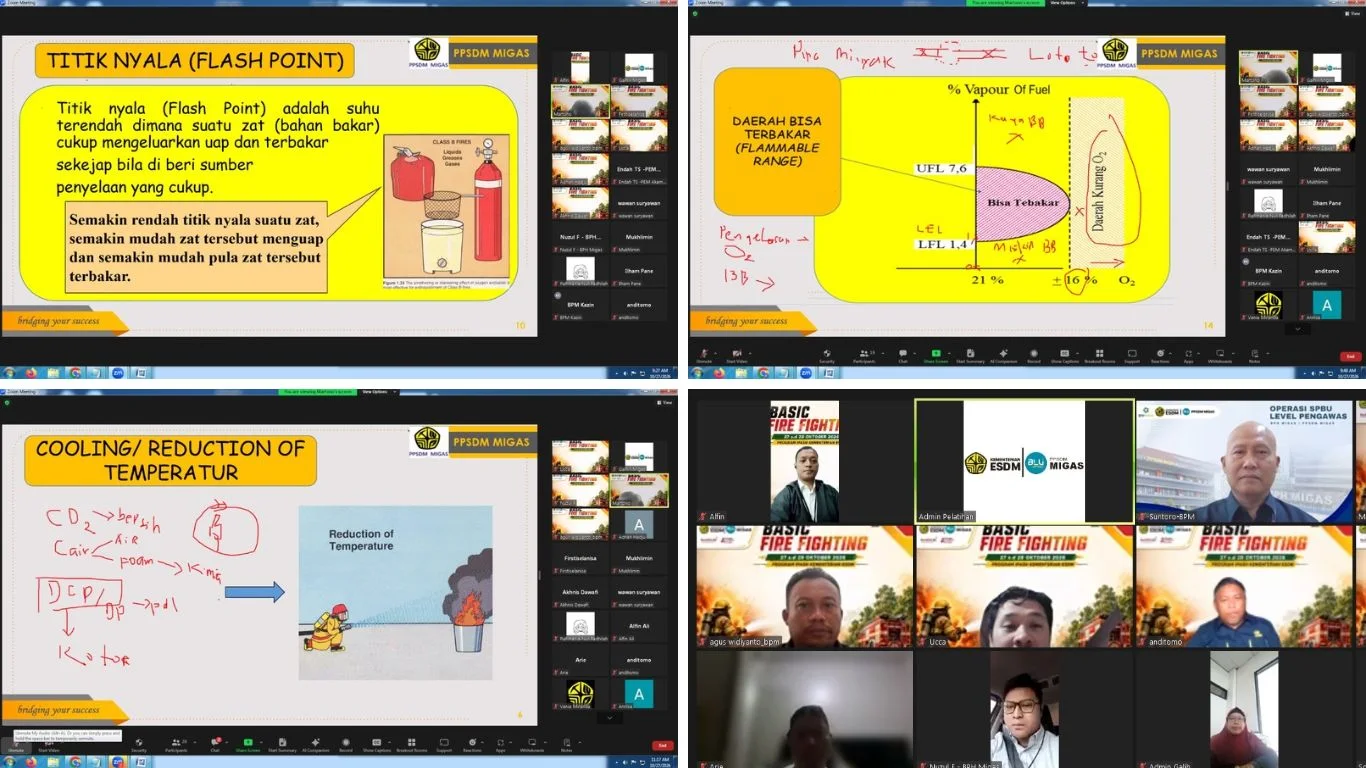
To improve these capabilities, the Ministry of Energy and Mineral Resources (ESDM) held Basic Fire Fighting training for civil servants (ASN) at the Human Resources Development Center for Oil and Gas (PPSDM Migas) in Cepu from October 27–29, 2026.
This training is part of an effort to strengthen the understanding and skills of civil servants in applying occupational safety standards, identifying potential hazards, and performing initial response actions during emergencies.
The training course leader, Restu Anditomo, explained that mastering safety procedures and the ability to respond to emergencies are essential competencies for Ministry of ESDM personnel, given the high operational risk characteristics of the energy industry.
“The material provided focuses on the introduction of hazardous areas, the integration of fire detection and alarm systems, and response readiness through Emergency Response Procedures (ERP),” said Restu Anditomo.
Participants Equipped with Firefighting and Emergency Response Techniques
During the program, participants received training on the basic principles of fire chemistry and firefighting techniques. This understanding serves as a foundation for identifying the causes of fires, fire characteristics, and determining appropriate handling methods.
The material continued with the introduction and use of portable fire extinguishers (APAR), the operation of fire hoses (hose connection), and foam-based firefighting techniques.
In addition to firefighting skills, the training covered the use of self-contained breathing apparatus ( Self-Contained Breathing Apparatus or SCBA). This equipment is a critical safety device for personnel facing environments with hazardous air or limited oxygen.
Participants were also equipped with an understanding of safety procedures for entering confined spaces (confined space entry) and handling steps for areas with potential hazardous material leaks.
According to Restu, mastering these various procedures is necessary so that personnel can identify risks and determine the appropriate actions in accordance with applicable safety standards.
“Furthermore, understanding tactical mastery regarding the use of self-contained breathing apparatus (SCBA), safety procedures for confined space entry, and handling zones prone to leaks are important assets for personnel,” he explained.
Promoting a Stronger Culture of Occupational Safety
Through this three-day training, the Ministry of ESDM aims to increase the preparedness of civil servants in facing potential work accidents, particularly those related to fires and emergency conditions in the energy industry environment.
This strengthening of competence is also expected to encourage the consistent application of Occupational Health and Safety (K3) culture, so that accident risks can be minimized and the operational continuity of the energy sector can be maintained.






Comments 0
Write a Comment Share your response