

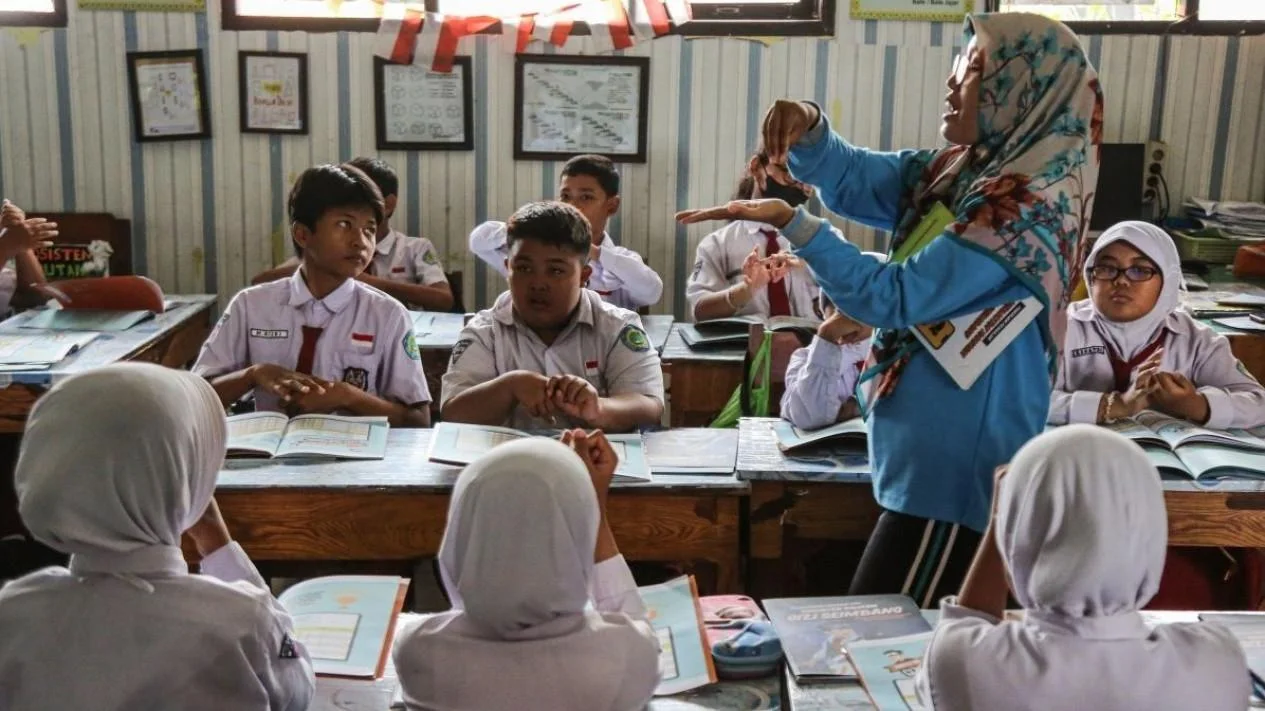
JurnalPost.com - In a classroom, time often moves with unpredictable dynamics. There are moments filled with energy and enthusiasm, but it is not uncommon for the pace of learning to slow due to fatigue, boredom, or unexpected emotional shifts. Amidst these dynamics, a teacher serves not merely as a deliverer of material, but as a guide who determines the rhythm and direction of student development.
The teaching profession is essentially the art of managing people. This work requires sensitivity, patience, and the ability to read situations to determine when to boost learning enthusiasm and when to provide space for students to process.
Cultural figure Emha Ainun Nadjib, affectionately known as Cak Nun, is known for his thoughts on maintaining balance in life. One phrase often associated with him is:
“Life requires knowing when to hit the gas and when to hit the brakes.”
This simple expression contains a philosophy relevant to the world of education. An educator needs to understand when to press the gas pedal to spark enthusiasm and when to apply the brakes as a form of empathy, patience, and self-control.
The balance between the two is a crucial part of creating a learning environment that is not only oriented toward academic achievement but also attentive to the needs and development of every child.
Accelerating: When Should a Teacher “Hit the Gas”?
In the context of education, the term hitting the gas does not mean acting hastily or imposing one's will on students. Instead, it represents passion, the courage to innovate, and a teacher's ability to provide positive encouragement in the learning process.
There are several situations where a teacher needs to increase their drive and energy.
1. Igniting Student Interest and Creativity
Amidst the rapid development of digital technology, monotonous learning methods can cause students to lose interest in studying.
Teachers need to be bold in presenting more creative approaches, ranging from the use of interactive learning media and educational technology to organizing activities that encourage students to think critically.
A teacher's enthusiasm can be a catalyst for curiosity. When educators show up with positive energy and engaging approaches, a classroom that once felt boring can transform into an active and enjoyable learning environment.
In conditions like these, teachers need to hit the gas—not by piling on more assignments, but by opening up more opportunities for students to explore.
2. Fostering Potential and a Growth Mindset
Not all students have the same level of self-confidence. Some children may fear failure, doubt their abilities, or feel left behind compared to their peers.
In such situations, the teacher plays a vital role in building a growth mindset. This is a mindset focused on development.
Teachers need to provide encouragement so that students dare to try, face challenges, and understand that abilities can continue to grow through effort, practice, and learning experiences.
The challenges provided must certainly be adjusted to each child's ability. The goal is not to create excessive pressure, but to help students realize their potential.
3. Upholding Values and Integrity
Firmness is also necessary in shaping student character.
In instilling values of honesty, discipline, responsibility, and mutual respect, teachers need to demonstrate consistency between their words and actions.
When shared rules are broken, teachers should not simply ignore them. However, such firmness must still be delivered through an approach that is educational, proportional, and respectful of the student's dignity.
Thus, hitting the gas in character building does not mean being harsh, but rather demonstrating a strong commitment to educational values.
Controlling Speed: When Should a Teacher “Hit the Brakes”?
If the gas pedal is pressed continuously without control, the journey risks losing its way. The same applies to education.
Learning that proceeds with high demands without considering the students' abilities and emotional conditions can cause fatigue, burnout, and even a decline in learning motivation.
Therefore, a teacher also needs to understand the art of braking—the ability to slow down the rhythm, control responses, and provide space for a more humane learning process.
1. Managing Emotions and Prioritizing Empathy
The classroom brings together students with diverse characters, family backgrounds, needs, and emotional states.
In practice, teachers may encounter children who have difficulty concentrating, make repeated mistakes, or exhibit behavior that disrupts the learning process.
Situations like these can trigger annoyance or frustration. However, a wise educator does not rush to respond with anger.
Braking means taking a pause before reacting, controlling emotions, and trying to understand the reasons behind a student's behavior.
A child who appears not to be paying attention to the lesson, for example, does not necessarily lack the desire to learn. They might be struggling to understand the material, feeling exhausted, or dealing with personal issues.
An empathetic approach allows teachers to find more appropriate solutions than simply issuing reprimands or punishments.
2. Adjusting the Rhythm and Pace of Learning
Every student has different needs, prior knowledge, and speeds at which they grasp material.
Some children can grasp explanations quickly, while others require repetition, concrete examples, or more intensive guidance.
A wise teacher understands that the success of learning is not measured solely by how quickly the material is completed.
When some students have not yet understood the concepts being taught, teachers need to be willing to slow the tempo, repeat explanations, or use alternative approaches.
Chasing curriculum targets is important, but ensuring that students truly understand the material is an equally fundamental part of the process.
In this case, hitting the brakes is not a sign of teaching failure, but a form of professional responsibility toward the child's learning success.
3. Maintaining Mental Health and Self-Balance
Teachers are also human beings with physical and emotional limits.
The responsibility of teaching, preparing lesson plans, conducting assessments, managing administration, and dealing with various student issues can become a source of pressure if not managed well.
Therefore, braking also means understanding when to rest and recharge.
Educators need to maintain a balance between professional responsibilities, personal life, and mental health.
Dedication to education should not be interpreted as an obligation to work endlessly without boundaries.
Teachers who are able to care for their own well-being will have more capacity to be present, patient, and responsive in supporting their students.
Harmony Above the Blackboard
Ultimately, the classroom is not a racetrack where the fastest person is the winner.
Education is a long journey to help individuals recognize their abilities, develop their character, and find the direction of their future.
A good teacher is not one who always moves fast under various demands, nor one who constantly holds back for fear of facing change.
An inspiring educator is someone who can determine when to speed up to open new opportunities and when to slow down so that every student receives attention.
There are times when a teacher needs to push a child to dare to exceed their limits. However, there are also times when a teacher needs to stop for a moment, listen to complaints, understand difficulties, and provide support.
The balance between firmness and gentleness, courage and caution, and demands and empathy is part of the wisdom required to carry out the teaching profession.
With the ability to manage the gas and brakes appropriately, teachers not only strive to achieve learning goals but also ensure that every child can undergo the educational process feeling safe, valued, and empowered to grow.
Because the success of a teacher lies not only in how much material has been delivered, but also in how meaningful the learning journey is for their students.
The author is an educator who actively observes learning dynamics, develops interactive teaching media, and pays attention to various primary education issues.






Comments 0
Write a Comment Share your response