

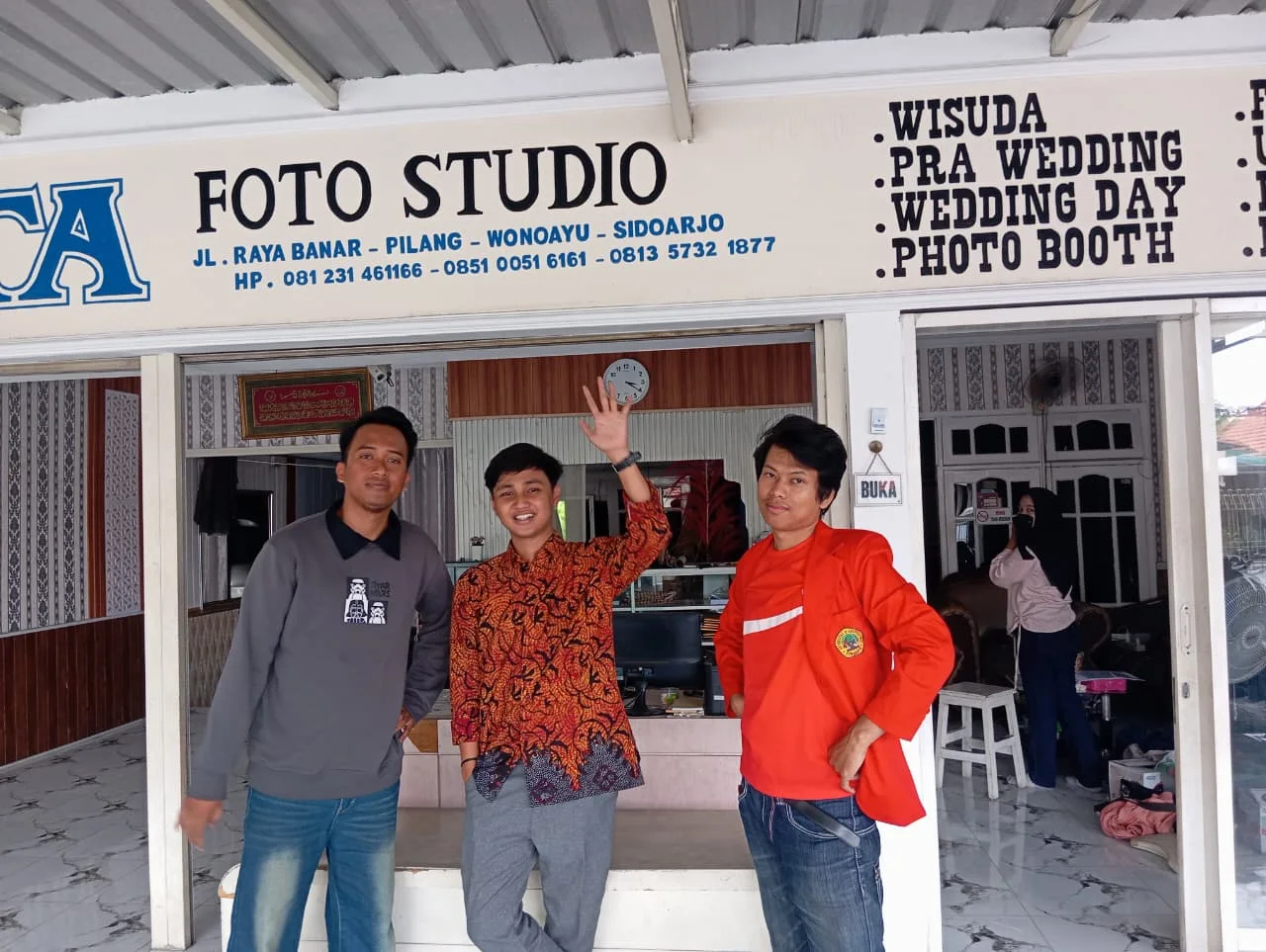
SURABAYA, JurnalPost.com – The photography industry requires more than just technical camera skills; it demands strong communication abilities to understand client needs. This was a key takeaway for M. Alfan Effendi, a Communication Studies student, during his industrial internship at Gita Foto in Surabaya.
The internship, which ran from 7 September to 23 October 2026, provided Alfan with the opportunity to observe and apply various communication concepts within a professional photography service environment.
Throughout the program, Alfan explored how interpersonal, organizational, and marketing communication play vital roles in building client relationships and supporting the studio's operational efficiency.
This experience highlights the critical role of communication in the creative sector, particularly for photography businesses that prioritize customer service and satisfaction.
Interpersonal Communication in Photography Services
Gita Foto offers a wide range of photography and videography services, including graduation portraits, family photos, ID photos, diploma photos, and both formal and informal portrait sessions.
Beyond studio sessions, the studio also provides documentation services for various events, such as weddings, pre-wedding shoots, engagements, circumcisions, and birthday celebrations.
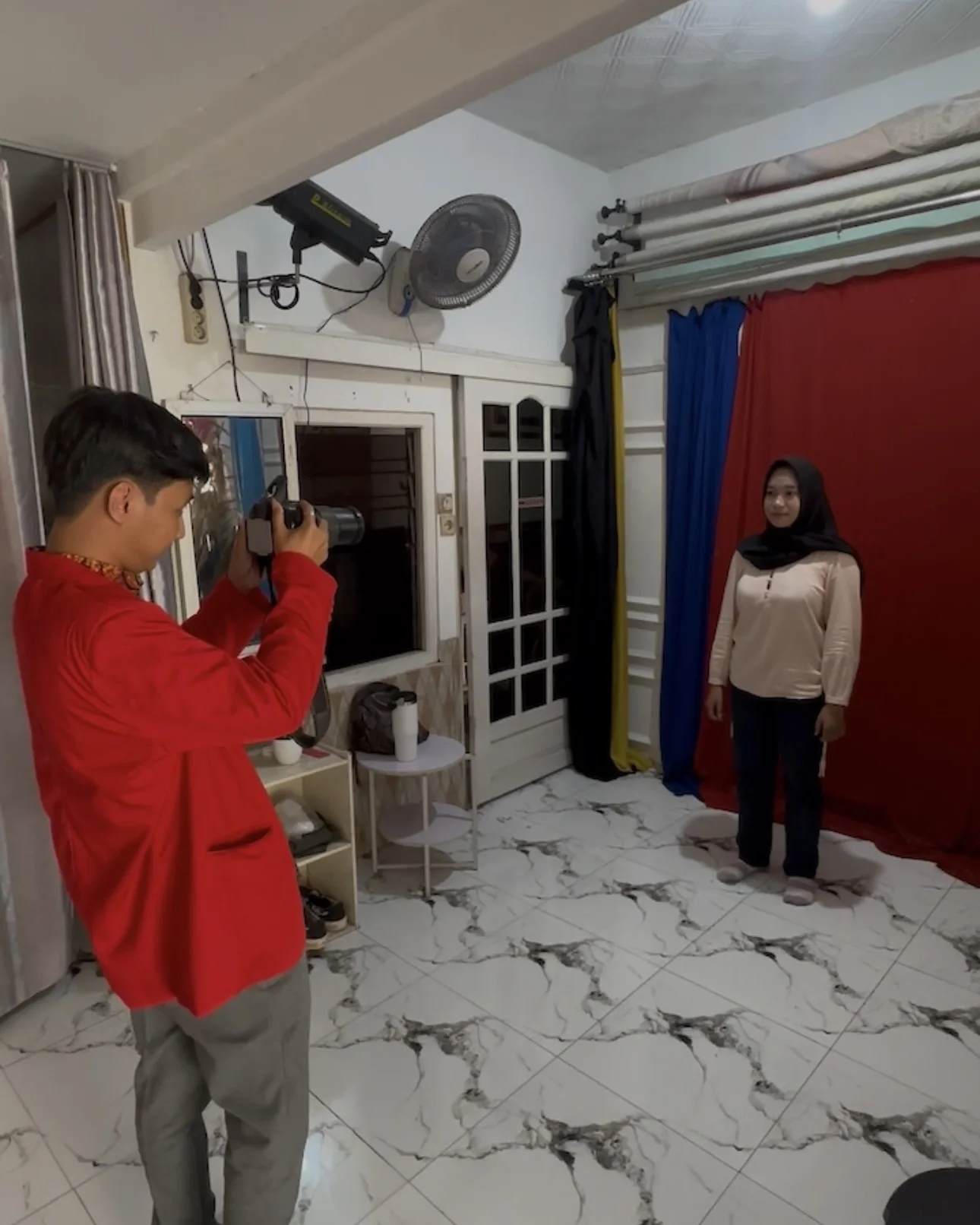
In practice, photography services involve more than just adjusting lighting, composition, or camera settings. Photographers must also establish effective communication to ensure clients feel comfortable during their sessions.
This aspect became a primary focus for Alfan during his internship.
According to Alfan, interpersonal communication helps photographers understand the unique character and needs of each client, as everyone has different levels of comfort in front of the camera.
Some clients are accustomed to posing, while others require guidance to appear more relaxed and confident.
"At Gita Foto, we learned that photography is not just about pressing the shutter button. It is a process of listening to client preferences, understanding their expectations, and translating them into visual work. Without empathetic communication, clients will feel stiff, and the results will not be optimal," Alfan said while reflecting on his internship.
Through direct interaction with clients, students learn the importance of using accessible language, maintaining a friendly demeanor, and reading non-verbal cues when providing posing directions.
These skills represent the practical application of interpersonal communication theories studied in the classroom.
The Importance of Team Coordination in Studio Operations
Beyond client-facing roles, Alfan also studied the application of organizational communication within the studio's daily operations.
Photography services involve multiple stages, from receiving orders and scheduling shoots to preparing equipment, capturing images, selecting photos, and completing the printing process.
Each stage requires coordination to ensure that work proceeds according to the client's requirements and agreements.
Structured internal communication helps team members understand their respective responsibilities while minimizing the risk of errors during execution.
For instance, information regarding shoot schedules, service types, print sizes, and specific client requests must be clearly communicated to the production team.
If this information is not conveyed effectively, errors can occur, potentially impacting customer satisfaction.
Through this internship, Alfan gained an understanding that organizational communication is not just about task delegation, but also about teamwork, precision, and accountability in service delivery.
Marketing Communication to Showcase Product Quality
Another area of focus during the internship was the application of marketing communication to introduce photography services and products to consumers.
Amidst rapid technological advancements and increasing competition in the photography industry, creative professionals must be able to articulate product advantages clearly.
One of the products offered by Gita Foto is prints on matte-finish photo paper.
Unlike glossy paper, which has a shiny surface, matte paper offers a finish with lower light reflection and a distinct texture.
The choice of paper can be tailored to the specific needs and preferences of the client.
In the context of marketing communication, explaining the characteristics of print materials is essential to help clients choose the product that best suits their desires.
Information regarding materials, sizes, finishes, and service options must be delivered in simple language so that consumers understand the product before placing an order.
Thus, marketing communication serves not only to offer services but also to educate customers about the products.
Internship Experience as Preparation for the Workforce
The nearly two-month internship at Gita Foto provided Alfan with practical experience in bridging communication theory with the demands of the professional world.
Through this activity, he observed firsthand how communication skills are utilized to handle clients, build teamwork, and promote photography services.
The experience also demonstrates that the creative industry offers a broad scope for applying communication studies, including customer service, organizational management, and service marketing.
For Communication Studies students, internships are an opportunity to develop professional skills while enhancing their ability to adapt to a work environment.
Meanwhile, for photography businesses, communicative service can be a key factor in building trust and creating a positive experience for clients.
Through his internship at Gita Foto Surabaya, Alfan learned that the success of a photography service is determined not only by the quality of the images but also by how the service provider understands, interacts with, and meets the needs of their clients.






Comments 0
Write a Comment Share your response