

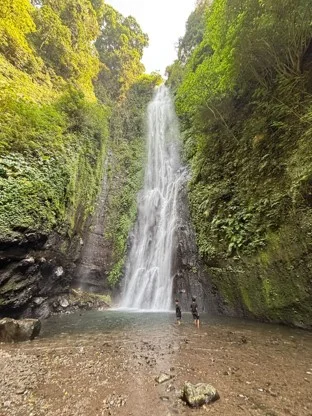
JurnalPost.com - Natural beauty is always a major draw for tourists looking to escape the daily grind. The lush forest atmosphere, cool air, and the roar of a waterfall offer an experience that is hard to find in the midst of urban hustle and bustle.
One such destination is Putuk Truno Waterfall, located in Prigen District, Pasuruan Regency, East Java.
This waterfall offers a captivating natural panorama with a green environment and a soothing mountain atmosphere. However, behind this beauty lies an essential aspect that must not be ignored: visitor safety.
Nature tourism has different characteristics compared to man-made tourist destinations. The natural environment is dynamic, and not all conditions can be controlled by humans. Weather changes, increased water discharge, slippery paths, and the possibility of landslides are risks that need to be anticipated.
Especially when entering the rainy season, environmental conditions around the waterfall area can change in a relatively short time. Rainfall in the upstream area, for example, can affect water flow even if the weather around the tourist site looks quite good.
These conditions demonstrate that the beauty of a tourist destination must be balanced with planned risk management.
Safety Must Be a Priority in Tourism Management
The development of tourist destinations is often associated with increasing visitor numbers, building facilities, and promoting attractions. However, the success of a destination is not determined solely by the number of tourists who arrive.
Visitor safety and comfort are essential parts of the quality of tourism services.
In the context of Putuk Truno Waterfall, efforts to maintain safety must be a continuous concern. Tourism managers need to identify potential hazards that may arise in the tourist area, particularly on the paths leading to the waterfall and areas adjacent to the water flow.
The presence of warning signs, clear path markers, barriers at dangerous points, and first aid facilities are some forms of protection that need to be addressed.
In addition, the readiness of staff in dealing with emergency situations is equally important. Ideally, tourism staff should have an understanding of safety procedures, first aid techniques, and evacuation mechanisms in the event of a situation that endangers visitors.
Attractive tourist facilities can indeed enhance the visiting experience. However, adequate safety facilities play a more fundamental role: helping to protect tourists from unexpected risks.
The Importance of Crisis Management in Nature Tourism
In tourism management, crisis management is an important approach for dealing with various potential safety disruptions.
In general, there are four stages that can be applied: mitigation, preparedness, emergency response, and recovery.
The mitigation stage focuses on efforts to identify and reduce potential risks before an emergency occurs. In waterfall tourist areas, this step can be carried out through mapping hazardous points, inspecting path conditions, and monitoring weather developments.
The preparedness stage relates to the manager's ability to deal with the possibility of an incident. The preparation of standard operating procedures (SOPs), staff training, the provision of safety equipment, and the determination of evacuation routes are part of this stage.
Furthermore, the emergency response stage emphasizes the importance of quick action when an event that endangers tourists occurs.
Coordination between destination managers, the Regional Disaster Management Agency (BPBD), health workers, and related parties is necessary so that handling can be carried out appropriately.
The recovery stage is carried out after the emergency situation has been successfully handled. This process includes evaluating the incident, checking the condition of facilities, improving safety systems, and assessing the feasibility of the area before tourism activities resume.
These four stages are interrelated and need to be applied continuously so that the management of nature tourism destinations is not merely reactive after an incident occurs.
Tourists Also Have Responsibilities
Safety in tourism activities is not solely the responsibility of the manager. Tourists also play an important role in creating a safe tourism environment.
Awareness of risks needs to start with simple actions, such as paying attention to weather forecasts, wearing appropriate footwear, obeying safety instructions, and avoiding activities in areas that have been declared dangerous.
Tourists also need to understand that natural conditions can change at any time. The desire to get an attractive photo or enjoy the view from a certain location should not override personal safety.
If the weather worsens or staff provide instructions to leave the area, the decision to stop tourism activities is a form of responsibility for personal safety as well as the safety of others.
Thus, creating safe tourism requires cooperation between managers and visitors.
Maintaining Natural Beauty and Sustainable Tourism
Putuk Truno Waterfall has natural appeal that can continue to be developed as part of the tourism potential of Pasuruan Regency.
However, such development should not only be oriented toward increasing visits but should also pay attention to safety, environmental preservation, and the sustainability of destination management.
Good risk management can help increase tourist confidence while maintaining the reputation of the tourist area in the long term.
Ultimately, the quality of a nature tourism destination is not sufficiently judged by the beauty of the panorama offered. The manager's ability to anticipate danger and provide protection to visitors is also an important measure.
The beauty of Putuk Truno Waterfall is worth enjoying and protecting together. However, a memorable tourism experience should not come at the cost of safety.
Because natural beauty feels more meaningful when every tourist can enjoy its charm with a sense of safety and comfort, and return home safely.



Comments 0
Write a Comment Share your response