

BARRU, JurnalPost.com – Efforts to improve the quality of democracy require more than just encouraging citizens to visit polling stations. Political understanding, awareness of exercising voting rights, and the ability to rationally select leaders are also essential components in building a healthy democracy.
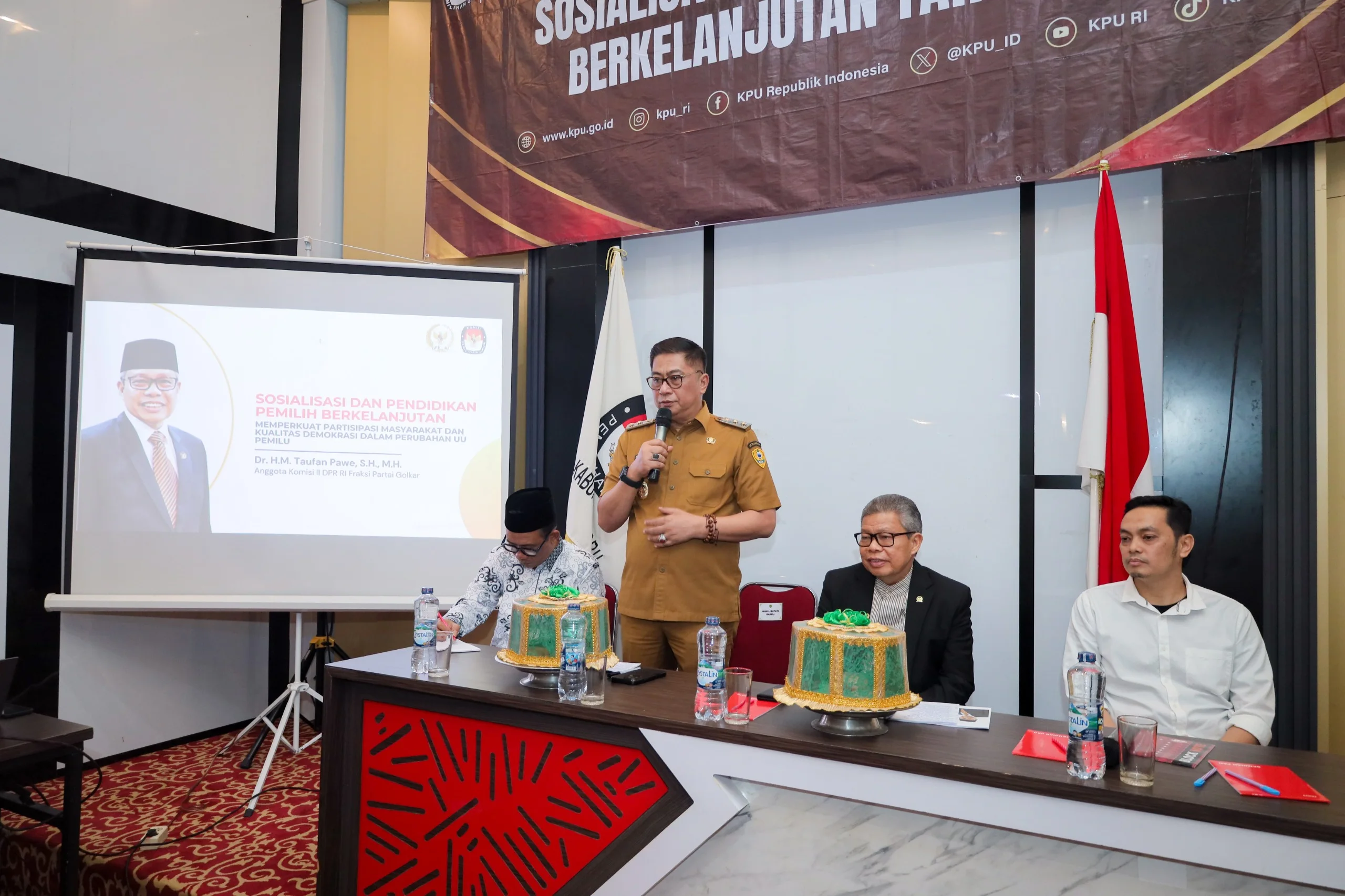
This issue was the focus of a Sustainable Voter Education Socialization event held by a member of Commission II of the House of Representatives (DPR RI) in collaboration with the General Elections Commission (KPU) at Hotel D'Shining, Takkalasi, Barru Regency, South Sulawesi, on Monday (9/11/2026).
The event, themed "Strengthening Public Participation and the Quality of Democracy in the Revision of the Election Law," featured a number of speakers from the legislature, election organizers, academia, and local government.
Deputy Regent of Barru, Abustan, who attended the event, noted that public political education requires more serious attention. According to him, an understanding of democracy should not be built only as elections draw near.
In his remarks, Abustan conveyed greetings from the Regent of Barru, Andi Ina Kartika Sari. He also expressed his appreciation for the presence of the Commission II DPR RI member and the speakers who provided political education to the people of Barru.
Political Education Must Extend Beyond Election Periods
Abustan emphasized the importance of making voter education a continuous effort. The public needs to understand that political rights are not only about choosing candidates but also involve the responsibility of determining the direction of regional and national development.
He hopes that political education activities can reach a wider range of community groups, including the younger generation, women, students, and civil society organizations.
According to Abustan, while high voter turnout is an indicator of a successful election, the number of people visiting polling stations does not fully reflect the quality of democracy.
Equally important is how citizens exercise their right to vote based on mature consideration, rather than simply following peer pressure or unverified information.
"Moving forward, we hope the public becomes more intelligent in their choices. The leaders elected should possess the capacity, competence, and ability to bring progress to the region and its people," he stated.
He also reminded attendees of the importance of collaboration between local government, election organizers, and various community elements in expanding access to political education.
Amid the rapid development of information technology, the public is increasingly exposed to various political views and information. This condition demands the ability to critically filter information to avoid falling for misleading content.
Therefore, voter education is expected to go beyond explaining voting procedures; it should also provide an understanding of democratic values, citizens' constitutional rights, and the importance of responsible voting.
Taufan Pawe Highlights the Importance of Election Law Reform
Meanwhile, member of Commission II of the DPR RI, Dr. H. M. Taufan Pawe, S.H., M.H., highlighted the importance of updating electoral regulations as a step toward improving the quality of democracy in Indonesia.
In his presentation, Taufan Pawe explained that discussions on revising the Election Law must consider various issues that emerged during the implementation of previous elections.
The experience of the 2024 elections, according to him, can serve as evaluation material to identify aspects of the process that still require improvement.
Such evaluation is crucial to ensure that the future electoral system provides legal certainty, upholds the principles of justice, and guarantees opportunities for public participation in the democratic process.
He believes that regulatory reform should not focus solely on technical provisions. Strengthening the institutions of election organizers and improving the quality of public engagement must also be prioritized.
Political participation, he continued, has a broader meaning than just casting a ballot on election day.
The public also plays a role in understanding public policy, following political developments, monitoring the democratic process, and exercising their constitutional rights consciously.
With better political understanding, the public is expected to be able to make decisions based on credible and accountable information.
KPU and Local Government Encouraged to Strengthen Voter Education
The socialization event in Barru served as a meeting point for policymakers, election organizers, academics, and the public to discuss future democratic challenges.
Sustainable voter education is considered vital in maintaining public political awareness, even outside of election and regional head election cycles.
Through such activities, the public is expected to better understand the importance of active involvement in the democratic process while gaining the ability to assess the quality of leadership candidates.
Synergy between the government, legislature, KPU, educational institutions, and community organizations is necessary to ensure that political education reaches all levels of society more equitably.
In addition to the Deputy Regent of Barru and the Commission II DPR RI member, the event was attended by KPU South Sulawesi Commissioner Romi Harmanto, S.Ag., M.Ag.; Vice Dean of the Faculty of Social and Political Sciences at Hasanuddin University, Dr. A. Lukman, S.IP., M.Si.; and Chairman of the KPU Barru Regency, Abdul Syarat B.S. Kim.
Also present were KPU Barru Regency commissioners, namely Ir. H. Abdul Mannan, M.Si., Arham, S.Sis., M.M., Gusman Agani, S.H., and Ilham, S.H.
Several government officials and local authorities also participated, including Balusu District Head A. Maya Novitasari, S.STP., M.Si., Balusu Police Chief Ipda Sultan, S.H., and Sergeant Atmam, representing the Military Rayon Commander (Danramil) 1405-04.
The event also involved representatives from the press, non-governmental organizations (NGOs), students, and community organizations.
Through this socialization, voter education is expected to not only increase public participation in upcoming elections but also help build a political culture that is more critical, open, and responsible.




Comments 0
Write a Comment Share your response