

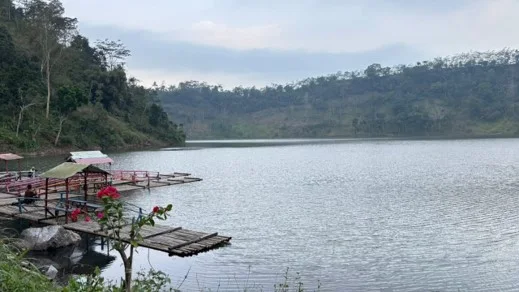
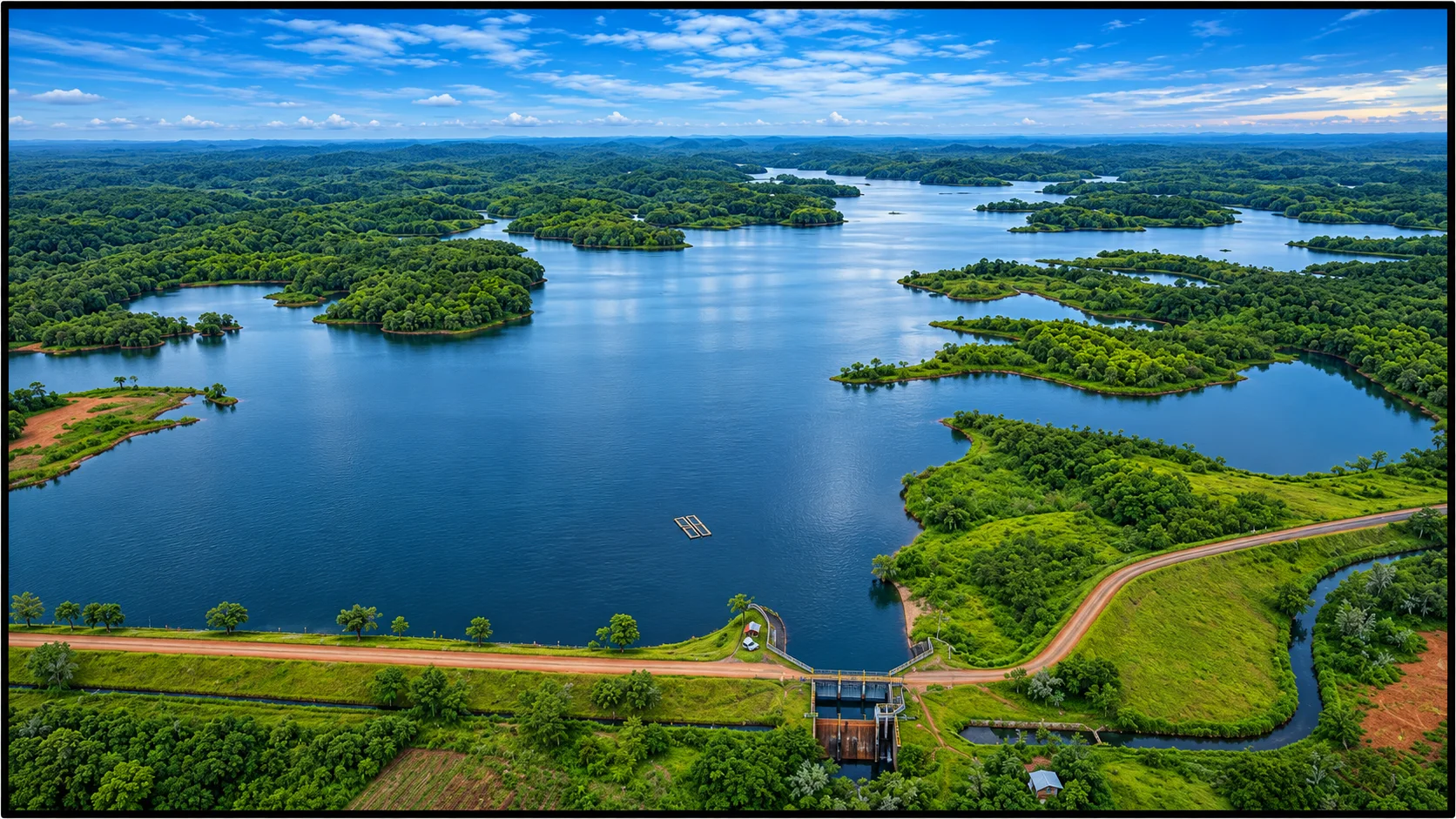
PROBOLINGGO, JurnalPost.com – Behind the hills of Tiris District, Probolinggo Regency, East Java, lies a lake that offers a natural landscape distinct from most tourist destinations. Lake Ranu Agung, located in Ranuagung Village, features a panorama of calm waters surrounded by towering rocky cliffs.
The uniqueness of this landscape is a major draw for tourists seeking to enjoy a natural atmosphere far from the bustle of the city. However, the beauty of Lake Ranu Agung actually holds potential far beyond being a mere spot for photos or relaxation.
Formed by the volcanic activity of Mount Lemongan, the lake has the potential to be developed into a destination for nature tourism, geological education, and community-based tourism.
To examine its development opportunities, the 6A tourism component approach can be used as an analytical framework. This approach includes Attraction , Accessibility , Amenities , Accommodation , Activities , and Ancillary Services .
Through these six components, the potential of Lake Ranu Agung can be reviewed more comprehensively, including various aspects that still require strengthening.
Landscape Uniqueness as a Geotourism Attraction
From the attractionaspect, Lake Ranu Agung possesses quite compelling natural characteristics. The combination of lake waters, green vegetation, and rocky cliffs creates a landscape with significant potential for nature tourism.
One prominent unique feature is the rock formation resembling columns, known as columnar joint. Such formations are related to geological processes and can serve as learning material for tourists interested in understanding landscape formation.
The presence of these geological elements opens opportunities for developing a geotourism concept—tourism activities that not only showcase natural beauty but also provide knowledge about the processes behind the formation of an area.
Through this approach, visitors can gain an experience that goes beyond simply enjoying the view.
For instance, explanations regarding the geological history of the area, rock characteristics, and the relationship between volcanic activity and the lake's formation could be developed into part of an educational tourism experience.
This potential certainly requires support in the form of accurate information, guides who understand the environmental characteristics, and adequate tourism interpretation facilities.
Accessibility and Facilities Need Attention
From the accessibilityaspect, the Lake Ranu Agung area can be reached by both two-wheeled and four-wheeled vehicles.
However, the journey to the lake area presents its own challenges. Visitors must navigate a path with approximately 250 steps to reach the water's edge.
For tourists in good physical condition, this journey can be part of the experience of enjoying nature. However, for the elderly, children, or visitors with limited mobility, this condition can be a barrier.
Therefore, improving the safety and comfort of access needs to be a priority in destination development.
The provision of handrails, rest areas, information boards, and trail markers should be considered to support visitor safety.
Meanwhile, from the amenitiesaspect, the Lake Ranu Agung area already has a number of supporting facilities, such as a parking area, toilets, food stalls, gazebos, and bamboo raft rental services.
The existence of these facilities is an important initial asset. Nevertheless, the quality of cleanliness management, the availability of trash bins, and safety equipment for tourists still need attention.
Specifically for water-based activities, the use of safety equipment and operational supervision are aspects that cannot be ignored.
Opportunities for Homestays and Educational Tourism Activities
The next component is accommodation or the provision of lodging for tourists.
In the context of developing Lake Ranu Agung, one opportunity that can be considered is the development of homestays based in residents' homes.
This concept has the potential to provide a lodging experience closer to the lives of the local community while opening economic opportunities for residents.
However, its development needs to consider community readiness, hygiene standards, comfort, and service quality.
From the activitiesaspect, Lake Ranu Agung also offers opportunities for the diversification of tourism activities.
Activities that can be enjoyed or developed include traversing the lake using bamboo rafts, nature photography, and fishing in accordance with management regulations.
Furthermore, this area has the potential to offer educational tourism packages focused on geology, environmental observation, and an introduction to the lake's ecosystem.
Diversification of these activities is important so that the tourism experience is not solely centered on enjoying the scenery.
Through activities designed to be engaging and educational, visitors have the opportunity to gain an understanding of natural characteristics as well as the importance of maintaining environmental sustainability.
Community Involvement is Key to Development
The final aspect in the 6A approach is ancillary services, which refers to the services and institutional support that sustain a tourist destination.
The development of Lake Ranu Agung requires collaboration between the local government, tourism management, business operators, and the local community.
Such synergy is needed in various activities, ranging from facility management and service quality improvement to destination promotion and environmental protection.
Local communities need to be positioned as an important part of the tourism value chain, rather than just being parties living around the tourist area.
Citizen involvement can be realized through the provision of local culinary offerings, tour guide services, homestay management, raft services, or other supporting businesses.
Thus, the economic benefits of tourism activities have the potential to be felt more broadly by the community.
However, such participation also requires capacity building, mentoring, and clear institutional management so that tourism activities can run sustainably.
Maintaining the Balance between Tourism and Environmental Sustainability
The development of Lake Ranu Agung as a nature tourism destination cannot be separated from the responsibility of maintaining environmental sustainability.
An increase in the number of visits has the potential to put pressure on the ecosystem if not balanced with proper management.
Issues such as waste, water pollution, and vegetation damage are some of the risks that need to be anticipated from the planning stage.
Therefore, the concept of sustainable tourism is important to implement through waste management, regulation of tourism activities, environmental education, and involving the community in protecting the area.
Analysis based on the six tourism components shows that Lake Ranu Agung has the opportunity to develop as a nature tourism destination based on geotourism and community empowerment.
The uniqueness of the landscape is its main asset, while improvements in accessibility, facilities, activity variety, and institutional strengthening are areas that need to be developed.
Ultimately, the success of Lake Ranu Agung's development is not solely determined by an increase in the number of tourists, but also by its ability to provide benefits to the community without neglecting environmental sustainability.
With planned and collaborative management, Lake Ranu Agung has the opportunity to become a destination that not only offers natural beauty but also provides an educational experience and economic benefits for the surrounding community.



Comments 0
Write a Comment Share your response