

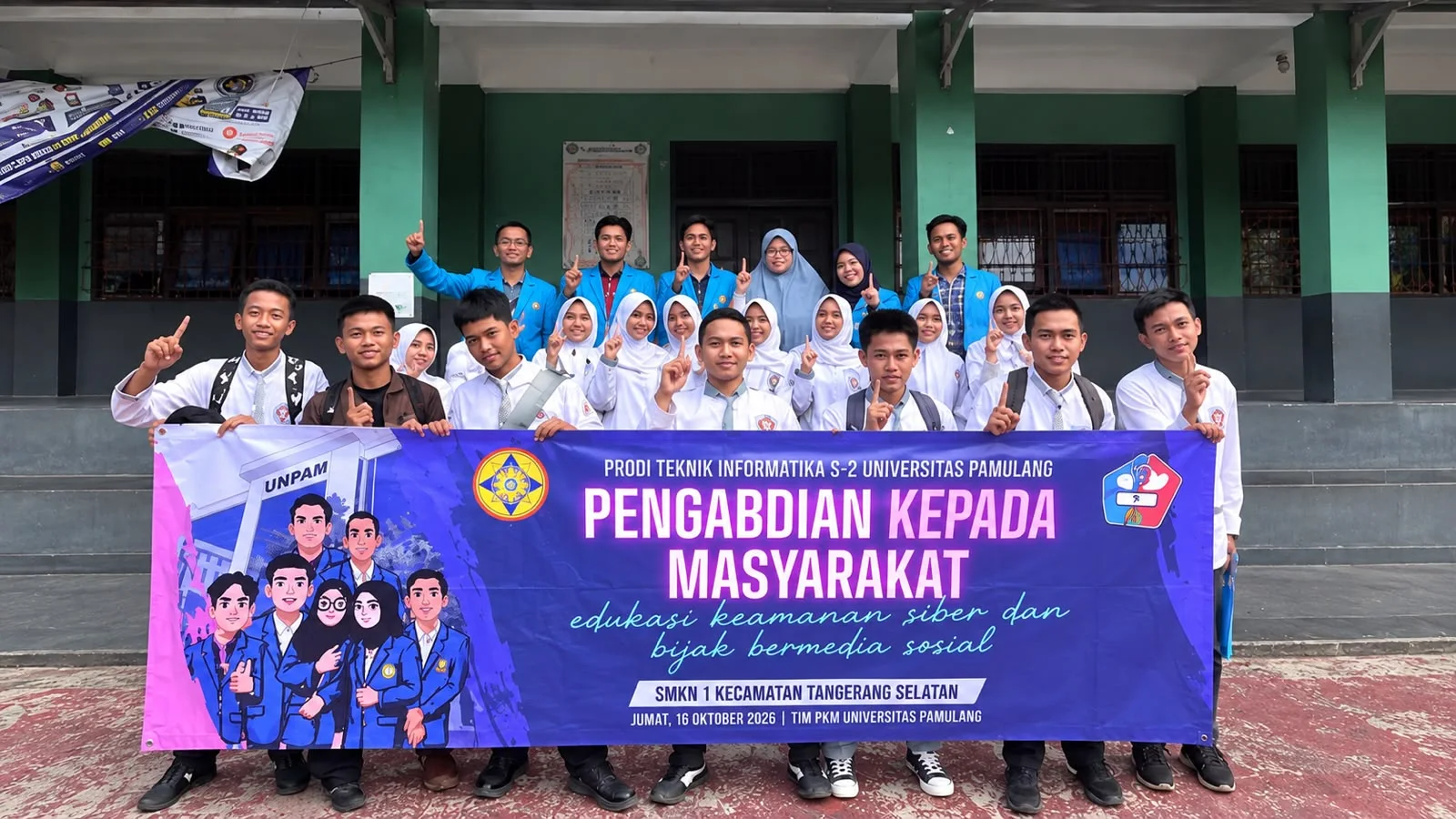
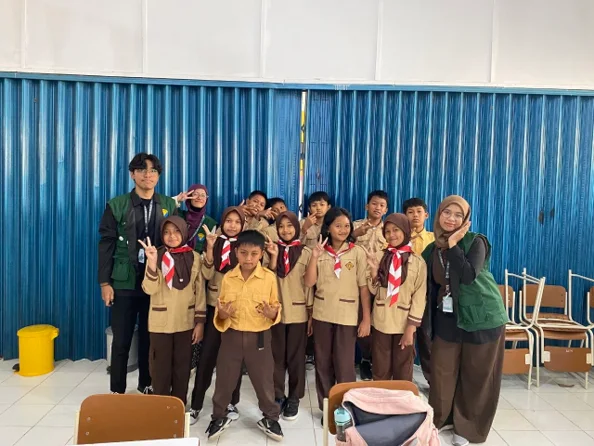
SOUTH TANGERANG, JurnalPost.com - The rise of digital fraud has become a primary concern for students at Universitas Pamulang. Through a Community Service (PKM) initiative, students from the Master of Informatics Engineering program at Universitas Pamulang held an educational session on cybersecurity and responsible social media use for students at SMKN 1 South Tangerang on Friday (10/16/2026).
The activity aims to increase students' awareness of various cybercrime threats, ranging from job scams and personal data theft to the spread of malicious links via social media.
This education is considered vital because students' daily activities are increasingly intertwined with internet usage. Beyond communication and entertainment, the internet serves as a tool for learning, gathering information, and seeking internship and job opportunities.
According to a 2025 survey by the Indonesian Internet Service Providers Association (APJII), internet penetration among Generation Z has reached 87.80 percent. This indicates that the younger generation is highly digitally connected, necessitating a corresponding understanding of security and personal data protection.
During the session, the Universitas Pamulang PKM team provided insights into various fraud modes frequently encountered online. One such example is fake job vacancies that offer attractive salaries but require applicants to pay fees under the guise of administrative or registration costs.
Additionally, students were introduced to the concept of phishing, which involves stealing personal information through links, websites, or QR codes designed to mimic official services. The team also warned about the dangers of online gambling promotions that often appear in social media advertisements and digital games.
Hadyan, a representative of the Universitas Pamulang Master of Informatics Engineering PKM team, stated that a simple step to avoid fraud is to get into the habit of verifying information before taking action.
“We want our younger students to get into the habit of being cautious before clicking: check if the sender is clear, if the message is urgent, and if they are asking for data or money,” said Hadyan.
According to him, such vigilance is essential for vocational high school (SMK) students, especially those preparing to enter the workforce. Information regarding job vacancies, internships, or apprenticeship opportunities circulating online must be verified first to ensure its authenticity.

Beyond presenting material, the Universitas Pamulang students engaged the pupils in a simple exercise to recognize the signs of digital fraud.
Participants were asked to observe several examples of suspicious messages, identify unofficial website addresses, and understand the risks of providing personal information to strangers.
During the session, the team introduced the “Three Seconds Before You Click” principle, which consists of three main steps: pause, check, and report.
Through this principle, students are encouraged not to immediately trust messages or links they receive. They need to pause for a moment, verify the sender's identity, confirm the authenticity of the information, and report any activity deemed suspicious.
The PKM team also explained the steps to take if someone has already fallen victim to digital fraud. Students were reminded not to follow further requests from the perpetrator, to save evidence of conversations or transactions, and to immediately seek help from parents or teachers.
The delivery of the material was interactive. Students had the opportunity to analyze case studies relevant to their daily digital activities, ensuring that cybersecurity concepts were not just learned in theory but could be applied in real life.
Based on the implementation team's evaluation through pre-tests and post-tests, the participants' understanding reportedly showed a significant increase after the activity. However, the team did not provide specific scores or the percentage of improvement in the evaluation results.
The educational activity received a positive response from SMKN 1 South Tangerang.
The Deputy Principal for Curriculum at SMKN 1 South Tangerang, Rijal, appreciated the initiative of the Universitas Pamulang students in providing practical knowledge on digital security to the pupils.
According to him, the material is relevant to the current needs of students, as the use of smartphones, the internet, and social media has become a part of their daily lives.
Appreciation was also expressed by the Universitas Pamulang PKM team supervisor, Dahlan Supriatna, S.Kom., M.Kom. This community service activity serves as a means for students to apply the knowledge gained during their studies while providing direct benefits to the community.
Through this program, Universitas Pamulang students hope that pupils will better understand the importance of maintaining account security, protecting personal data, and being critical of any information received online.
Cybersecurity education is also expected to foster positive habits in using technology, particularly the courage to refuse suspicious requests and report indications of fraud to trusted parties.
With increased awareness and digital literacy skills, students are expected to become not only active internet users but also smarter, more vigilant, and more responsible in utilizing technological advancements.
This Universitas Pamulang PKM activity at SMKN 1 South Tangerang also serves as a form of contribution from higher education institutions in supporting the creation of a safer digital environment for the younger generation.





Comments 0
Write a Comment Share your response