

East Lampung, JurnalPost.com – Instilling positive character in children from an early age requires more than just advice or classroom lectures. Values such as compassion, care, empathy, and responsibility must be introduced through learning experiences that are closely tied to daily life.
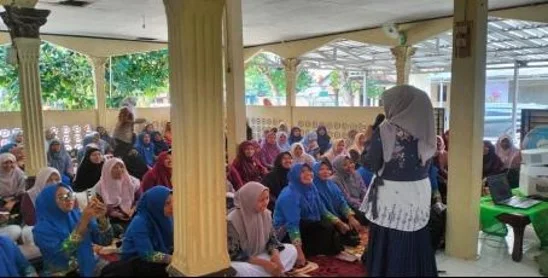
This effort is the focus of a team of lecturers from the Early Childhood Islamic Education (PIAUD) study program at the Faculty of Tarbiyah and Teacher Training (FTIK), UIN Jurai Siwo Lampung, through training and mentoring on the implementation of the Love-Based Curriculum (KBC) for principals and teachers of Raudhatul Athfal (RA) in East Lampung Regency.
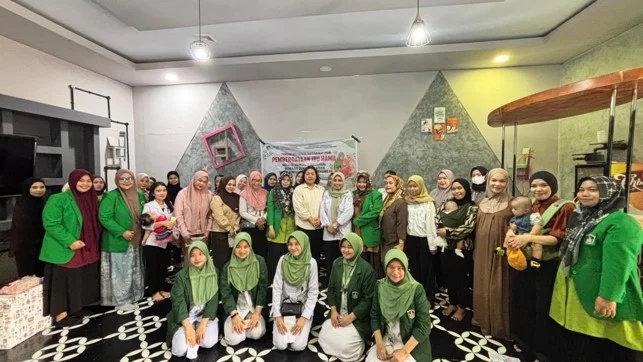
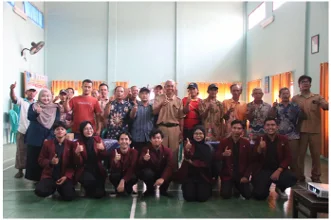
The activity, which took place from 20 July to 10 August 2026, was attended by 116 RA principals and teachers from 24 sub-districts in East Lampung Regency.
The training was organized in collaboration with the Raudhatul Athfal Teachers Association (IGRA) of East Lampung Regency and was centered at three partner institutions: RA Muslimat Pekalongan, RA Muslimat Toto Mulyo Way Bungur, and RA Ma’arif Sekampung Udik.
Through this activity, educators received guidance on understanding and translating the values of the Love-Based Curriculum into the planning and execution of early childhood learning.
Integrating Compassion into Learning
Early childhood education plays a vital role in building the foundation of a child's character and social-emotional development. At this stage, children not only learn to recognize their environment and develop basic skills but also begin to understand how to interact with others.
Therefore, the learning process must provide space for children to learn about compassion, mutual respect, cooperation, and showing care for the surrounding environment.
The Love-Based Curriculum is one of the approaches introduced to participants to strengthen character formation through humanistic learning activities that align with the child's developmental stage.
During the training, teachers studied five core value orientations: love for Allah SWT and the Prophet Muhammad SAW, love for oneself and fellow human beings, love for knowledge, love for the environment, and love for the homeland.
These five values are intended not only to be understood conceptually but also to be applied in various learning activities.
For example, love for fellow human beings can be instilled through habits of sharing, helping friends, and respecting differences. Meanwhile, care for the environment can be built by habituating children to keep the classroom clean, care for plants, and use shared facilities responsibly.
With this approach, character education does not stand as a separate subject but becomes part of the child's daily learning experience.
Teachers Trained to Develop Love-Based Lesson Modules
The activity was designed to be participatory so that participants would not only receive theoretical explanations but also gain direct experience in developing learning tools.
RA principals and teachers engaged in group discussions, Q&A sessions, case studies, simulations, and practical exercises in drafting daily lesson plans or teaching modules.
In the practical sessions, participants were guided on how to integrate the values of the Love-Based Curriculum into the opening, core, and closing segments of their lessons.
This mentoring helped teachers understand that character building can be achieved through simple activities that are relevant to the needs and development of the child.
For instance, the opening segment can be used to build the habit of greeting friends kindly and expressing feelings politely.
In the core activity, teachers can introduce group games that encourage cooperation, mutual assistance, and respect for others' opinions.
Meanwhile, the closing segment can be used to invite children to reflect on their learning experience, express gratitude, and build the habit of appreciating their own efforts and those of others.
In addition to drafting learning tools, educators were encouraged to apply positive communication and provide role models in daily interactions.
This is crucial because young children learn largely through observation and direct experience. A teacher's attitude in communicating, resolving problems, and treating students serves as an example for the child's behavioral development.
Collaboration Between Lecturers, Students, and IGRA East Lampung
This community service activity was carried out by a team of PIAUD UIN Jurai Siwo Lampung lecturers led by Lia Ricka Pratama, M.Pd., along with two members, Siti Kurniasih, M.Pd. and Annisa Herlidasari, M.Pd.
The program implementation also involved two PIAUD students, namely Eka Zahra Nur Rahma and Ana Maulidatul Khusnia.
The involvement of students is part of an academic collaboration to support community service activities, particularly those related to improving the competence of early childhood educators.
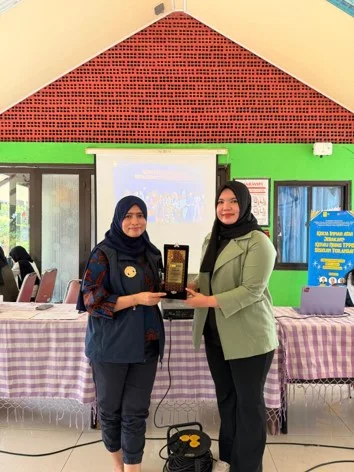
Meanwhile, the partnership with the IGRA of East Lampung Regency helped facilitate the participation of RA principals and teachers from various sub-districts.
Through this collaboration, the mentoring activity is expected to open a space for teachers to exchange experiences regarding learning strategies that support children's character development.
Participants Respond Positively to Mentoring
Based on observations, interviews, and participant reflections during the activity, the training received a positive response from the RA principals and teachers involved.
Participants noted that the activity provided a deeper understanding of how to incorporate Love-Based Curriculum values into the lesson plans used at their respective institutions.
The experience of drafting learning tools firsthand also gave teachers the opportunity to develop more contextual activity ideas.
Beyond understanding the basic concepts of the KBC, participants gained practical experience in designing activities that promote social-emotional development and character formation in children.
However, the results of this activity cannot yet be used as a basis to conclude that there has been an immediate change in the students' character.
The impact of implementing the Love-Based Curriculum on children's behavior, social-emotional development, and character formation requires further observation and evaluation after the learning tools are applied in the classroom.
Therefore, follow-up actions such as implementation, reflection, and learning evaluation are essential for the benefits of the mentoring to continue to grow.
Promoting the Love-Based Curriculum as a Learning Culture
The service team hopes that educators will utilize the lesson plans developed during the training to be applied gradually at their respective institutions.
This implementation should be accompanied by periodic reflection so that teachers can identify which activities are effective and which aspects still require refinement.
Collaboration with IGRA and partner institutions is also expected to be further developed through best-practice sharing sessions and continued mentoring.
With these steps, the values of the Love-Based Curriculum will not only exist in planning documents but will also become part of the learning culture and daily interactions within the RA environment.
Through this community service program, PIAUD UIN Jurai Siwo Lampung strives to contribute to improving the quality of early childhood education, particularly in strengthening teacher competence and developing character-oriented learning.
Education based on compassion is expected to create a learning environment that is safe, comfortable, and respectful of every child, while serving as a foundation for the growth of a generation characterized by empathy, care, responsibility, and mutual respect.




Comments 0
Write a Comment Share your response