

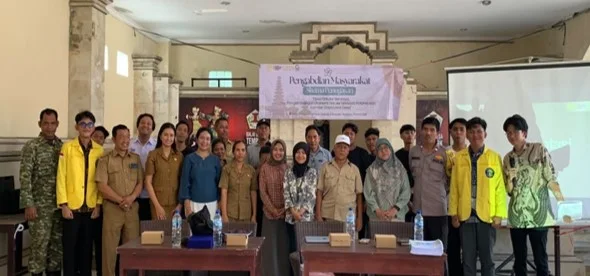
BULELENG, JurnalPost.com — Plastic waste, long considered an environmental burden, is now being viewed as an economic opportunity for the residents of Tembok Village, Tejakula District, Buleleng Regency, Bali. Through a community service program, the University of Indonesia (UI) is encouraging residents to develop waste management practices that turn refuse into raw materials and marketable products.
The event, held on Monday, 2 November 2026, introduced concepts including the circular economy, waste downstreaming, intellectual property protection, and plastic processing technology using an extruder machine.
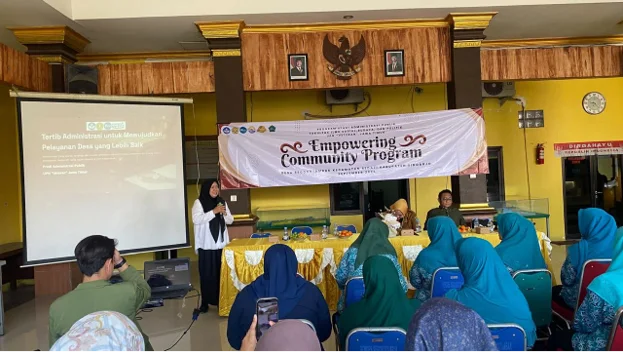
This program was carried out by a University of Indonesia service team with support from the Directorate of Community Service and Social Innovation (DPIS UI).
Beyond raising environmental awareness, the initiative aims to create new business opportunities by utilizing resources that have previously been underutilized.
Head of the UI Service Team, Siti Fatimah, M.Pd., CertDA., stated that waste management should not stop at collection and disposal. According to her, waste can become an economic resource if managed with the right approach.
"Through this activity, we want to encourage a shift in perspective, showing the community that waste is not just something to be discarded, but a resource that can be transformed into products with economic value," said Siti Fatimah.
The lecturer from the Office Administration Study Program at the UI Vocational Education Program hopes that the knowledge and technology introduced can be applied sustainably through collaboration between the community, village government, and various stakeholders.
Circular Economy Starts with Resident Habits
During the event, Tembok Village residents were introduced to the circular economy concept, an approach that seeks to maintain the utility of materials for as long as possible through waste reduction, reuse, and material processing.
Implementation does not always require large-scale technology. Simple habits such as bringing reusable shopping bags, reducing single-use plastic consumption, and sorting waste at home are essential parts of building a sustainable management system.
The UI team also introduced the 5R principles through discussions and group activities to help participants understand how to reduce waste generation and repurpose materials that still hold value.
Tembok Village is considered to have the initial capital to develop such a system, notably through the community-based waste bank managed by Budi.
This community initiative demonstrates that waste management is already part of local activity, though there is room for development to ensure that sorted and processed results yield higher economic value.
Five Principles of Economically Valuable Waste Processing
In addition to discussing behavioral changes, participants gained an understanding of plastic waste downstreaming.
This approach emphasizes the importance of processing used materials into raw materials or products with added value, rather than simply selling mixed waste.
The service team introduced five principles for economically valuable waste management: sort, clean, dry, sufficient quantity, and routine.
These five principles serve as the foundation for producing raw materials that are more consistent and suited to processing requirements.
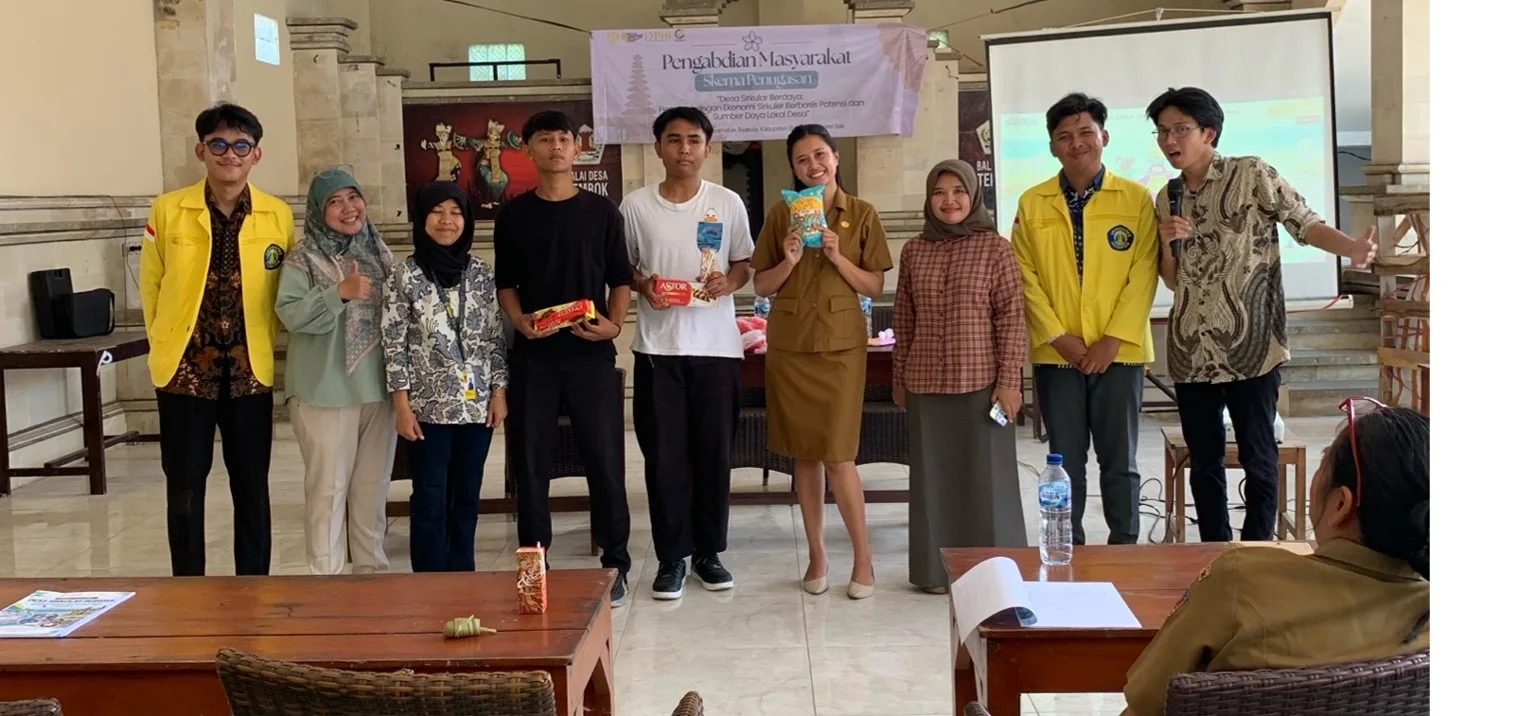
Participants also learned about plastic identification codes numbered 1 through 7. Understanding plastic types is considered crucial because each material has different characteristics and processing requirements.
In Tembok Village, the potential for developing waste management is supported by the existence of an Integrated Waste Processing Site (TPST) managed by the BUMDes Giri Arta.
The presence of this facility is a key asset for the village to build a more organized system for waste collection, sorting, and utilization.
However, developing waste-based businesses still requires a stable supply of raw materials, appropriate technology, and market access to ensure production activities remain sustainable.
Local Craft Products Encouraged to Seek Legal Protection
Beyond focusing on plastic processing, the UI service program also addressed intellectual property protection for local entrepreneurs.
This material relates to the potential of local Tembok Village crafts, including coconut shell keychains, coasters, and various woven products.
Participants received an introduction to trademarks, copyrights, industrial designs, and communal intellectual property.
This understanding is necessary so that the community can not only produce goods but also build a product identity that is easily recognized by consumers.
In business development, a brand can serve as a differentiator between one entrepreneur's product and another.
Meanwhile, industrial design or copyright protection can be relevant depending on the characteristics of the creative works developed by the community.
The UI team also provided an overview of the trademark registration process and the importance of designing a business identity with unique characteristics.
Extruder Machine Introduced for Plastic Waste Processing
A key part of the activity was the introduction of an extruder machine as a technology to process specific types of plastic into reusable material.
Participants received an explanation of the machine's working principles, main components, and basic operation.
Extrusion technology works by heating and pushing plastic material through a mechanical system so that it can be formed into new material according to production needs.
However, not all types of plastic can be processed with the same treatment. Therefore, the service team emphasized the importance of material sorting, temperature control, and the application of workplace safety.
This introduction serves as an initial stage before follow-up technical activities scheduled for 4 November 2026.
Through this learning stage, the community is expected to be equipped to understand both the opportunities and challenges of using technology in plastic waste processing.
Collaboration is Key to Village Economic Development
The community service program in Tembok Village involved a multidisciplinary team from the University of Indonesia.
In addition to Siti Fatimah as the team leader, the team consists of Ira Iriyanti, Karin Amelia Safitri, Mila Viendyasari, Radityo Kusumo Santoso, Muhammad Dhafa Ardilinata, Fahmi, and Dennis Oktavianus Christiawan.
The involvement of various fields of expertise allows the empowerment activities to address not only environmental issues but also business development, product protection, and technology utilization.
Moving forward, the success of the program will depend on the community's ability to apply the knowledge gained in their daily waste management activities.
Collaboration between universities, the village government, BUMDes, waste management communities, and business owners is a vital factor in ensuring that these activities do not stop at the socialization stage.
The development of a circular economy in Tembok Village also has the potential to open up business opportunities based on recycled materials, especially if supported by the availability of raw materials and product marketing.
With this approach, waste management is expected to no longer be viewed solely as an obligation to maintain environmental cleanliness, but also as part of an effort to strengthen the economic independence of the village community.



Comments 0
Write a Comment Share your response