

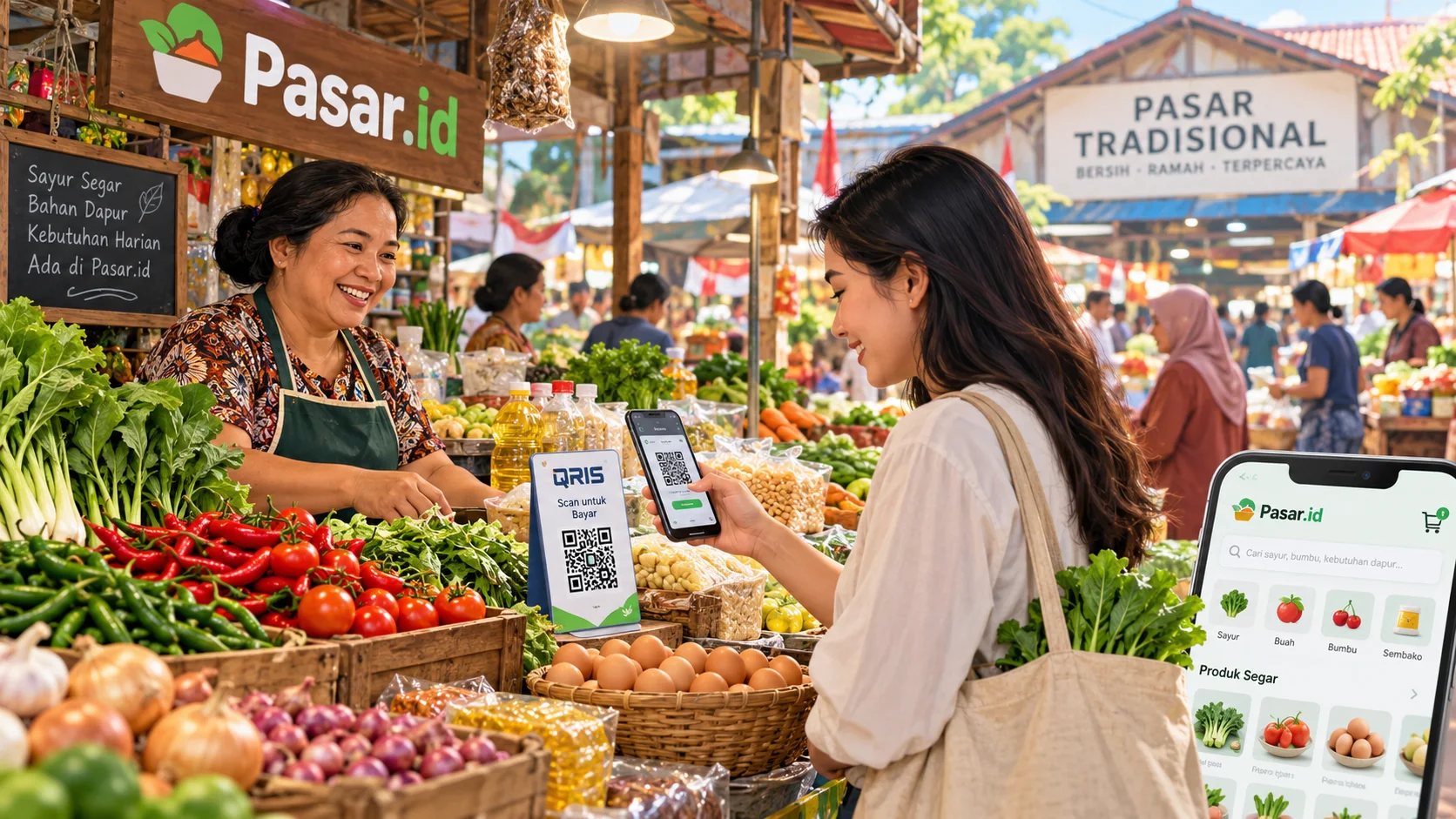
BOJONEGORO, JurnalPost.com - Shopping for vegetables and kitchen essentials no longer requires a trip to the market. The growth of digital services now offers the public new ways to fulfill their daily needs, including the Pasar.id platform, which allows shoppers to select various food items more conveniently.
The introduction of this service is part of an effort to digitize traditional markets. Beyond providing an alternative for shoppers, the use of technology opens opportunities for merchants to reach a wider customer base without relying solely on in-person transactions at their stalls.
In Bojonegoro Regency, shifting consumer habits are creating opportunities for market vendors to adopt digital services. Vegetables, spices, and various food ingredients that were previously sold conventionally now have the potential to be marketed through online platforms.
Narti, a market vendor, believes that technological advancements can benefit small merchants, particularly by introducing their goods to a broader audience.
According to her, vegetables and kitchen essentials are items that people look for almost every day. Therefore, having easier shopping options can provide added value for both merchants and buyers.
"If shopping can be more practical now, it will certainly become a preferred choice for buyers. My hope is that market goods become better known and the number of customers increases," said Narti.
Traditional Markets Begin Adapting to Digital Services
The use of Pasar.id provides an alternative for people who have limited time to visit the market in person. Buyers can select their kitchen needs as required through the available digital service.
However, this convenience must be balanced with the merchants' readiness to manage orders and maintain the quality of the goods offered.
Information regarding prices, product types, and stock availability is crucial to ensure buyers receive items as ordered. For fresh food ingredients, the quality and condition of the products also require attention.
For traditional merchants, using technology is not just about the ability to sell goods online, but also involves customer service and communication.
Nevertheless, digital services do not necessarily replace the habit of shopping in person. Some people still feel more comfortable coming to the market to select vegetables, check the freshness of food ingredients, and compare prices between sellers.
QRIS Payments Become a Cashless Transaction Option
In addition to the ease of selecting kitchen needs, the development of digital payments provides another alternative for the public when conducting transactions.
The use of the Quick Response Code Indonesian Standard (QRIS) allows buyers to make payments by scanning a QR code through banking applications or digital wallets that support the service.
For merchants who have implemented QRIS, cashless payments help reduce the need to prepare small change. Meanwhile, buyers do not always have to carry cash when shopping.
Puah, a shopper, admitted that the ease of selecting items and the availability of digital payment methods are significant considerations when shopping for daily needs.
"If I can choose kitchen needs more practically and pay using QRIS, it certainly helps. Especially when I am in a hurry or do not have cash on hand," said Puah.
According to her, the choice of payment methods gives the public the flexibility to adjust transactions to their individual habits.
However, the use of QRIS still depends on the availability of payment services at the merchant's stall, as well as the support of internet networks and the applications used by the buyer.
New Opportunities for Market Merchants
The digitization of traditional markets can be an opportunity for merchants to retain customers while expanding their sales reach.
By utilizing platforms like Pasar.id, merchants have an alternative to introduce their goods to people who are accustomed to using digital services.
However, the success of using technology still depends on product quality, clear price information, stock availability, and the merchant's ability to meet the buyer's needs.
For the public, the presence of digital services also provides more choices. They can continue to shop directly at the market or utilize online services according to their situation and needs.
These developments show that traditional markets have room to adapt to technological changes without losing their primary character as a place for the community to obtain basic necessities.
Through the use of Pasar.id and QRIS payments, the buying and selling of kitchen essentials are expected to become increasingly flexible. However, buyer trust and service quality remain key factors in ensuring that the benefits of digitization are truly felt by both merchants and the public.








Comments 0
Write a Comment Share your response