

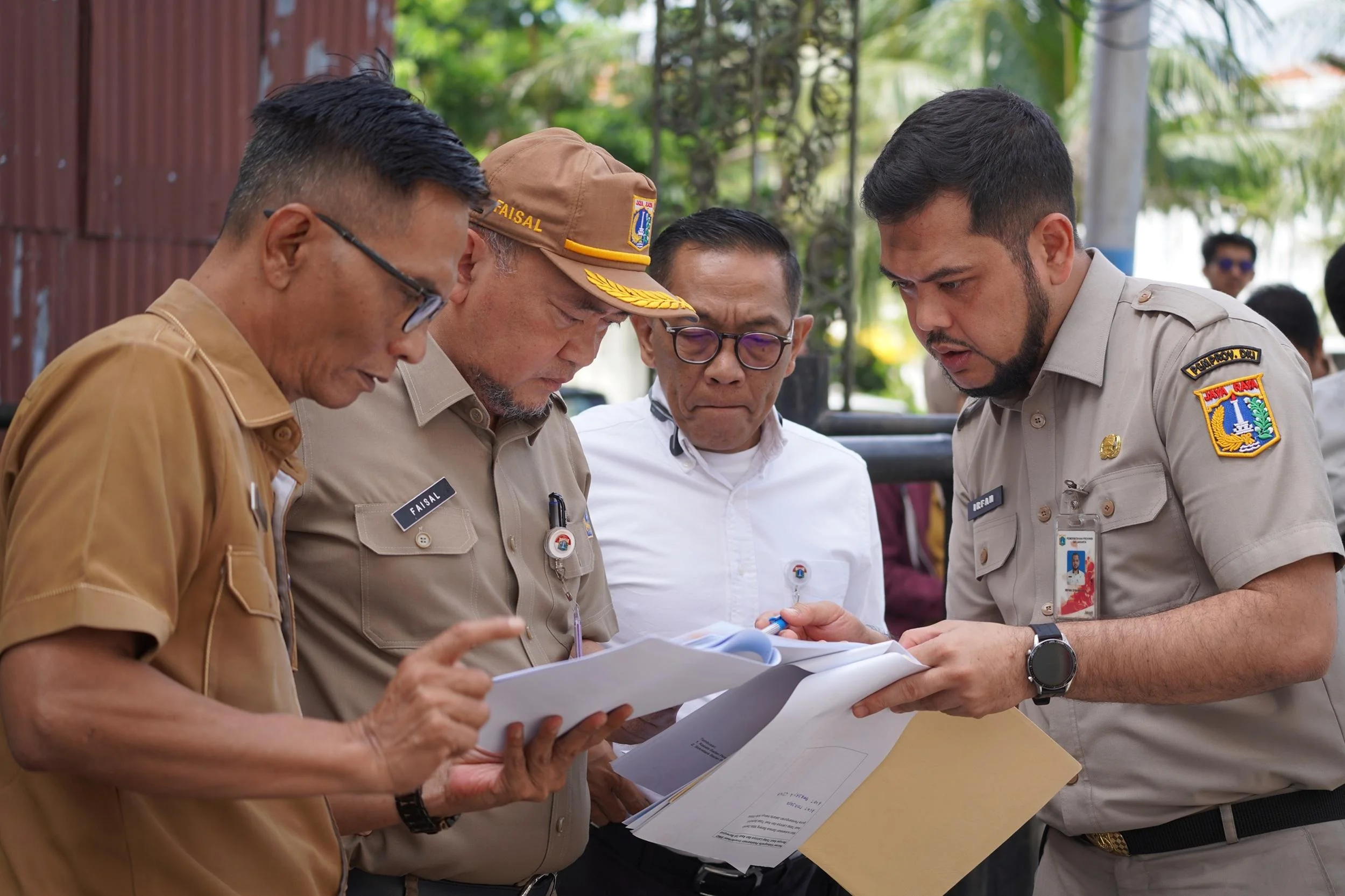
JurnalPost.com - State and regional assets are vital components of governance and public service delivery. Office buildings, government land, official vehicles, educational facilities, and medical equipment in community health centers are all examples of public assets that must be maintained and managed responsibly.
Most of these assets are acquired through state or regional budgets derived from public revenue. Additionally, some assets are obtained through grants or other legitimate means. Because they are tied to the public interest, their management cannot be dictated by the personal whims of officials or specific parties.
However, the management of government assets remains a challenge in many regions. Issues range from disorganized record-keeping and unauthorized procedures to the appropriation of assets by unauthorized parties. This situation demonstrates that managing state and regional property is not merely an administrative task but a matter of law and responsibility toward the public interest.
The Legal Basis for State and Regional Asset Management
The management of State-Owned Property (BMN) and Regionally-Owned Property (BMD) is governed by a clear legal framework. A primary regulation is Government Regulation Number 27 of 2014 concerning the Management of State/Regional Property, enacted on 24 April 2014.
This regulation was subsequently amended by Government Regulation Number 28 of 2020 to align asset management provisions with the evolving needs of government.
For regional governments, more technical arrangements are provided in the Minister of Home Affairs Regulation Number 19 of 2016 regarding Guidelines for the Management of Regionally-Owned Property. This regulation was later amended by the Minister of Home Affairs Regulation Number 7 of 2024.
These regulations provide certainty regarding the authority, procedures, and responsibilities of officials managing government assets.
At the regional level, asset management provisions can be further regulated through regional bylaws. One example is the Jakarta Provincial Bylaw Number 1 of 2026 concerning the Management of Regionally-Owned Property, which was enacted on 23 February 2026.
This regulation replaced Bylaw Number 17 of 2004 as part of an update to regional asset management policies.
With this legal foundation, every action taken regarding government assets must have a basis and follow established mechanisms.
Six Principles of Asset Management
Under Article 3 of Government Regulation Number 27 of 2014, the management of state and regional property is based on six principles: functionality, legal certainty, transparency, efficiency, accountability, and value certainty.
These six principles are closely linked to ensure that government assets are used for their intended purposes.
The principle of functionality emphasizes that asset management must be carried out according to the duties, functions, and authority of each party. Meanwhile, the principle of legal certainty requires that every action taken regarding an asset has a justifiable legal basis.
Transparency is necessary so that asset management can be monitored, while efficiency requires the optimal use of resources without waste.
Accountability demands responsibility for every asset management decision. The principle of value certainty relates to the accuracy of asset valuation to support reporting and decision-making.
Guided by these principles, government assets should not become facilities freely used for the personal interests of individuals, groups, or parties outside of legal provisions.
Asset Management Extends Beyond Record-Keeping
In government practice, asset management is often misunderstood as merely inventory or record-keeping. In reality, its scope is much broader.
Asset management encompasses needs planning and budgeting, procurement, usage, utilization, security and maintenance, valuation, transfer, destruction, disposal, administration, as well as guidance, supervision, and control.
Each of these stages has its own procedures that must be executed by authorized officials.
For example, official vehicles intended for government operations cannot be treated as private vehicles without regard for usage regulations.
Similarly, government-owned land and buildings cannot simply be rented out, transferred, or used by other parties without going through official mechanisms.
Provisions regarding asset utilization, including lease and loan-for-use schemes, dictate the requirements and approvals that must be met.
In a loan-for-use mechanism, the recipient is also not permitted to utilize the borrowed object independently outside of applicable regulations.
This demonstrates that public asset management is not only about ownership but also about the limits of authority and legal responsibility.
The Importance of Administrative, Physical, and Legal Order
A key objective of government asset management is to achieve administrative, physical, and legal order.
Administrative order means all assets are recorded and reported correctly. Physical order requires that the existence and condition of assets are known and maintained. Legal order demands the existence of valid documents and proof of ownership.
These three aspects are inseparable.
A plot of land, for instance, may be recorded as a regional government asset. However, if the ownership documents are incomplete or the physical boundaries are unclear, the asset may become a subject of dispute.
Conversely, a building might still be used for public services, but if it is not properly recorded in government administration, its existence can cause issues in reporting and accountability.
Such conditions highlight the importance of inventory, document security, and periodic inspections of state and regional property.
Recurring Asset Management Issues
Various issues in regional asset management do not always stem from a lack of regulations. In many cases, the problems arise during the implementation phase.
Limited human resources, weak inter-agency coordination, data discrepancies, and suboptimal supervision systems can hinder orderly asset management.
Another issue is the discrepancy between the physical condition of assets and the data recorded in government financial reports.
If left unaddressed, the government may face difficulties in determining asset values, preparing financial reports, or verifying the legal status of the goods it controls.
Furthermore, weak supervision can open opportunities for misuse, unauthorized control, or asset transfers that do not comply with procedures.
The impact not only harms the government administratively but also potentially reduces the benefits of assets that should be used for public service.
Asset Misuse and Legal Consequences
The management of state and regional assets carries legal responsibility for every official granted authority.
When violations occur, consequences can range from administrative actions and the obligation to compensate for state or regional losses to criminal liability if the elements of a crime are met.
Asset misuse involving unlawful acts, abuse of authority, and state financial losses can be subject to investigation under applicable law.
However, it is important to understand that not every administrative error is automatically a criminal act of corruption. Determining criminal liability must remain based on proving the elements of the crime as stipulated in legislation.
Therefore, supervision of government assets must be conducted objectively, professionally, and based on the law.
Enforcing rules is not merely about imposing sanctions, but also about ensuring public assets are protected from misuse.
The Public Has the Right to Oversee Public Assets
Supervision of state and regional assets should not be the sole responsibility of government institutions.
The public also has a direct interest because public assets involve the use of budgets and the provision of public services.
Public participation can be exercised by observing the use of government facilities, questioning unclear changes in asset functions, and utilizing public information disclosure mechanisms.
If there are allegations of irregularities, the public can submit reports to the authorized supervisory agency, accompanied by relevant information or evidence.
Responsible public oversight can help promote transparency while preventing asset misuse.
Ultimately, the success of managing state and regional property is not measured solely by the completeness of documents or the value of assets recorded in government reports.
A more important measure is the extent to which these assets are maintained, utilized legally, and provide tangible benefits to the community.
Regulations have provided sufficiently clear guidelines. The real challenge lies in the consistency of implementation, the quality of supervision, and the integrity of those managing them.
Public assets are not the private property of officials or specific groups. These assets are state or regional wealth that must be managed responsibly for the greatest benefit of the public.









Comments 0
Write a Comment Share your response