

JurnalPost.com The debate regarding the relationship between religion and the state in Indonesia seems never-ending. Amidst an increasingly open society, some still hold the view that religious values and nationalism are contradictory. Some groups even suggest that patriotism is incompatible with religious teachings.
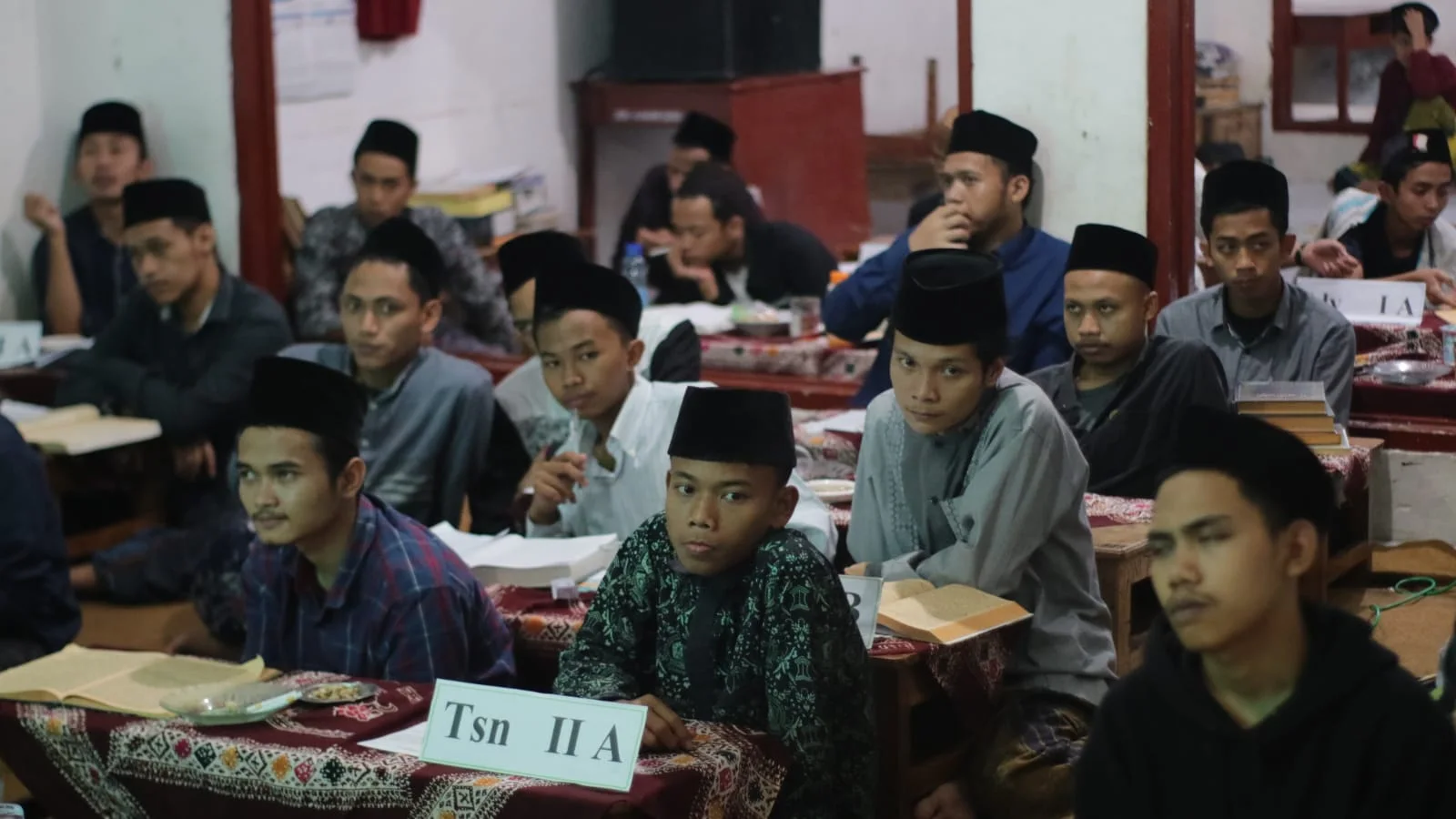
In reality, a look at Indonesia's long history reveals that religion and nationalism are deeply intertwined. Islamic boarding schools (pesantren), madrasas, and religious scholars have played a pivotal role in both the struggle for independence and the preservation of the Unitary State of the Republic of Indonesia (NKRI).
This relationship continues to evolve in modern education. Through the Merdeka Curriculum, the values of Pancasila and Islamic teachings are given space to be applied simultaneously in the learning process. There is no need to pit them against each other, as they share numerous principles, particularly in shaping individuals who are faithful, ethical, just, tolerant, and responsible members of society.
Nationalism and Islam in the History of Indonesian Education
The history of Indonesia's struggle for independence cannot be separated from the involvement of religious scholars and the pesantren community. Islamic educational institutions served not only as centers for deepening religious knowledge but also as hubs for fostering social awareness and a spirit of nationalism.
One of the concepts that developed within the Islamic tradition of the Indonesian archipelago is Hubbul Wathan Minal Iman, which means that love for one's homeland is part of faith. This expression has long been used to instill the awareness that protecting the nation is a responsibility aligned with religious values.
Ibda (2017), in his study on the concept of Hubbul Wathan Minal Iman in Islamic education, discusses the importance of positioning nationalism as an integral part of character development for students.
In the Indonesian context, loving the homeland is more than just showing pride in national identity. Nationalism is also manifested through concern for others, respect for differences, and a willingness to maintain unity amidst diversity.
These principles intersect with Islamic teachings that emphasize justice, brotherhood, responsibility, and the common good.
Therefore, education plays a strategic role in introducing the relationship between religious and national values from an early age.
The Merdeka Curriculum as a Space for Integrating Islamic and Pancasila Values
The implementation of the Merdeka Curriculum provides opportunities for educational units to develop learning that is more contextual and oriented toward character building.
In madrasas, this character strengthening can be achieved through the integration of the Pancasila Student Profile and the Rahmatan lil Alamin Student Profile (P3RA).
This approach positions education not merely as a process of transferring knowledge, but as a means to shape the attitudes, habits, and social responsibilities of students.
Cahyanto and his colleagues (2024) examined the internalization of the dimensions of the Pancasila and Rahmatan lil Alamin student profiles in the implementation of the Merdeka Curriculum. Their study highlights the importance of integrating character values with the students' learning experiences.
Through this approach, students do not just study Pancasila as rote material or understand Islamic teachings as mere theory. They are also guided to apply these values in their daily lives.
For example, the value of mutual cooperation (gotong royong) can be realized through group work and social service activities. Meanwhile, the principle of justice can be applied through learning that provides equal opportunities to all students, regardless of their background or circumstances.
Thus, religious education and civic education do not operate in isolation but complement each other in shaping the character of students.
Transforming the Classroom into a Space for Learning Tolerance
The challenges of character education today are increasingly complex. Students are growing up amidst the rapid development of digital technology, social media, and the swift flow of information.
They receive knowledge not only from teachers or textbooks but also from various digital platforms that do not always present information accurately or responsibly.
In such conditions, learning that relies too heavily on one-way lectures risks leaving students less actively engaged.
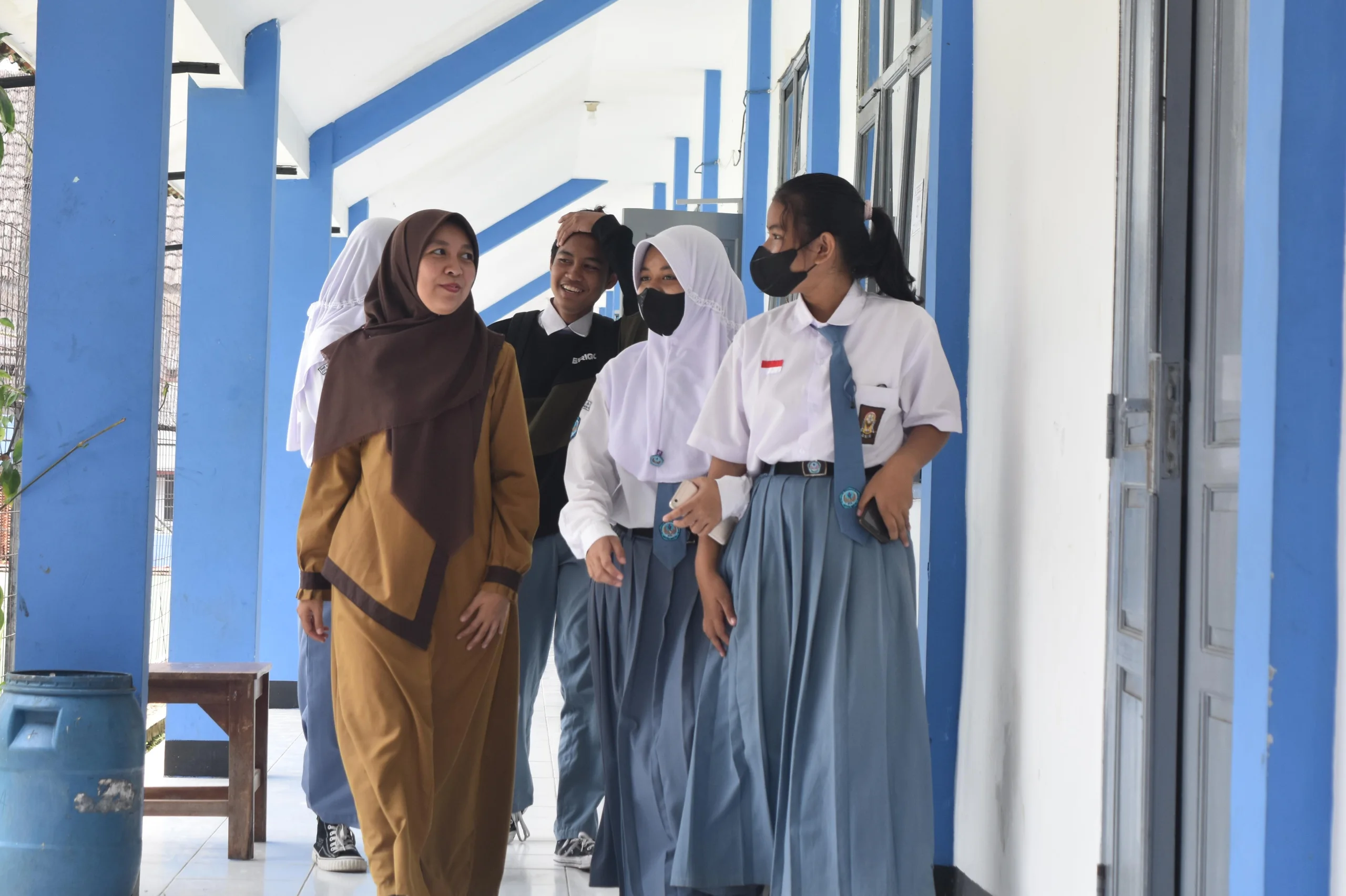
Teachers need to create learning experiences that allow students to discuss, ask questions, express opinions, and respect the views of others.
Hijriyah and her colleagues (2024) discussed innovations in learning media through interactive media exhibitions aimed at fostering motivation among Islamic education students to develop engaging learning materials.
This innovative idea is relevant for encouraging the creation of more participatory classrooms.
In practice, teachers can use group discussions, project-based learning, educational games, and digital media to introduce the values of tolerance and national life.
For instance, students can be invited to discuss examples of Indonesian society, which consists of diverse religions, cultures, and traditions. Through such discussions, they learn that diversity is not a threat, but a social reality that must be respected.
This is where the value of religious moderation or wasathiyah can be introduced concretely.
Religious moderation includes a commitment to the nation, tolerance, rejection of violence, and appreciation for local traditions, provided they do not contradict basic religious principles.
These values are more easily understood when students have the opportunity to practice them directly.
The Role of School Culture in Shaping National Character
Character building cannot be achieved solely through classroom lessons. School habits and culture also have a significant influence on student attitudes.
In the world of education, this process is known as the hidden curriculum , which refers to the learning of values that occurs through the culture, rules, interactions, and daily habits within the school environment.
In pesantren and madrasa environments, the hidden curriculum can be realized through various activities that connect religious values with national responsibility.
The flag-raising ceremony every Monday, for example, is not just a ceremonial activity. If conducted with the right understanding, it can serve as a means to instill discipline, respect for state symbols, and an awareness of the importance of unity.
The same applies to Scout activities, which teach cooperation, leadership, independence, and environmental awareness.
These values are linked to the principle of mutual cooperation in Pancasila as well as Islamic teachings regarding mutual assistance and social responsibility.
On the other hand, the habituation of religious activities such as Dhuha prayers, congregational Zuhur prayers, and reciting the Quran can help build the spiritual discipline of students.
However, such habituation must be accompanied by the teacher's example and an educational environment that respects differences, upholds justice, and rejects discriminatory actions.
Dzofir and Nur (2024), in their study on the integration of religious moderation values in pesantren, highlight the importance of education in shaping a generation that is tolerant and possesses a moderate understanding of Islam.
This means that the success of character education is not measured solely by the number of religious or national activities held by the school, but by how these values are reflected in the behavior of the students.
Maintaining National Unity Starts with Education
Maintaining the integrity of the NKRI is not just the responsibility of the government, security forces, or community leaders. The world of education plays an equally important role in building the national consciousness of the younger generation.
Through education, students can understand that being a devout religious person is not contradictory to their responsibilities as citizens.
On the contrary, a religious understanding that upholds justice, brotherhood, and respect for others can strengthen the commitment to maintain Indonesia's unity.
The Merdeka Curriculum opens opportunities for schools and madrasas to present learning that connects knowledge, spiritual values, and social experience in a more meaningful way.
Nevertheless, its success depends on the readiness of teachers, school culture, family support, and the consistency of educational institutions in providing role models.
Ultimately, caring for the NKRI does not always have to be done through speeches about nationalism or long debates about the relationship between religion and the state.
Such efforts can start with simple things: getting students accustomed to respecting friends who have different opinions, acting fairly, working together, obeying rules, and understanding that national life requires shared responsibility.
When the values of Islam and Pancasila are truly present in daily educational practice, the classroom is no longer just a place to acquire knowledge.
The classroom also becomes a place for the growth of a generation that possesses strong convictions, open-mindedness, social concern, and love for the homeland.
Because the future of Indonesia's unity is determined not only by major decisions at the state level but also by the values instilled in the nation's children from the moment they sit in school benches.
Bibliography
Cahyanto, B., Suwandayani, B. I., Badaruddin, S., Kamarzaman, M. H., & Syafuddin, A. (2024). The internalization of the Pancasila and Rahmatan Lil Alamin student profiles dimensions in the implementation of the Merdeka Curriculum. Cendekia: Jurnal Kependidikan dan Kemasyarakatan, 22(2), 224–241. https://doi.org/10.21154/cendekia.v22i2.9906
Dzofir, M., & Nur, D. M. M. (2024). Integration of religious moderation values in education at Islamic boarding schools: Building a tolerant and Islamic generation. Edukasia: Jurnal Penelitian Pendidikan Islam, 19(2), 347–368. https://doi.org/10.21043/edukasia.v19i2.30681
Hijriyah, U., Baharudin, Fiteriani, I., Fitriati, & Azizah, N. (2024). Innovative learning media exhibition: Cultivating motivation among Islamic education students to create engaging learning media. Edukasia: Jurnal Penelitian Pendidikan Islam, 19(2), 369–388. https://doi.org/10.21043/edukasia.v19i2.28599
Ibda, H. (2017). Konsep hubbul wathan minal iman dalam pendidikan Islam sebagai ruh nasionalisme. International Journal Ihya' 'Ulum al-Din, 19(2), 245–270. https://doi.org/10.21580/ihya.18.1.1740






Comments 0
Write a Comment Share your response