

JurnalPost.com - Have you ever heard a clicking sound in your jaw while yawning, chewing food, or opening your mouth? Some people may have experienced this but do not consider it a major issue, especially if the sound is not accompanied by pain.
However, there are important facts to know about this condition. A clicking sound in the jaw does not always indicate joint damage. Nevertheless, if it is accompanied by pain, difficulty opening the mouth, or discomfort while chewing, the condition requires attention.
One disorder associated with these symptoms is Temporomandibular Disorders (TMD), which involves the jaw joint, the muscles used for chewing, and the surrounding tissues.
Understanding the Temporomandibular Joint and Its Function
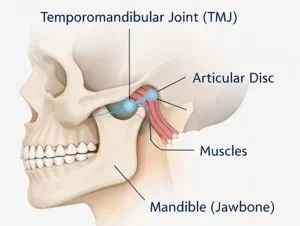
The temporomandibular joint or Temporomandibular Joint (TMJ) is the joint that connects the lower jaw to the skull. It is located near the ear and plays a vital role in various daily activities, such as speaking, chewing, swallowing, and yawning.
Although relatively small, this joint has a complex structure involving bones, the articular disc, ligaments, and surrounding muscles. All these components must work in coordination for the jaw to move properly.
When a disorder affects one of these parts, a person may experience pain, clicking sounds in the jaw, or difficulty opening and closing the mouth.
What Causes Clicking Sounds in the Jaw?
Temporomandibular disorders do not always stem from a single cause. Several contributing factors include the habit of grinding teeth (bruxism), clenching the jaw too tightly, a history of injury, and psychological factors such as stress and anxiety.
When someone is stressed, for example, they may unconsciously tighten their jaw muscles or clench their teeth for extended periods. If these habits persist, the chewing muscles can become tense and cause discomfort.
Research by Lai, Damayanti, and Wulansari (2023) on 45 students also found that 33 respondents experienced temporomandibular disorders based on questionnaire assessments.
These findings indicate that jaw disorders can also be found in young adult groups, meaning they are not just a concern for the elderly.
The impact of this disorder is sometimes greater than imagined. Imagine feeling pain every time you chew food or struggling to open your mouth while speaking. Simple activities that are usually done without a second thought can become uncomfortable.
In some cases, symptoms may also be accompanied by headaches around the temples and pain in the facial muscles. If this continues, the condition can disrupt daily activities and reduce a person's quality of life.
Therefore, while a clicking jaw sound should not immediately be considered a serious problem, it should not be ignored if it is accompanied by other symptoms.
The Role of Physiotherapy in Treating Jaw Disorders
So, how can physiotherapy help address these issues?
Physiotherapy is often known for treating back pain, sports injuries, or movement disorders in the limbs. However, the scope of physiotherapy also includes disorders of the face and jaw area.
In cases of TMD, physiotherapists can use several approaches, such as exercise therapy, manual therapy, and patient education.
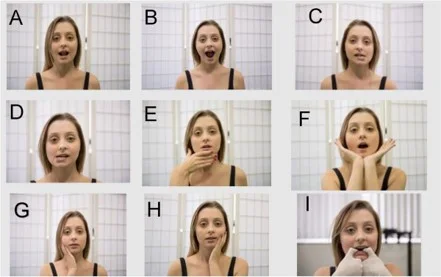
One form of exercise that may be prescribed is controlled jaw movement. This exercise aims to improve the ability to open and close the mouth, reduce stiffness, and improve the coordination of the muscles involved in jaw movement.
The type of exercise and treatment must, of course, be tailored to the results of each individual's examination.
This is supported by research from Cahyani, Chairunnisa, and Akma (2024), who conducted a systematic review of seven research articles on the management of temporomandibular disorders.
The study compared exercise therapy with occlusal splinttherapy, which involves a special device worn on the teeth to help manage certain jaw disorders.
The review results showed that both approaches have comparable effectiveness in reducing pain and improving limitations in mouth opening.
These findings demonstrate that exercise therapy can be a conservative treatment option for patients with temporomandibular disorders, although the choice of intervention should still consider the patient's specific condition.
Effectiveness of Jaw Exercises Based on Research
Another study conducted by Chairunnisa, Nasution, and Maheswari (2024) also discussed the influence of jaw exercises on the severity of temporomandibular disorders.
The study involved 30 respondents who had TMD complaints. The results showed that 24 respondents, or approximately 80%, experienced a change in severity levels after performing jaw exercises.
The analysis also showed a significant difference between the conditions before and after the exercises.
Although these results are promising, the relatively small number of respondents is a limitation of the study. Therefore, these results cannot yet be used as a basis to conclude that jaw exercises will yield the same results for everyone.
How to Maintain Jaw Joint Health
In addition to physiotherapy, the public can start paying attention to habits that potentially strain the jaw joint.
For example, avoid the habit of chewing excessively hard foods, do not force the mouth to open too wide, and reduce the habit of clenching teeth when not necessary.
If the jaw feels painful or becomes increasingly difficult to move, an examination by a dentist or a healthcare professional specializing in musculoskeletal disorders can help determine the cause.
Jaw exercises should also be performed according to the guidance of a healthcare professional to avoid worsening the symptoms.
Conclusion
Ultimately, a clicking sound in the jaw is not always a sign of joint damage. However, when the sound is accompanied by pain or limited movement, the condition requires further attention.
Temporomandibular disorders may sound simple, but their impact can affect daily activities.
Through education and appropriate treatment, physiotherapy can be part of the effort to help restore jaw movement function.
Maintaining health is not just about ensuring the body can walk and move well, but also about paying attention to parts of the body that are often used unconsciously, including the jaw joint.
References
Cahyani, I., Chairunnisa, R., & Akma, A. N. (2024). Evaluation of the effectiveness of occlusal splint therapy and exercise therapy on temporomandibular disorders: A systematic review. Padjadjaran Journal of Dental Researchers and Students, 8(3), 263–270. https://doi.org/10.24198/pjdrs.v8i3.58960
Chairunnisa, R., Nasution, H., & Maheswari, U. (2024). The difference in severity of temporomandibular joint disorders before and after jaw exercises. COMSERVA: Jurnal Penelitian dan Pengabdian Masyarakat, 3(10), 4075–4085. https://doi.org/10.59141/comserva.v3i10.1199
Garrett, A., Gonzalez, D. A. B., & Sonza, A. (2025). Therapeutic exercises, manual therapy, and health education program for adolescents with temporomandibular disorders: Face-to-face and online multimodal rehabilitation protocol for a randomized controlled clinical trial. Trials, 26, Article 54. https://doi.org/10.1186/s13063-024-08642-4
Lakeview Chiropractic. (2022, April 15). Understanding TMJ & jaw discomfort in Calgary. https://www.lakeviewchiropractic.ca/blog/chiropractors-may-help-tmj
Lai, S., Damayanti, L., & Wulansari, D. (2023). Gangguan sendi temporomandibular akibat ruang edentulous pada usia dewasa muda: Penelitian deskriptif. Padjadjaran Journal of Dental Researchers and Students, 7(1), 13–18. https://doi.org/10.24198/pjdrs.v7i1.37693









Comments 0
Write a Comment Share your response