


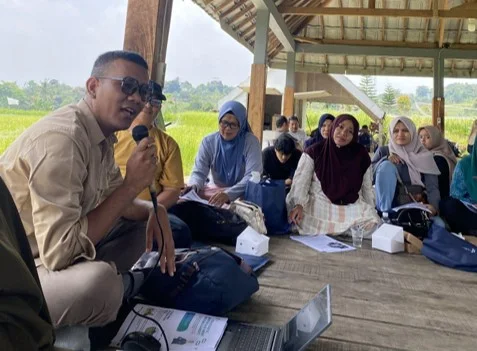
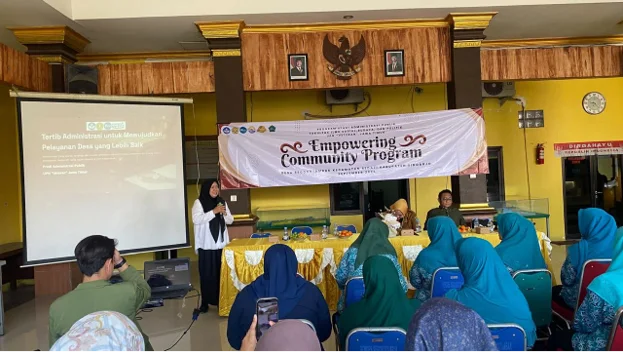
Bogor, JurnalPost.com — A total of 35 participants from Micro, Small, and Medium Enterprises (MSMEs) and the community of Mulyaharja, Bogor City, attended a digital marketing training session organized by lecturers from the Food Quality Assurance Supervisor (SJMP) study program at IPB University's Vocational School on September 20, 2026.
This training is part of a Community Service (PPM) initiative aimed at helping local business owners leverage digital technology to introduce their products and reach a wider market.
Amidst changing consumer habits in seeking information and shopping, the ability to use social media for business purposes is increasingly essential. However, digital marketing is not merely about uploading product photos or offering goods over the internet.
Business owners also need to understand who their potential customers are, how to communicate product advantages, and how to build communication that attracts attention and retains customers.
These issues were a primary focus of the training held in the Mulyaharja sub-district.
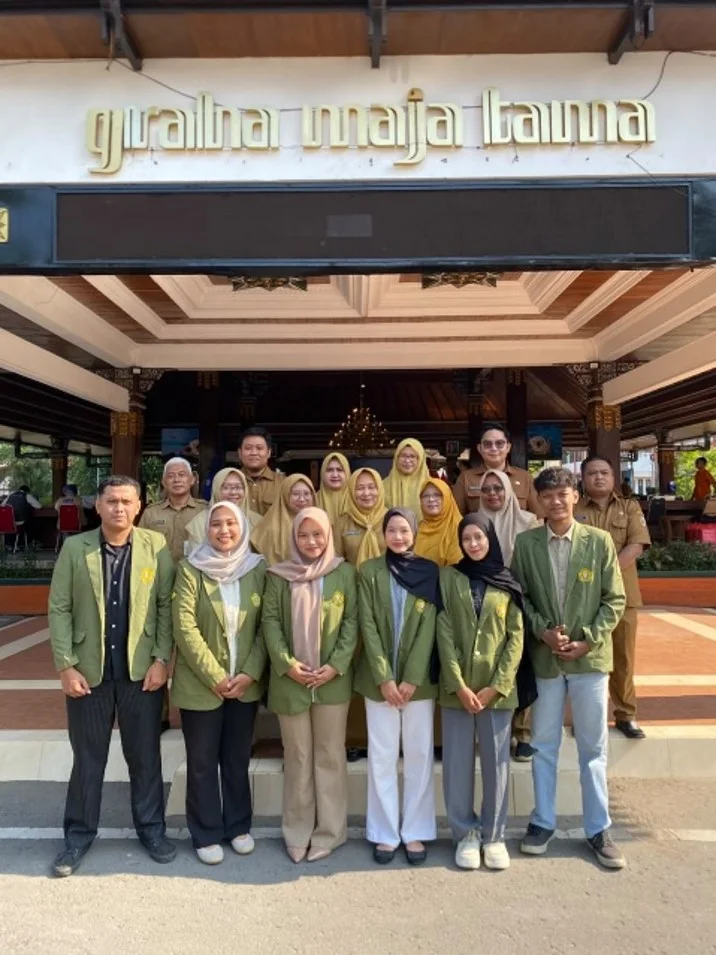
The event was attended by Mulyaharja Sub-district Head Muslim Yuliantono, S.Sos., Sub-district Secretary Taufik Hidayat, Head of the Economy and Development Section Rosani Sutawijaya, S.H., Chairman of the Bangkit MSME Group Yunto Mardanus, and Mulyaharja Field Agricultural Extension Worker (PPL) Agus Faisal.
Learning to Identify Consumers and Create Marketing Content
The training material was presented by Dr. Doni Sahat Tua Manalu, S.E., M.Si., who discussed various digital marketing approaches that MSMEs can apply according to the scale and characteristics of their businesses.
One key point of focus was the importance of identifying target consumers before determining a marketing strategy.
By understanding the needs and habits of potential buyers, business owners can choose the types of content, promotional messages, and communication channels that are most appropriate.
Participants also received material on social media usage, marketing content creation, and how to build a business identity in the digital space.
Business identity is an equally important aspect. Amidst the many similar products offered online, product presentation and information can influence consumer interest.
Clear product photos, easy-to-understand descriptions, and responsive communication can help potential buyers recognize the products being offered.
Furthermore, consistency in managing business accounts was also highlighted. Social media used for sales needs to be managed in a planned manner so that product information can reach consumers sustainably.
Through this approach, participants were encouraged to understand that digital marketing does not have to start with complex technology or large promotional costs.
MSME players can start by optimizing the platforms they already use in their daily activities.
Opening Market Opportunities Outside Mulyaharja
The use of digital technology provides opportunities for MSME products to be known by people outside the immediate vicinity of the business.
Products that were previously marketed mostly directly to local residents now have the potential to reach consumers from other regions through online marketing channels.
However, wider reach does not automatically increase sales. Business owners must still pay attention to product quality, accuracy of information, customer service, and the alignment of marketing strategies with market needs.
This is one of the reasons why improving digital skills for MSME players is so important.
For the Mulyaharja community, the training also opened up space to understand how the potential of local products can be introduced through digital media in a more targeted manner.
Collaboration between universities, the sub-district government, and local business groups is expected to support the capacity building of MSME players, especially in facing increasingly open market competition.
Participant Understanding Measured through Pre-test and Post-test
The training was not limited to the delivery of material. The IPB University Vocational School Community Service team also conducted evaluations to measure participant understanding.
The evaluation was carried out through a pre-test before the training and a post-test after all material had been presented.
The pre-test was used to determine the extent to which participants understood the basic concepts of digital marketing, including the use of social media for business activities.
Meanwhile, the post-test was conducted to observe changes in participant understanding after attending the learning sessions.
The results of both measurements can serve as a basis for the implementation team to assess the effectiveness of the training while identifying material that still needs to be strengthened.
However, the specific evaluation scores and the extent of the increase in participant understanding were not included in the available activity information.
Implementing Strategies as the Next Challenge
After attending the training, the next challenge for participants is to apply the knowledge gained to their respective business activities.
This implementation can be done gradually, starting from improving product presentation, compiling clearer sales information, to building routine communication with customers through digital platforms.
For small-scale businesses, simple steps taken consistently can be the beginning of improving marketing.
Follow-up assistance is also an important aspect so that the material obtained does not stop as knowledge gained during the training.
Through this Community Service activity, IPB University's Vocational School strives to connect academic knowledge with the real needs of business players at the local level.
The success of the program is ultimately measured not only by the number of participants who attended or their understanding of the material, but also by the extent to which digital marketing strategies can be applied to help Mulyaharja MSMEs develop their businesses sustainably.






Comments 0
Write a Comment Share your response