

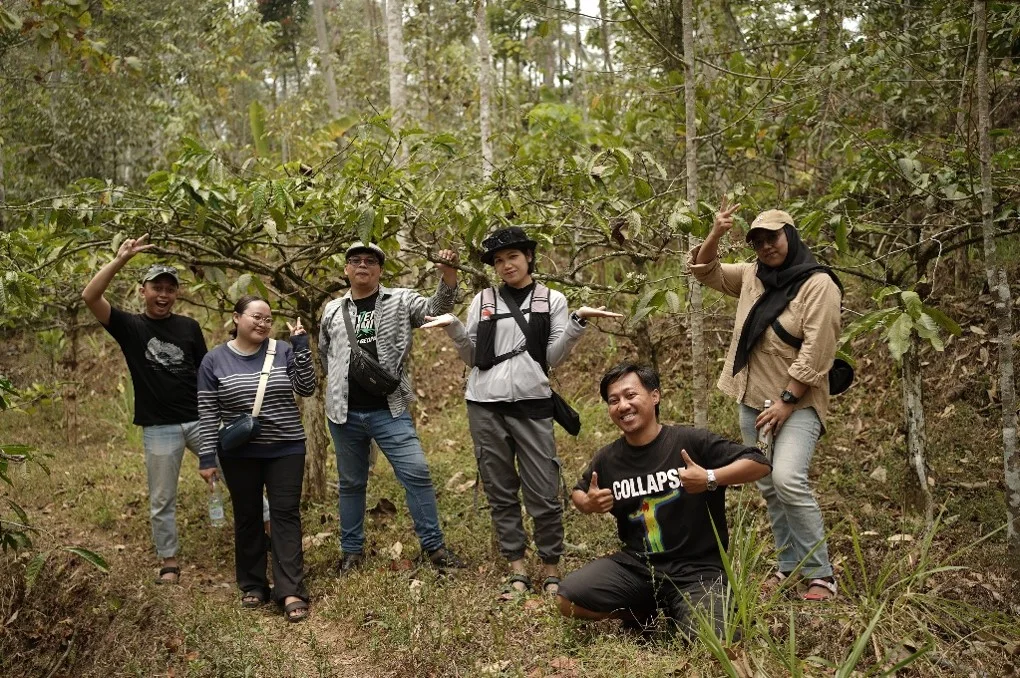
JOMBANG, JurnalPost.com – Enjoying a cup of coffee does not always have to start at a cafe table. In Wonosalam Village, Jombang Regency, East Java, the experience of getting to know coffee can begin by walking through plantations, observing plants firsthand, and listening to stories about the history and flavor profiles of coffee in the very environment where it grows.
This experience is part of the Telusur Rasa: Coffee Education in Wonosalam Village activity conducted by lecturers from the Universitas Pembangunan Nasional (UPN) “Veteran” East Java.
The activity aims to identify the potential for education- and nature-based tourism as part of the preparation for a Coffee and Mangrove Summer Coursetour package.
Through this initiative, plantation areas are viewed not only as sites for agricultural commodity production but also as learning spaces that offer direct experiences for visitors.
Trekking Through Plantations and Discovering Excelsa Coffee
The journey began at a meeting point in the Sumber Wandhe area, Wonosalam. From there, the group continued on foot, trekking through the plantation areas that define the region's landscape.
Throughout the journey, participants were invited to observe various types of coffee plants growing in the area. One prominent variety encountered was Excelsa coffee, known for its unique characteristics and flavor profile.
The direct introduction to coffee plants provided an engaging experience, as participants did not merely receive information through explanations but were able to see the condition of the plants and the environment where the coffee thrives.
This activity provided an opportunity to understand the relationship between agricultural commodities, natural conditions, and the potential for developing educational tourism.
The exploration continued through a snake fruit (salak) plantation. The presence of these plants amidst the coffee landscape highlights the diversity of agricultural commodities found in Wonosalam.
For tourism development, this diversity represents potential that can be packaged as a learning experience regarding agriculture and rural life.
Tourists are not only invited to enjoy the scenery but can also gain knowledge about the plants they encounter along the way.
Enjoying Coffee by the Riverside
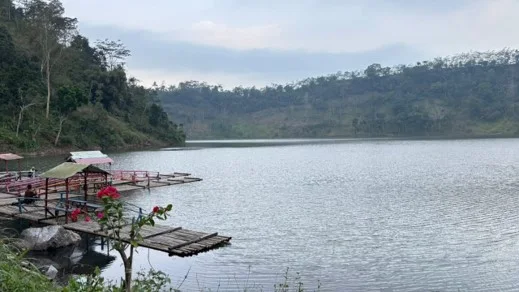
One of the highlights of the Telusur Rasa activity occurred when the group stopped by the riverbank to rest.
Amidst the beautiful natural surroundings and the sound of flowing water, participants enjoyed coffee and light snacks. This atmosphere served as a space to share stories and knowledge about coffee.
The conversation flowed casually, covering topics from coffee history and the characteristics of various coffee types to the experience of identifying the flavors and aromas of the coffee served.
This simple moment demonstrated how tourism activities can be developed into educational experiences without relying on complex facilities.
The natural environment becomes part of the learning experience, while coffee acts as a medium that connects knowledge, stories, and local potential.
Enjoying coffee by the riverbank certainly offers a different atmosphere compared to drinking it in a cafe. Visitors can feel a closer connection between the product they are enjoying and the environment from which it originates.
This type of experience is a key opportunity in the development of experiential tourism, or experiential tourism, an approach that encourages visitors to engage directly in activities and learning throughout their journey.
Coffee as a Medium for Education and Local Potential
The Telusur Rasa activity demonstrates that coffee has potential far beyond being a mere agricultural commodity or beverage product.
Behind every cup of coffee lies a cultivation process, knowledge of the plants, environmental characteristics, and stories related to the lives of the local community.
These various elements can become compelling learning materials if packaged within educational tourism activities.
Through this approach, tourists do not just come to see plantations or taste coffee; they also gain the opportunity to understand the processes and stories behind the product.
Developing coffee-based educational tourism also has the potential to open spaces for local community involvement, particularly for farmers and business owners associated with coffee commodities.
The knowledge and experience of the community can be a vital part of introducing the characteristics of Wonosalam coffee to visitors.
However, such development still requires careful planning, including the design of activity flows, facility readiness, visitor safety, and community involvement in tourism management.
In this way, tourism activities can provide meaningful experiences for visitors while supporting the sustainability of local potential.
Opportunities for the Coffee and Mangrove Summer Course
Identifying tourism potential through the Telusur Rasa activity is a step in preparing the Coffee and Mangrove Summer Coursetour package.
This concept opens opportunities to combine learning experiences regarding agricultural commodities with an introduction to the natural environment within an educational program.
Wonosalam possesses a plantation landscape that can be utilized as a field learning space, specifically to introduce the relationship between agriculture, the environment, and tourism.
Through structured activities, program participants are expected to not only gain theoretical knowledge but also understand regional potential through direct experience.
Plantation exploration, coffee variety identification, agricultural commodity observation, and knowledge-sharing sessions can all be part of the design of this tourism experience.
Beyond providing educational value, developing such programs also offers the opportunity to introduce Wonosalam's potential to a wider audience.
Tourism Is Not Always About Popular Destinations
The Telusur Rasa experience in Wonosalam shows that a region's tourism potential does not always have to rely on famous tourist attractions.
Plantations, rivers, agricultural products, and community stories can become attractions if developed through the right educational approach and tourism interpretation.
In this context, the visitor's experience becomes an essential part of a destination's value.
Tourism is not measured solely by the number of places visited, but also by the knowledge, interaction, and experience gained during the journey.
The Telusur Rasa activity provides an initial overview of how local potential can be identified to support the development of educational tourism in Wonosalam Village.
From trekking through plantations to enjoying coffee by the river, there is an experience that connects nature, agriculture, and knowledge into a single series of activities.
Ultimately, getting to know a region is not always enough by just visiting its tourist destinations. Sometimes, more meaningful experiences are found when someone takes the time to walk through the environment, listen to stories, and understand the life that grows within it.
In Wonosalam, the journey of getting to know coffee is one way to discover that experience.


Comments 0
Write a Comment Share your response