

JurnalPost.com - Rivers play a vital role in community life. Beyond being part of the ecosystem, they are closely linked to the cleanliness, health, and comfort of our living environment. Unfortunately, the awareness required to keep rivers clean remains an issue that demands collective attention.
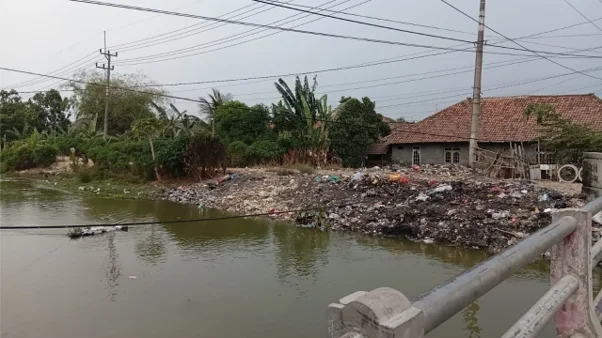
Waste piling up along riverbanks is no longer an unfamiliar sight in many areas. A similar condition is visible in Gintung Lor. Based on direct observation, piles of trash were found on the riverbank. Furthermore, there are still instances of residents disposing of waste directly into the river flow.
Such sights are certainly concerning. However, the waste problem should not be an excuse for finger-pointing. Instead, this condition should serve as a reminder that protecting the environment is a shared responsibility, both for the community and the local government.
River cleanliness cannot be solely burdened upon sanitation workers or specific parties. Every individual has a role to play through simple habits, ranging from disposing of trash in designated places to helping maintain the cleanliness of the surrounding environment.
More than just an environmental issue, caring for rivers is actually closely related to the values of Pancasila, which serve as the guiding principles for the Indonesian nation.
Practicing Pancasila Through Environmental Stewardship
Pancasila has long been known as the foundation of the state, studied since our school days. However, understanding Pancasila is not enough if it is limited to memorizing its five principles. These values must be manifested through concrete attitudes and actions in daily life.
One simple form of practicing Pancasila is maintaining environmental cleanliness, including that of our rivers.
The second principle, Just and Civilized Humanity, teaches the importance of respecting the rights and interests of fellow human beings. When someone litters in a river, the impact is not only felt by themselves but also affects the surrounding community.
A river filled with trash has the potential to cause pollution, disrupt comfort, and increase health risks. Therefore, keeping the river clean is a form of care for the safety and well-being of others.
Meanwhile, the third principle, The Unity of Indonesia, contains values of togetherness and mutual cooperation (gotong royong). Waste issues will be difficult to resolve if the community relies only on individual actions without cooperation.
Activities such as cleaning the environment, providing communal trash bins, and reminding one another not to litter are simple examples of applying the value of unity.
Mutual cooperation is not just about cleaning the environment together; it also reflects the awareness that the community's interests must be placed above indifference toward the environment.
Pancasila values are also reflected in the fifth principle, Social Justice for All the People of Indonesia. Every citizen has the right to enjoy a clean, healthy, and comfortable environment.
However, this right must go hand-in-hand with the obligation to protect the environment. At the same time, the government and relevant parties have a responsibility to provide adequate waste management facilities so that the community can adopt clean living habits more easily.
Thus, protecting rivers is not just a matter of cleanliness, but also part of an effort to realize a society that is caring, united, and just.
Changing Community Habits Through Simple Steps
One of the challenges in maintaining river cleanliness is changing long-standing community habits.
Appeals not to litter may be heard often. However, such messages will not yield meaningful change if they are not followed by awareness and concrete action.
Change can actually start from the closest environment: the home.
Every family can get into the habit of disposing of trash in its proper place, sorting waste by type, and reducing the use of single-use items that contribute to waste volume.
These habits may seem simple, but if done consistently by many people, the impact can help reduce environmental pollution.
Families also play an important role in building awareness from an early age. Children tend to learn through the behavior of the adults around them.
When parents make it a habit to maintain cleanliness, children receive a concrete example of the importance of being responsible for the environment.
Conversely, if children are accustomed to seeing adults litter, that behavior risks being perceived as normal.
Therefore, environmental education should not only be conveyed through advice but also demonstrated in daily actions.
Mutual Cooperation as a Force for Protecting Rivers
Beyond individual habits, community involvement is a crucial factor in maintaining river cleanliness.
Community service activities (kerja bakti) can be a step toward clearing trash that has accumulated around riverbanks. Through these activities, the community not only protects the environment but also strengthens social bonds among residents.
However, maintaining river cleanliness is not enough if done only through occasional community service. Sustainable awareness is needed so that trash does not pile up again after the cleanup is finished.
Education regarding waste management also needs to be carried out continuously. Residents can remind each other politely when they encounter behavior that could potentially pollute the environment.
An approach that prioritizes communication and shared awareness is better than actions that shame or corner specific parties.
On the other hand, the role of village governments and relevant agencies cannot be ignored.
Providing easily accessible waste disposal sites, regular collection systems, and environmental education programs can help the community build better habits.
Without adequate facilities, efforts to change community behavior may face various obstacles. Therefore, individual responsibility and government support must go hand-in-hand.
The River in Gintung Lor as a Shared Reminder
The condition of the riverbank in Gintung Lor, where piles of trash are still found, serves as a reminder that environmental issues require real attention.
This problem is not merely about who threw the trash or who is tasked with cleaning it. More importantly, this condition shows the importance of building a collective awareness that the environment is a shared living space.
Every action has consequences. When someone chooses to throw trash into the river, the impact is potentially felt by other members of the community. Conversely, when someone starts maintaining cleanliness, they have made a positive contribution to their surrounding environment.
Humanitarian values can be realized through concern for the health and comfort of the community. The value of unity is seen in the cooperation to protect the environment, while the value of social justice is reflected in efforts to provide a clean and decent environment for all citizens.
The application of these Pancasila values does not always require grand gestures. Rather, through simple habits performed consistently, the community can build more sustainable change.
Making Care a Habit
Maintaining river cleanliness is not a responsibility that can be completed in one day. It requires commitment, cooperation, and behavioral changes that are continuously practiced in daily life.
The community can start by not littering, maintaining the cleanliness of the area around their homes, and participating in mutual cooperation activities.
Meanwhile, the government and relevant parties need to support these efforts through adequate facilities and waste management.
A clean river ultimately reflects the community's care for the environment and fellow human beings.
Pancasila should not stop at being a memorized text or a symbol in ceremonial activities. The values contained within it need to be present in concrete actions, including when the community faces waste problems in rivers.
Because bringing Pancasila to life does not always start with something big. Sometimes, that step begins with a simple decision not to litter and a willingness to invite others to protect the environment together.
A clean river is the result of shared care. Protecting it is not just about fulfilling an obligation, but also about valuing life, building togetherness, and bequeathing a better environment to future generations.









Comments 0
Write a Comment Share your response