

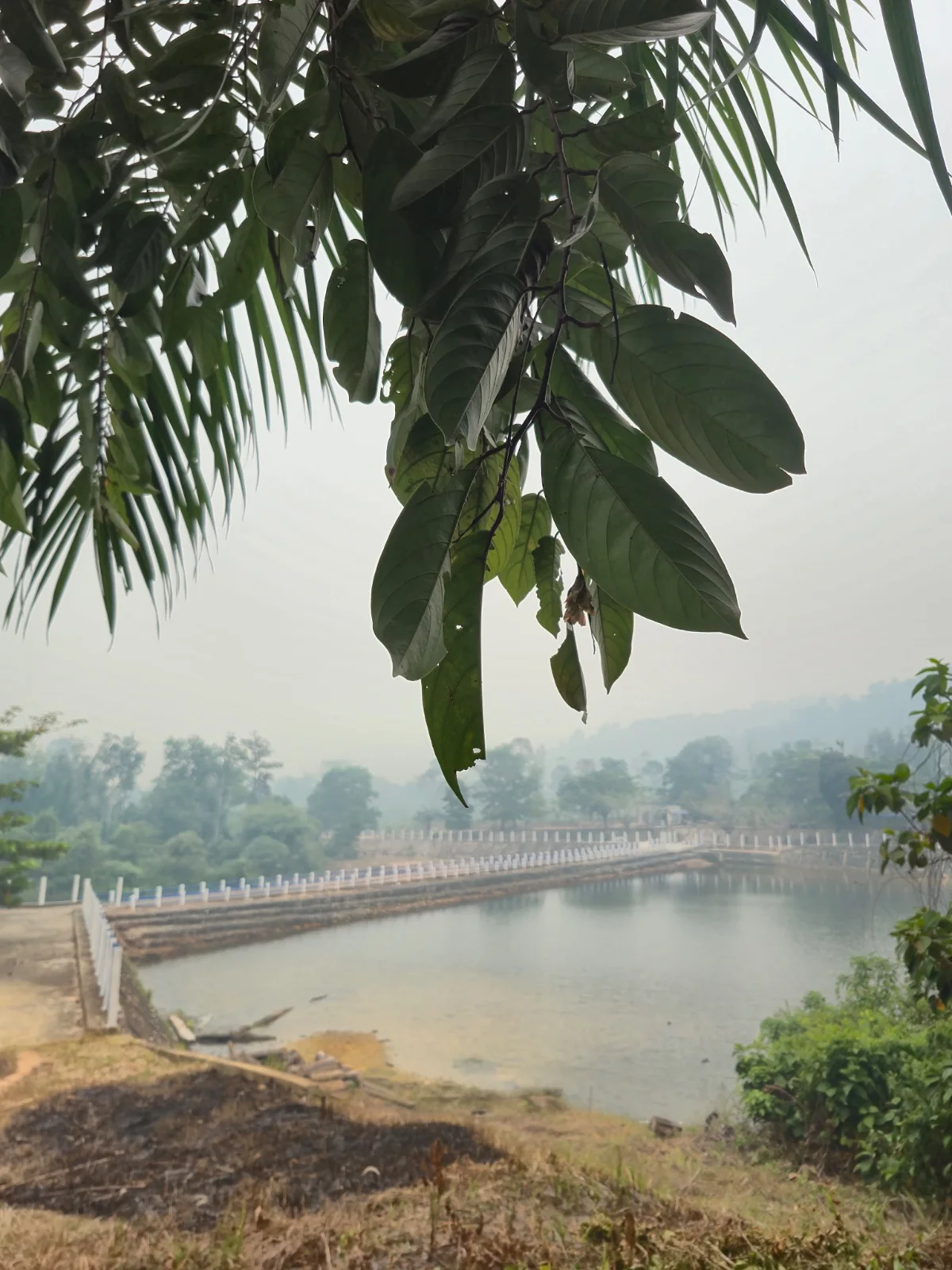
KUBU RAYA, JurnalPost.com – Amidst the coastal landscape of Kubu Raya Regency, West Kalimantan, Ambawang Village holds promising natural resource potential. Smallholder plantations, forest areas, water sources, and traditional crafts are integral to the lives of a community striving to build village self-sufficiency.
However, behind this wealth, the people of Ambawang Village, Kubu District, still face several development challenges. Limited healthcare facilities, the lack of secondary schools, and the condition of connecting roads are issues that require the attention of the government and various stakeholders.
Based on village profile data from 2026, Ambawang Village covers an area of 14,200 hectares with a recorded population of 3,457 people belonging to 1,107 households.
The territory is dominated by 7,410 hectares of smallholder plantations, 3,283 hectares of forest, 1,813 hectares of dry land, and 1,510 hectares of rice fields.
With its vast landscape and diverse natural resources, Ambawang Village has the opportunity to strengthen its agriculture, plantation, water management, and community-based economic sectors.
Community Diversity as a Village Strength
The social life of the Ambawang Village community is characterized by a diversity of religions, cultures, and local traditions that grow side by side.
The community consists of Muslims, Catholics, Christians, and Confucians, with the Dayak people being one of the primary elements shaping the village's cultural identity.
Values of mutual cooperation, togetherness, and social concern are essential parts of daily life.
This spirit is also reflected in the public service approach implemented by the village government.
In certain conditions, village officials provide direct services to the homes of residents who need urgent assistance, including when community members face obstacles in reaching the village office.
The village government also strives to ensure that the distribution of social assistance is well-targeted so that those in need can receive benefits according to regulations.
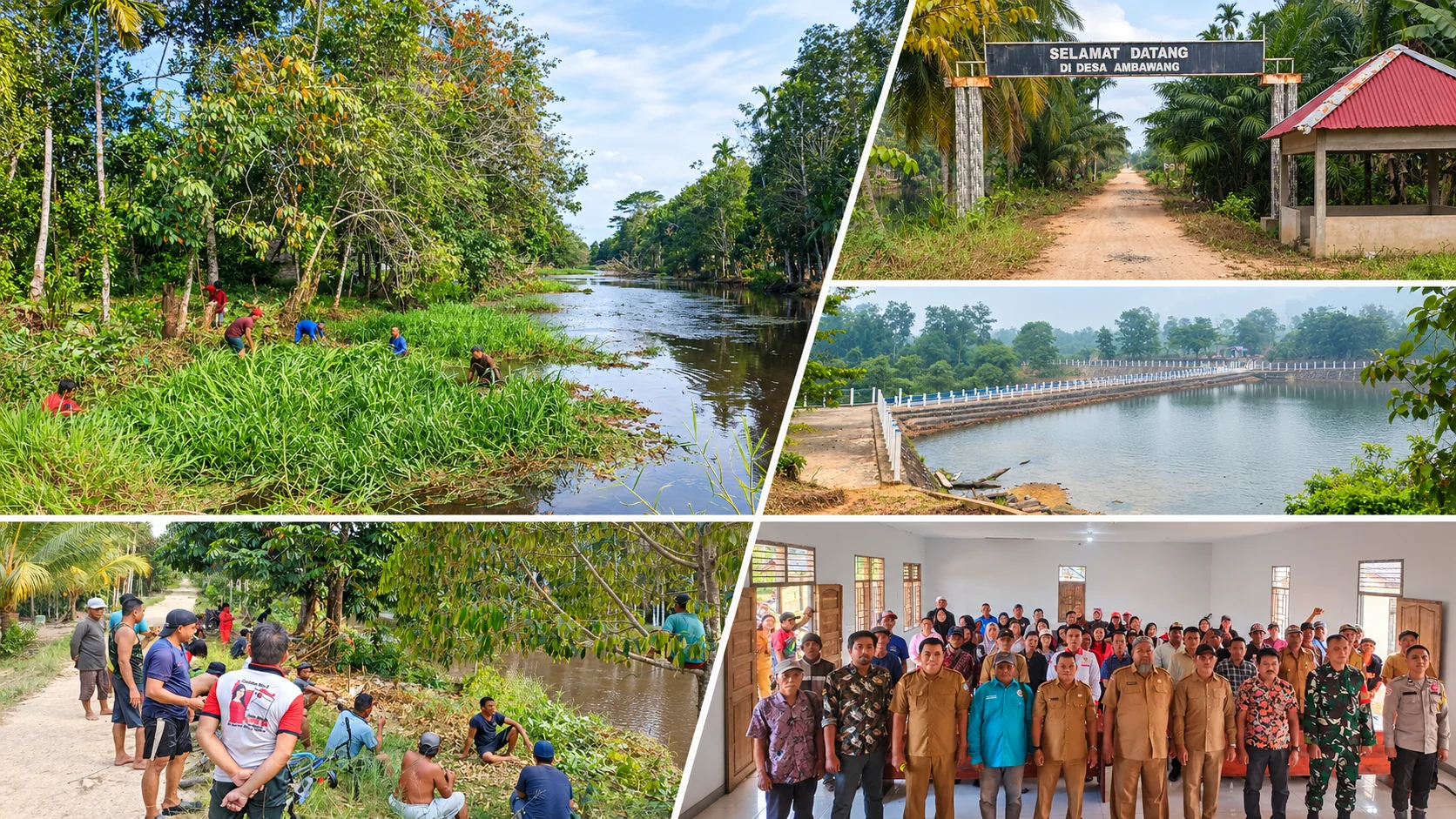
This service approach, which brings the government closer to the residents, is one of the efforts to reach the community in areas with transportation access challenges.
Village Self-Sufficiency through Plantation Yields and Digital Infrastructure
One of the efforts toward self-sufficiency in Ambawang Village is evident in the utilization of village-generated revenue (PADes) derived from palm oil plantation plasma partnerships.
This income is used to support the construction and repair of village infrastructure, including roads that are vital for community activities.
The village government has also introduced Starlink satellite-based internet services at the village office to support connectivity and administrative services.
The availability of internet access is a crucial step, especially for areas facing limited telecommunications networks.
With technological support, administrative services and access to public information are expected to become more easily accessible.
These efforts demonstrate that village development does not always have to wait for large-scale projects but can also begin with the gradual management of local potential and revenue sources.
Parong Reservoir and Mount Ambawang as Strategic Potential
In addition to plantations, Ambawang Village has water resource potential through the existence of the Parong Reservoir, which is connected to the Parong River flow and Mount Ambawang.
Based on infrastructure data from the Kalimantan I River Basin Organization (BWS) in Pontianak, as cited in the village profile, the Parong Reservoir has an inundation area of approximately 0.52 hectares with a storage capacity reaching 23,136 cubic meters.
Its water source comes from the Parong River, which originates in the Mount Ambawang area, with an average discharge reported at approximately 300 liters per second.
The reservoir has a raw water output capacity of 10 liters per second to support community needs.
The existence of this water infrastructure is not only important for meeting basic needs but also opens up opportunities for village economic development.
One idea that could be explored is the management of a community-based drinking water business through the Village-Owned Enterprise (BUMDes).
However, the development of such a business still requires studies on water quality, economic feasibility, necessary permits, and guarantees of resource sustainability.
On the other hand, the Parong Reservoir and Mount Ambawang area also have the potential to be developed as conservation-based nature tourism destinations, while still respecting the primary function of the water source and environmental carrying capacity.
Woven Crafts and Agricultural Produce Hold Economic Potential
Ambawang Village also possesses a wealth of tradition in the form of mat weaving crafts unique to the local community.
This craft is part of the knowledge and skills passed down through generations.
The village profile mentions that these woven products have a history of trade reaching international markets.
This potential can serve as a foundation for developing the craft business through quality improvement, digital marketing, and the involvement of local entrepreneurs.
In addition to crafts, the agriculture and plantation sectors are important pillars of community life.
Commodities such as rice, palm oil, rubber, and sago reflect the diversity of Ambawang Village's produce.
Sustainable development of local commodities has the potential to strengthen food security while increasing sources of community income.
Lacking a Local Health Clinic, Residents Face Healthcare Access Challenges
Amidst these various potentials, the availability of healthcare facilities remains an urgent need for the people of Ambawang Village.
Based on information in the village profile, this area does not yet have its own Auxiliary Community Health Center (Pustu).
Consequently, residents who need healthcare services must access facilities in neighboring villages.
This issue is a concern, especially for vulnerable groups such as pregnant women, toddlers, the elderly, and people who require regular health check-ups.
Although the distance between villages is not always very far, the condition of damaged and potholed connecting roads can slow down travel to healthcare facilities.
This situation potentially poses greater risks when residents face medical emergencies.
Therefore, the construction of a Pustu and the provision of healthcare workers who can serve the community regularly is one of the residents' main hopes.
The presence of healthcare facilities within the village is expected to shorten travel time, expand access to basic services, and improve the quality of public health.
Residents Hope for Junior and Senior High Schools in Ambawang Village
Another equally important issue is access to education for the younger generation.
Currently, according to information provided by the village government, Ambawang Village has three elementary school (SD) units, while junior high school (SMP) and senior high school (SMA) facilities are not yet available in the village area.
This condition forces children who wish to continue their education to travel outside the village.
For families with limited transportation, the distance to school and road conditions are significant challenges.
The Ambawang Village Government continues to push for proposals to build secondary education facilities so that children have the opportunity to learn closer to home.
The presence of SMP and SMA is expected to expand access to education, reduce travel burdens, and support the improvement of human resource quality.
However, the realization of a new school needs to be supported by studies on student needs, the availability of educators, and the planning of adequate facilities and infrastructure.
Government and Private Sector Synergy for the Future of Ambawang Village
The development of Ambawang Village requires the support of various parties so that the available local potential can be developed optimally.
The village government and the community are opening opportunities for cooperation with the Kubu Raya Regency Government, the Health Office, the Education Office, BWS Kalimantan I, and private parties that have business activities in the relevant area.
Several companies, including PT Sintang Raya and PT MAR, are mentioned as parties expected to become partners in village development efforts.
This cross-sector collaboration is expected to accelerate the fulfillment of basic needs, specifically the construction of a Pustu, the provision of secondary education facilities, road repairs, and the optimization of water resource potential.
On the other hand, support for the development of community businesses is also an important part of ensuring that development does not rely solely on physical infrastructure.
For the people of Ambawang Village, the progress of the village is not merely about the magnitude of the natural potential it possesses, but also about the opportunity to receive healthcare, education, and a better life.
With responsible resource management, a spirit of mutual cooperation, and support from the government and the business world, Ambawang Village has the opportunity to strengthen its self-sufficiency while opening new hope for future generations.



Comments 0
Write a Comment Share your response