


Fauzan Ahmad, Fitri Umayah, Salsabila Zahra, Adhelia Annisa Cahya
Brief of the Story
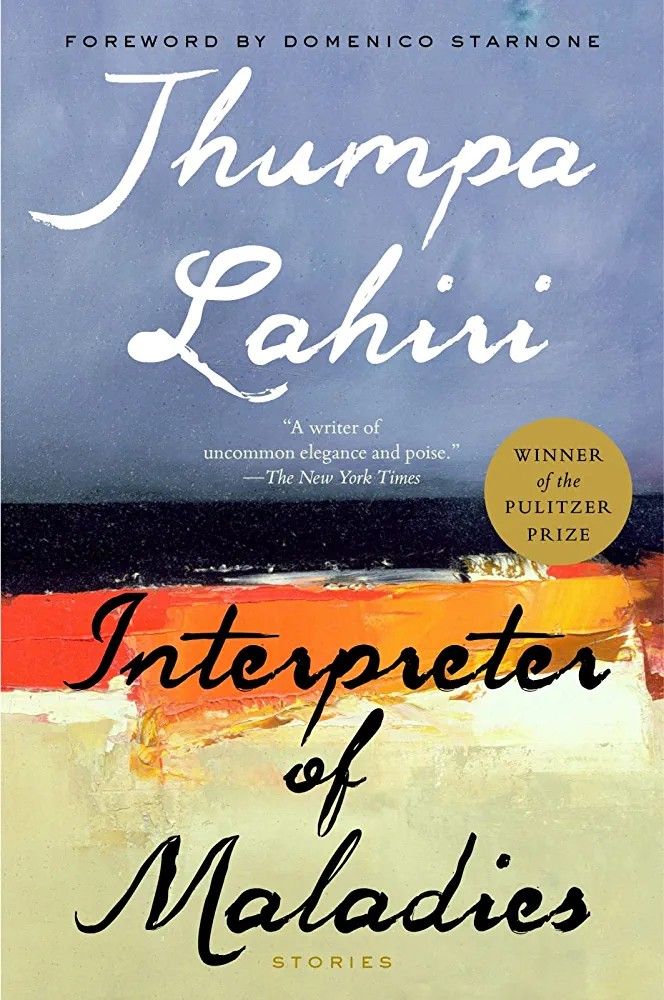
This story follows the travels of an Indian-American family the Das family on vacation in India. They hire a driver and tour guide named Mr. Kapasi, who also works as a translator for doctors’ patients. From the start of the trip, it is clear that the Das family’s relationship is cold and disharmonious. Mr. and Mrs. Das often argue, pay little attention to their children, and seem more like siblings than husband and wife.
During the trip to the Sun Temple in Konarak, Mrs. Das shows interest in Mr. Kapasi’s work as an “interpreter of maladies” (translator of illnesses). This attention made Mr. Kapasi feel appreciated and he began to fantasize about an emotional closeness with Mrs. Das, even imagining a friendship through letters after the trip was over.
However, when they stopped at another tourist spot, Mrs. Das revealed a big secret: one of her children was not her husband’s, but the result of an affair that had taken place years earlier. She admitted to living with guilt and hoped that Mr. Kapasi, as an “interpreter,” could provide her with emotional solutions or comfort.
Mr. Kapasi realized that Mrs. Das was not really interested in him as a person, but was only looking for an outlet and release from her guilt. The romantic fantasy he had built collapsed. Shortly thereafter, Mrs. Das’s child was attacked by a monkey due to parental negligence, creating panic. In the chaos, the paper containing Mr. Kapasi’s address as a symbol of hope for their relationship was blown away by the wind. The story ends with Mr. Kapasi returning to his reality, realizing that the relationship he had imagined never truly existed.
ANALYSIS
Diaspora
Based on this story, it can be seen that there is a small group (the Das family). The Das family consists of Mr. Das, Mrs. Das, and their three children. The Das family is of Indian descent but has lived in America for a long time. However, they returned to India for a visit. During their trip, Mr. Das hired a tour guide named Mr. Kapasi to show them tourist attractions in India and introduce them to Indian culture. Although they are Indian, living in America for so long has meant that they are completely unfamiliar with Indian culture.
Mr. Das himself mentioned that they were raised and born in America; it was not them who migrated, but their parents who migrated in search of decent work in America and are now retired.
“Oh, Mina and I were both born in America,” Mr. Das announced with
an air of sudden confidence. “Born and raised. Our parents live here
now, in Assansol. They retired. We visit them every couple years. ”
In this case, it can be seen that the Das family, who are native Indians, actually feel alienated from Indian culture and even their own region. This is due to the clash between two strong identities (American and Indian). Administratively, they are Americans (an Indian community that has lived in America for a long time). However, they cannot be called Americans because physically, Mr. Das’s family still shows that they are native Indians.
Culture Hybridity
The Das family exemplifies cultural hybridity, physically resembling Indians but dressing and behaving like Americans. “The family looked Indian but dressed as foreigners did, the children in stiff, brightly colored clothing and caps with translucent visors.” “Mr. Kapasi had pressed his palms together in greeting, but Mr. Das squeezed hands like an American so that Mr. Kapasi felt it in his elbow.” The narrative in the story describes how the Das family looked like Indians on the outside, and Mr. Kapasi assumed that Mr. Das would respond to his greeting in the traditional Indian manner, but instead Mr. Das shook hands like an American.
Identity Changes
This shows a change in identity because Mr. Das, who has lived in America for a long time, has adopted the customs and culture there. His identity is no longer singular because there is a mixture of American culture and Indian physical characteristics, like an Indian with an American physique. They consider India to be only a vacation destination, not their country of origin. Moreover, Mr. and Mrs. Das’s children, who were born and raised in America, will consider India not to be their country of origin because they have been mixed with American culture for too long.


