

BOGOR, JurnalPost.com - Stunting prevention efforts do not always require large-scale programs or expensive costs. By utilizing local food sources and implementing Clean and Healthy Living Behaviors (PHBS), families can play a direct role in supporting a child's growth and development from an early age.
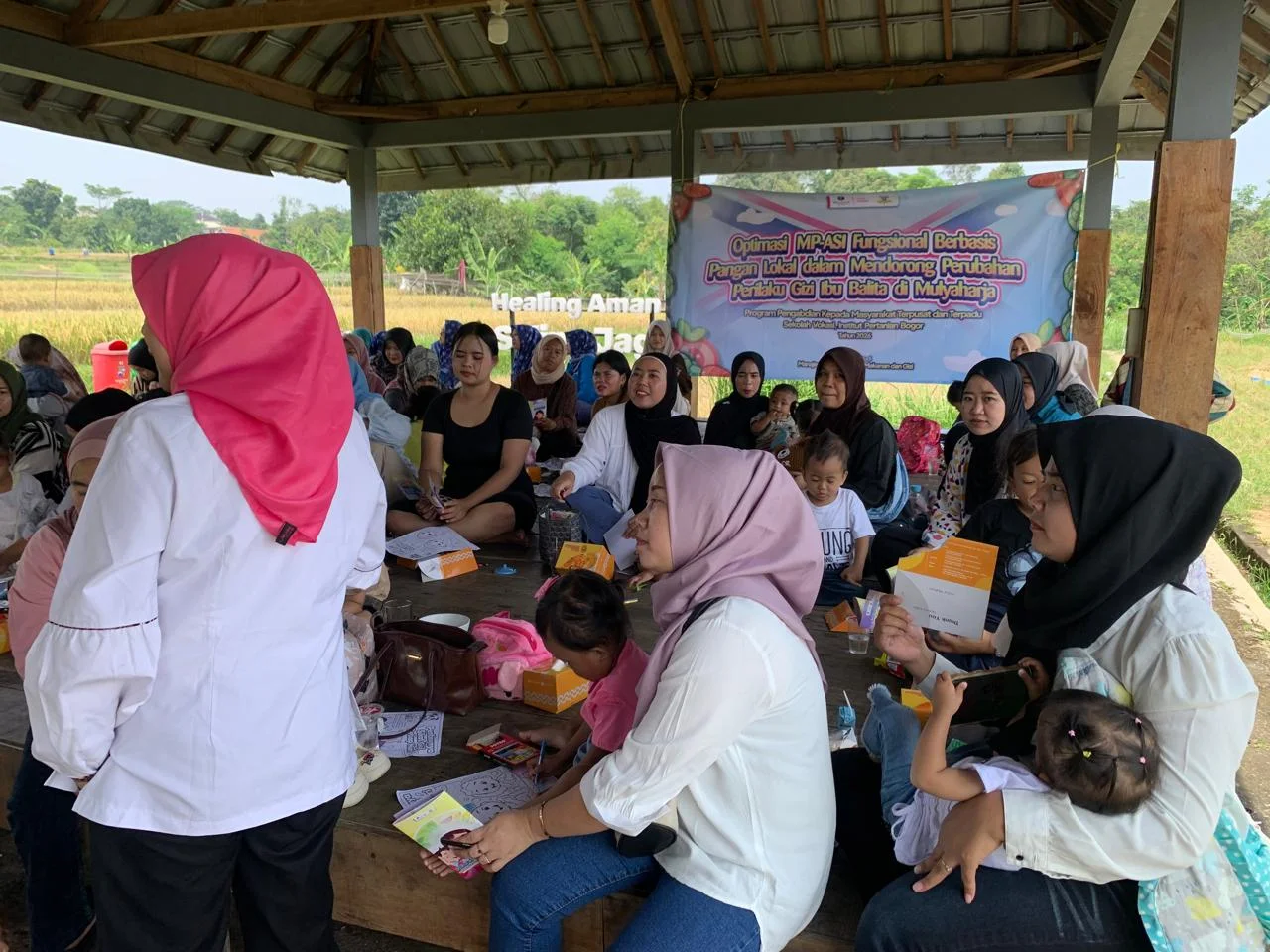
This spirit was evident in the community service activity organized by the Food Service Industry Management and Nutrition Study Program team from the Vocational School of IPB University at Saung AEWO, Mulyaharja Village, Bogor City, on Monday (19/10/2026).
Carrying the theme “Optimal Growth and Development: A Smart Guide to Complementary Feeding (MP-ASI) & Supplementary Feeding (PMT) for Healthy Toddlers”, this activity was attended by dozens of mothers of toddlers and posyandu (integrated healthcare center) cadres who were enthusiastic about learning the importance of balanced nutrition, the use of local food ingredients, and clean living habits in preventing stunting.
The activity, which took place from 08.00 to 12.00 WIB, was led by Ksatriadi Widya Dwinugraha, S.Gz., M.Si., along with the community service team from the IPB University Vocational School.
The atmosphere of the counseling session was warm and interactive. While the mothers followed the material presentation, their children were invited to participate in coloring activities featuring PHBS-themed images with various interesting characters.
These activities not only provided entertainment for the children but also served as a means to introduce healthy living habits from an early age. Consequently, the mothers were able to focus on the counseling session in a comfortable and enjoyable environment.
The Importance of Nutritional Fulfillment in the 1,000 First Days of Life
The counseling session featured Dr. R.A. Hangesti Emi Widyasari, S.Pi., M.Si., as the main speaker. In her presentation, she emphasized the importance of meeting nutritional needs during the 1,000 First Days of Life (HPK), which is the period from pregnancy until the child reaches two years of age.
This period is a critical phase for physical growth, brain development, and the formation of a child's cognitive abilities. Long-term nutritional deficiencies during this time can increase the risk of stunting and affect the child's future development.
Therefore, parents need to pay attention to the quality and diversity of the food provided to their children, especially when entering the period of introducing Complementary Foods for Breast Milk (MP-ASI).
One of the key messages conveyed during the activity was that nutritious food does not have to be expensive.
So far, some members of the public still believe that optimal nutrition requires high-priced food items, such as imported meat or salmon. In reality, various local food ingredients easily obtained in traditional markets also contain good nutritional content to support a child's growth and development.
Through the concept of protein synergy, participants were introduced to the importance of combining animal and plant-based protein sources in family meals.
Animal proteins, such as mackerel and eggs, provide high-quality protein and various essential nutrients for the body's growth and the child's brain development.
Meanwhile, plant-based protein sources such as tempeh, tofu, and mung beans can complete protein requirements while providing other nutrients beneficial for health.
The utilization of these local food ingredients is expected to help families prepare nutritious menus that are more affordable, varied, and tailored to the child's needs.
Environmental Hygiene as a Crucial Part of Stunting Prevention
In addition to discussing nutritional fulfillment, the counseling also highlighted the relationship between environmental hygiene, infectious diseases, and child growth disorders.
Nutritious food intake alone may not be sufficient if a child frequently experiences infections due to unhygienic environmental conditions.
Toddlers have high curiosity and tend to be active in touching various objects around them. The habit of putting hands or contaminated objects into their mouths can increase the risk of introducing disease-causing germs.
Infections such as diarrhea and worm infections can interfere with nutrient absorption, reduce appetite, and affect a child's health. If these occur repeatedly over a long period, such conditions have the potential to hinder growth.
To address these risks, participants were introduced to the WASH (Water, Sanitation, and Hygiene) approach, which emphasizes the importance of access to clean water, proper sanitation, and habits of maintaining cleanliness.
In this counseling, the implementation of PHBS was explained through three main steps that families can take at home.
First, maintaining the child's personal hygiene through the habit of washing hands with soap and running water, as well as regularly trimming nails.
Second, ensuring that eating utensils, food ingredients, and the kitchen environment are always in a clean condition. Eating utensils also need to be stored in a place protected from dust, insects, and other sources of contamination.
Third, building healthy living habits through parental modeling. Children are expected to imitate positive behaviors that are consistently applied in daily life.
Through this approach, families are encouraged to understand that stunting prevention requires a balance between nutritional fulfillment, disease prevention, and a healthy living environment.
Mothers of Toddlers Enthusiastically Discuss Feeding Challenges
The participants' enthusiasm was even more evident when the activity entered the discussion and question-and-answer session.
Various issues often faced by parents in feeding their children became the topic of discussion. These ranged from handling children with allergies to certain food ingredients, the habit of holding food in the mouth, to difficulties in eating without watching videos on gadgets.
These questions showed that feeding toddlers is not only related to nutritional content but is also influenced by habits, behavior, and the interaction between parents and children.
Responding to these questions, the speaker and facilitator team provided education on the concept of responsive feeding, which is a feeding approach that pays attention to the child's hunger and satiety cues and is carried out with patience, attention, and without coercion.
Parents are encouraged to create a comfortable eating atmosphere, establish a consistent meal schedule, and get children used to interacting directly with food without dependence on digital entertainment.
This approach is expected to help families build healthier eating habits while strengthening the emotional bond between parents and children.
Family and Posyandu Synergy to Realize a Stunting-Free Generation
This community service activity at Saung AEWO Mulyaharja is a form of contribution from higher education institutions in supporting the improvement of public health through nutrition education and behavioral change.
Stunting prevention efforts require the involvement of various parties, ranging from families, posyandu cadres, and health workers to educational institutions.
In daily life, parents play an important role in providing nutritious food, maintaining environmental cleanliness, and building parenting patterns that support child growth.
Meanwhile, posyandu cadres play a role in helping to monitor toddler growth periodically, including through recording weight and length or height in the Maternal and Child Health (KIA) Book.
This monitoring is important for early detection of possible growth disorders so that children can receive appropriate examination and treatment.
Through the collaboration between the IPB University academic team, posyandu cadres, and mothers of toddlers, this activity is expected not to stop at the delivery of material but also to encourage the application of knowledge in daily family life.
From Saung AEWO in Mulyaharja Village, the spirit of stunting prevention continues to be built through simple steps that can be taken at home.
The utilization of local food, the implementation of PHBS, proper feeding patterns, and routine growth monitoring are important parts of realizing a generation of Indonesian children who are healthy, intelligent, and growing optimally.





Comments 0
Write a Comment Share your response