


"Don't overthink it." "You're just not being grateful enough." "Problems like that should be solved on your own."
These phrases may sound simple, but for someone experiencing psychological distress, such responses can make them feel misunderstood. Instead of sharing their problems, they might choose silence to preserve family honor, fearing they will be seen as weak or judged as ungrateful.
For Indonesian society, which is rich in cultural diversity, values such as family, religion, communal harmony, and mutual respect can be sources of psychological support. However, these same values can also trigger emotional burdens when individuals feel they must hide personal struggles to maintain their reputation or meet surrounding social expectations.
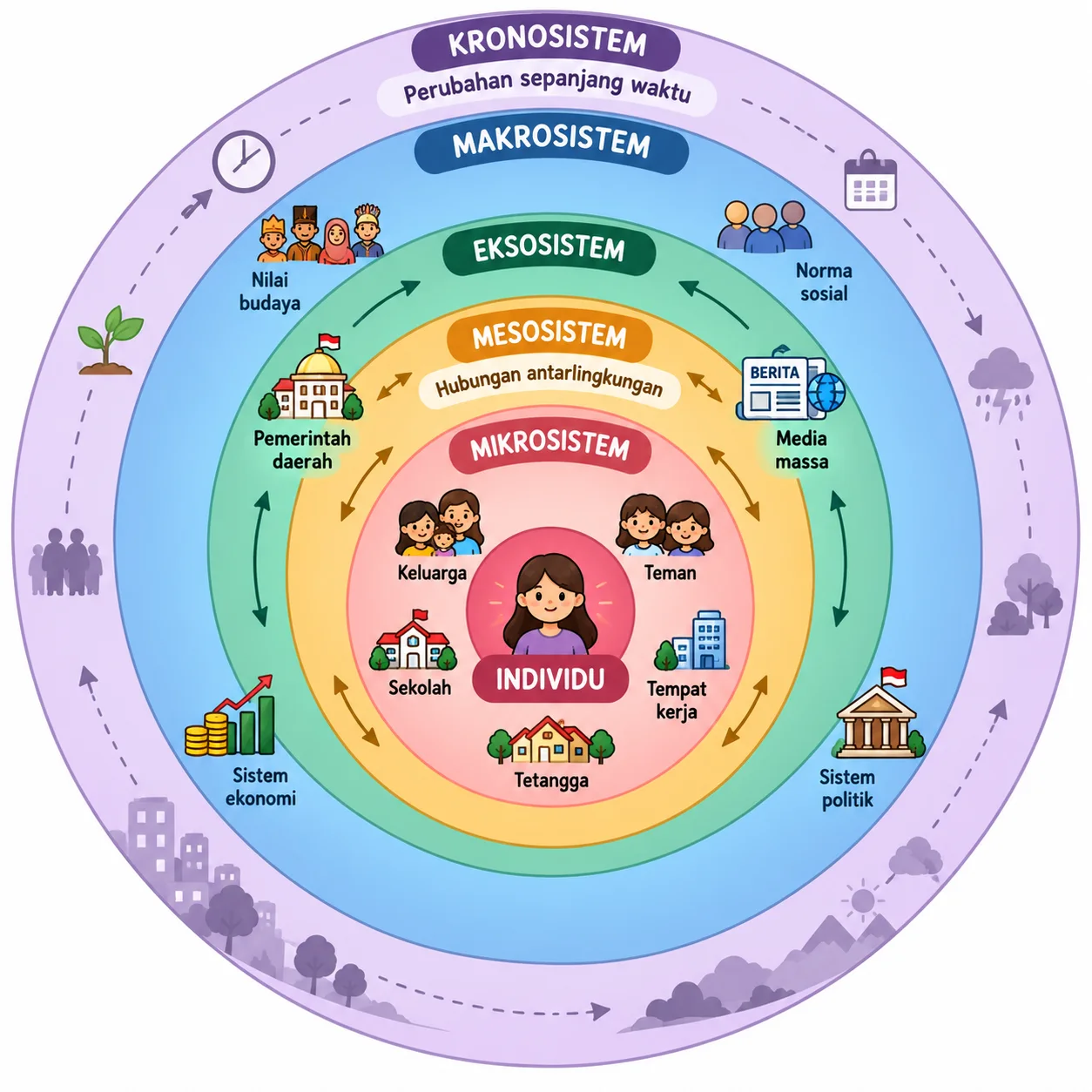
Mental health issues do not exist as isolated phenomena; they are closely linked to an individual's social context. How one understands psychological distress, expresses feelings, and seeks help is influenced by their social environment and personal beliefs.
Therefore, discussions on mental health must consider cultural contexts without hastily labeling culture as the primary cause of these issues.
Culture Shapes How We Understand Mental Health
From a multicultural psychology perspective, an individual's psychological experience cannot be separated from their social and cultural context. Culture influences how individuals understand emotions, evaluate behavior, and determine appropriate actions when facing problems.
This influence is evident in how different social groups understand the causes of mental disorders and choose the types of treatment they consider relevant.
Research by Anjara et al. (2021) involving 75 participants in Yogyakarta shows that the community understands mental health issues through various perspectives, ranging from personal and environmental factors to spiritual ones.
This diverse understanding shapes the choices for help deemed appropriate, such as medical services, social support, or religious interventions. This confirms that cultural perception plays a crucial role in an individual's decision-making process when seeking help.
Spiritual beliefs do not necessarily hinder recovery. Religious and community support can actually help individuals cope with life's pressures.
Problems can arise when a viewpoint is dominated by a single perspective, risking the neglect of the importance of professional examination and treatment.
Therefore, mental health services need to respect community beliefs while providing accurate information regarding psychological treatment.
Beyond influencing the understanding of mental disorders, culture also shapes how families respond to mental health issues.
In social environments, the ability to control emotions and solve problems independently is often viewed as a sign of maturity. This value can encourage independence, but it can also create a psychological burden when individuals feel they are not allowed to show fatigue or vulnerability.
This fear of appearing vulnerable can ultimately lead to the stigma that overshadows mental health issues.
Through qualitative research on 25 family members of people with mental disorders in Indonesia, Subu et al. (2023) identified the presence of family stigma, social isolation, and various beliefs regarding the causes of mental disorders.
These findings show that the impact of stigma does not always stop at the individual experiencing the disorder but can extend to their family members.
When mental health issues are considered a disgrace, families may feel the need to hide them from the surrounding environment. As a result, individuals in need of support risk experiencing alienation or delays in receiving help.
However, this view is certainly not uniform across all families in Indonesia. This diversity of experience is heavily influenced by cultural factors, level of knowledge, social conditions, and access to healthcare services.
Another issue is seen in the practice of shackling (pasung) people with mental disorders.
Hidayat et al. (2020), through a systematic review of shackling, discussed the link between this issue and stigma, public understanding of mental disorders, and the limitations of services and community support.
These findings confirm that mental health treatment should not only focus on changing individual perspectives but also requires family support, affordable healthcare services, and the protection of patient rights.
On the other hand, culture and social environments are not always sources of obstacles. Open families, supportive communities, and environments that value differences can help individuals feel safe enough to discuss their problems.
Research by Setia Lesmana and Chung (2024) on 760 Indonesian adolescents found that more supportive school environments are associated with lower stigma, higher mental health literacy, and better help-seeking behavior.
Because this study used a sample of adolescents from several schools, the results cannot be directly generalized to the entire Indonesian population. However, the findings highlight the importance of environments that support openness regarding mental health.
Thus, culture needs to be understood in a balanced way. Values of togetherness, care, and family support can be strengths in recovery.
Conversely, stigma that overly emphasizes social judgment or forbids individuals from expressing difficulties can increase psychological burdens.
The challenge is not to eliminate culture, but to build a perspective that allows cultural values to support mental health.
Building a More Caring Culture
Efforts to improve public mental health need to start within the family. When someone shares their sadness, anxiety, or pressure, the first response should be a willingness to listen and an effort to understand, rather than immediate judgment.
Families also need to distinguish between giving advice and dismissing the psychological experiences of others.
Second, mental health literacy needs to be improved.
Maya (2021), through a study of 349 young people aged 18–24 in Bandung, examined the contribution of mental health literacy and public stigma perceptions to attitudes toward seeking professional help.
This research supports the importance of discussing knowledge and stigma as relevant factors in efforts to encourage the public to seek professional help.
Third, schools, universities, workplaces, and communities need to build safe environments for discussing mental health.
Education can help the public recognize when psychological pressure requires further attention, understand service options, and know that asking for help is not a sign of weakness.
Kaligis et al. (2022) also demonstrated the importance of valid Indonesian-language instruments to assess mental health literacy and help-seeking behavior, although their testing was conducted on specific groups of medical students.
Fourth, mental health services need to be sensitive to cultural backgrounds.
Professionals need to understand the family values, religious beliefs, language, and social experiences of patients without being judgmental.
If appropriate and with the patient's consent, support from family or community leaders can complement professional services, rather than replace necessary care.
Finally, society needs to build an understanding that maintaining cultural values does not mean preserving every habit without evaluation.
Traditions that strengthen solidarity and care are worth maintaining, while practices that degrade dignity or hinder access to help need to be reviewed.
Nurturing Culture, Strengthening Mental Health
Culture plays an important role in shaping how Indonesian society understands mental health.
Values of togetherness, family support, and spiritual beliefs can be an emotional foundation. However, stigma, fear of social judgment, and inaccurate understanding can also make individuals reluctant to express problems or seek help.
Therefore, building a more psychologically healthy society does not have to be done by abandoning culture.
What is needed is to develop cultural values that support care, openness, and respect for human dignity.
Listening without judgment, providing accurate information, and supporting access to professional help are concrete steps that can be taken together.
Not all wounds are visible, and not everyone feels safe enough to share their wounds.
A caring society is not one that demands everyone to always be strong, but one that provides space for everyone to get support when they need it.
Bibliography
Anjara, S. G., Brayne, C., & Van Bortel, T. (2021). Perceived causes of mental illness and views on appropriate care pathways among Indonesians. International Journal of Mental Health Systems, 15, Article 74. https://doi.org/10.1186/s13033-021-00497-5
Hidayat, M. T., Lawn, S., & Muir-Cochrane, E. (2020). The use of pasung for people with mental illness: A systematic review and narrative synthesis. International Journal of Mental Health Systems, 14, Article 90. https://doi.org/10.1186/s13033-020-00424-0
Kaligis, F., Ismail, R. I., Wiguna, T., Prasetyo, S., Indriatmi, W., Gunardi, H., Pandia, V., & Magdalena, C. C. (2022). Mental health problems and needs among transitional-age youth in Indonesia. International Journal of Environmental Research and Public Health, 19(10), 5916. https://doi.org/10.3390/ijerph19105916
Maya, N. (2021). Kontribusi literasi kesehatan mental dan persepsi stigma publik terhadap sikap mencari bantuan profesional psikologi. Gadjah Mada Journal of Psychology, 7(1). https://doi.org/10.22146/gamajop.58470
Setia Lesmana, M. H., & Chung, M.-H. (2024). Mediating roles of perceived stigma and mental health literacy in the relationship between school climate and help-seeking behavior in Indonesian adolescents. PLOS ONE, 19(5), e0298017. https://doi.org/10.1371/journal.pone.0298017
Subu, M. A., Wati, D. F., Al-Yateem, N., Netrida, N., Priscilla, V., Dias, J. M., Slewa-Younan, S., & Nurdin, A. E. (2023). “Family stigma” among family members of people with mental illness in Indonesia: A grounded theory approach. International Journal of Mental Health, 52(2), 102–123. https://doi.org/10.1080/00207411.2021.1891363
Subu, M. A., et al. (2022). Traditional, religious, and cultural perspectives on mental illness: A qualitative study on causal beliefs and treatment use. International Journal of Qualitative Studies on Health and Well-being, 17(1). https://doi.org/10.1080/17482631.2022.2123090
Yunita, F. C., et al. (2020). Coping strategies used by families in Indonesia when caring for patients with mental disorders post-pasung, based on a case study approach. General Psychiatry, 33(1), e100035. https://doi.org/10.1136/gpsych-2018-100035
World Health Organization. (2022). World Mental Health Report: Transforming Mental Health for All. https://www.who.int/publications/i/item/9789240049338
Kementerian Kesehatan Republik Indonesia. (2024). Survei Kesehatan Indonesia (SKI) 2023. https://www.kemkes.go.id/id/survei-kesehatan-indonesia-ski-2023


Comments 0
Write a Comment Share your response