

Pamekasan, JurnalPost.com - Efforts to raise public awareness about infectious diseases do not always have to be carried out through direct health counseling. In Pamekasan District, Pamekasan Regency, East Java, a research team from the Sociology Study Program, Faculty of Social and Cultural Sciences (FISIB), University of Trunojoyo Madura (UTM), is attempting a different approach by introducing animated health education videos tailored to the local socio-cultural life of the community.
The animated video was developed as part of a study titled “A Model for Infectious Disease Prevention Integrating Herbal Medicine, Medical Treatment, and Digital Media Based on the Socio-Cultural Changes of the Madurese Community.”
The research, which involves both lecturers and students, seeks to bridge medically-based health information with the habits and perspectives of the Madurese people in understanding and preventing infectious diseases.
The primary focus of the developed educational media is the prevention of measles and tuberculosis (TB), two infectious diseases that require public understanding regarding transmission, preventive measures, and the importance of appropriate medical treatment.
Rooted in Daily Life
The development of the animated video was not based solely on academic study. The research team went directly into the community to understand how health information is received, understood, and applied in daily life.
A number of community activities became part of the research process, ranging from Posyandu (integrated healthcare center) sessions and health cadre meetings to Family Welfare Empowerment (PKK) activities in several villages in Pamekasan District.
Through interviews, observations, and coordination with health workers and the community, the team gathered various information that was then used as material for compiling the educational content.
This approach was taken so that health messages are not only accurate in terms of medical information but can also be delivered in a way that aligns with the habits and characteristics of the local community.
The result is an animated video that combines moving images, sound, and simple narration. The material is structured to be easily followed by people of various age groups and educational backgrounds.
Animation was chosen as an alternative for delivering health information that is more engaging than written materials alone.
Involving Posyandu Cadres and Islamic Boarding Schools
Once developed, the animated video was introduced through a series of socialization activities involving various elements of the community.
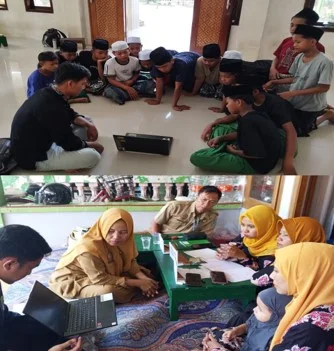
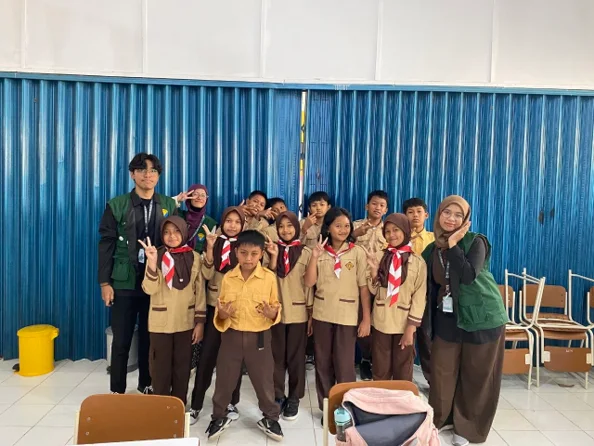
Students participating in the research team took part in socialization activities alongside Posyandu cadres in Pamekasan District.
In addition, similar activities were carried out at the Nasyrul Ulum Islamic Boarding School in Pamekasan, involving the students (santri).
The involvement of health cadres and the Islamic boarding school environment is a crucial part of expanding the reach of the information. Both groups have close ties to the community, and it is hoped they can help relay these health messages within their respective circles.
Through these activities, the research team also had the opportunity to introduce digital-based health education directly to the public.
Hoping It Does Not End with the Research Project
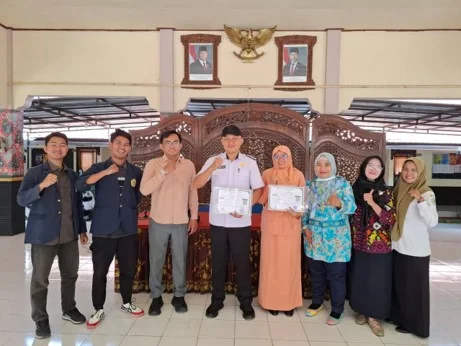
The head of the research team, Ekna Satriyati, hopes that the development of the animated video will not just be an academic output, but can also be utilized sustainably by the community and relevant stakeholders.
This hope was expressed during the handover ceremony of the research output documents on October 14, 2026.
“We hope that the people of Pamekasan and stakeholders can work together to disseminate this animated video. By doing so, information regarding the prevention of infectious diseases can reach more people and help increase collective awareness,” said Ekna Satriyati.
According to the research team, the sustainability of using educational media is one of the key factors in ensuring that information on infectious disease prevention reaches a wider audience.
Support for the use of the animated video also came from the caretaker of the Nasyrul Ulum Islamic Boarding School, Kiai Hamid.
He believes that the development of digital technology opens new opportunities to convey health information more concisely and in an easily understandable manner.
“Hopefully, this research will be a source of ongoing merit (amal jariah) for us all. Animated videos like this are timely, because through short and concise educational videos, the public can understand information about infectious disease prevention more quickly,” said Kiai Hamid.
Meanwhile, the Head of Pamekasan District, Dwi Norkholis Ikhwan, along with the Chair of the Pamekasan District TP PKK, Fadila Ikhwan, also gave a positive response to the development of the educational media.
Both view the use of animation as an engaging alternative to assist in delivering health information to the public.
Bridging Medical Knowledge and Socio-Cultural Approaches
This research also highlights the importance of understanding socio-cultural aspects when conveying health information to the public.
In daily life, people have experiences, habits, and local knowledge that can influence how they view a disease and determine their treatment steps.
Therefore, the medical approach and understanding of traditional health practices became part of the research study. However, the use of herbal medicine must still consider scientific evidence and should not replace necessary medical examinations or treatments, especially for diseases like measles and TB.
Through the integration of socio-cultural approaches and digital media, the UTM Sociology research team strives to provide health information that is more accessible and relevant to the community's needs.
Moving forward, collaboration between universities, the district government, health workers, educational institutions, Posyandu cadres, and the community is expected to expand the use of the animated video.
The development of this media serves as an example of how social research can produce educational tools that have the potential to be utilized directly in the lives of the community.
For the research team, the success of the activity is measured not only by the completion of the research or the submission of output documents, but also by the opportunity to use the research results to support increased public awareness regarding the prevention of infectious diseases.
Comments 0
Write a Comment Share your response