


Lamongan, JurnalPost.com — Internships serve as a vital means for students to gain direct experience in the professional world while connecting the knowledge acquired during their studies with field practice. This was the experience of Rangga Arya Pramudita, a student of the Law Study Program at the Faculty of Law, University of 17 Agustus 1945 Surabaya (UNTAG Surabaya), who carried out his internship at the Class IB Lamongan District Court.
The internship was conducted over approximately 40 working days, from July 6 to September 2, 2026. During the program, Rangga had the opportunity to gain a closer look at the various duties and operational mechanisms within the Lamongan District Court, particularly those related to criminal and civil case administration.
In practice, the internship involved not only observing court proceedings but also learning various clerkship administrative tasks. One area of focus was the workflow for receiving new cases through electronic systems used by the court, such as E-Berpadu and e-Court.
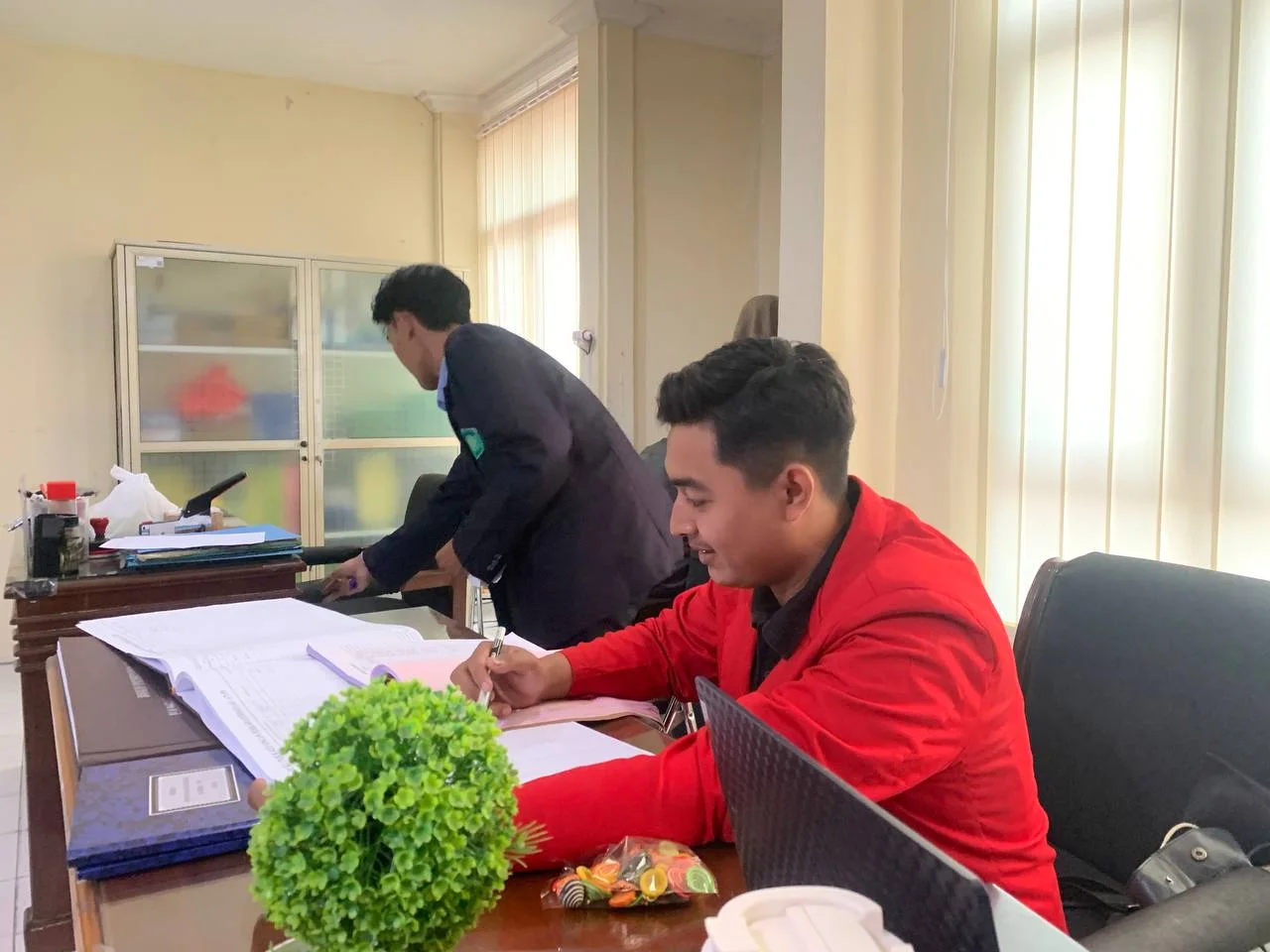
Additionally, students were introduced to the Case Tracking Information System (SIPP) used for managing and tracking case information within the judicial environment. Through this activity, students came to understand that resolving cases in court is not solely about the trial process but is also supported by systematic case administration.
During the program, Rangga also gained experience in various clerkship duties. Some of the tasks performed included learning to draft court summons, learning to compile Trial Minutes, recording criminal and civil case master registers, and registering traffic violation tickets.
Students also had the opportunity to study the process of verifying file completeness and registering civil cases, including lawsuits, small claims, and petitions. Furthermore, students were introduced to the contents and functions of case files, including Bundle A, as part of court case administration.
Other experience was gained through the opportunity to attend court hearings in person. During the internship, students observed several trials, including cases involving violence, small claims, and narcotics-related criminal matters. This experience provided a real-world perspective on how trials are conducted and how the law studied in the classroom is applied in practice.
The internship at the Lamongan District Court also provided an understanding of the importance of Standard Operating Procedures (SOPs) in carrying out clerkship duties. Every stage of case administration involves procedures that must be executed meticulously and in accordance with applicable regulations. This served as an important lesson for law students who will eventually enter the professional workforce.
According to Rangga, the experience gained during the internship provided knowledge distinct from what is learned solely through lectures. Through direct practice, students can observe how case administration, judicial services, and trials function within a court environment.
“During my internship, I gained a lot of experience that I had not previously encountered directly in the classroom. I have a better understanding of how case administration and trials are carried out in court,” said Rangga.
This experience is expected to serve as a foundation for students in understanding the professional legal field. The internship also provided an opportunity to develop precision, discipline, responsibility, and the ability to understand work procedures within the judicial environment.
The internship at the Class IB Lamongan District Court is part of the learning process for students to become more familiar with legal practice in the field. Through this activity, students not only acquire knowledge of legal theory but also gain experience in how the judicial system and case administration are operated firsthand.
For law students, the experience of being in a court environment is a crucial step in preparing for the professional world. The lessons learned during the internship are expected to serve as a foundation for determining future paths and developing skills in the legal field after completing their higher education.







Comments 0
Write a Comment Share your response