

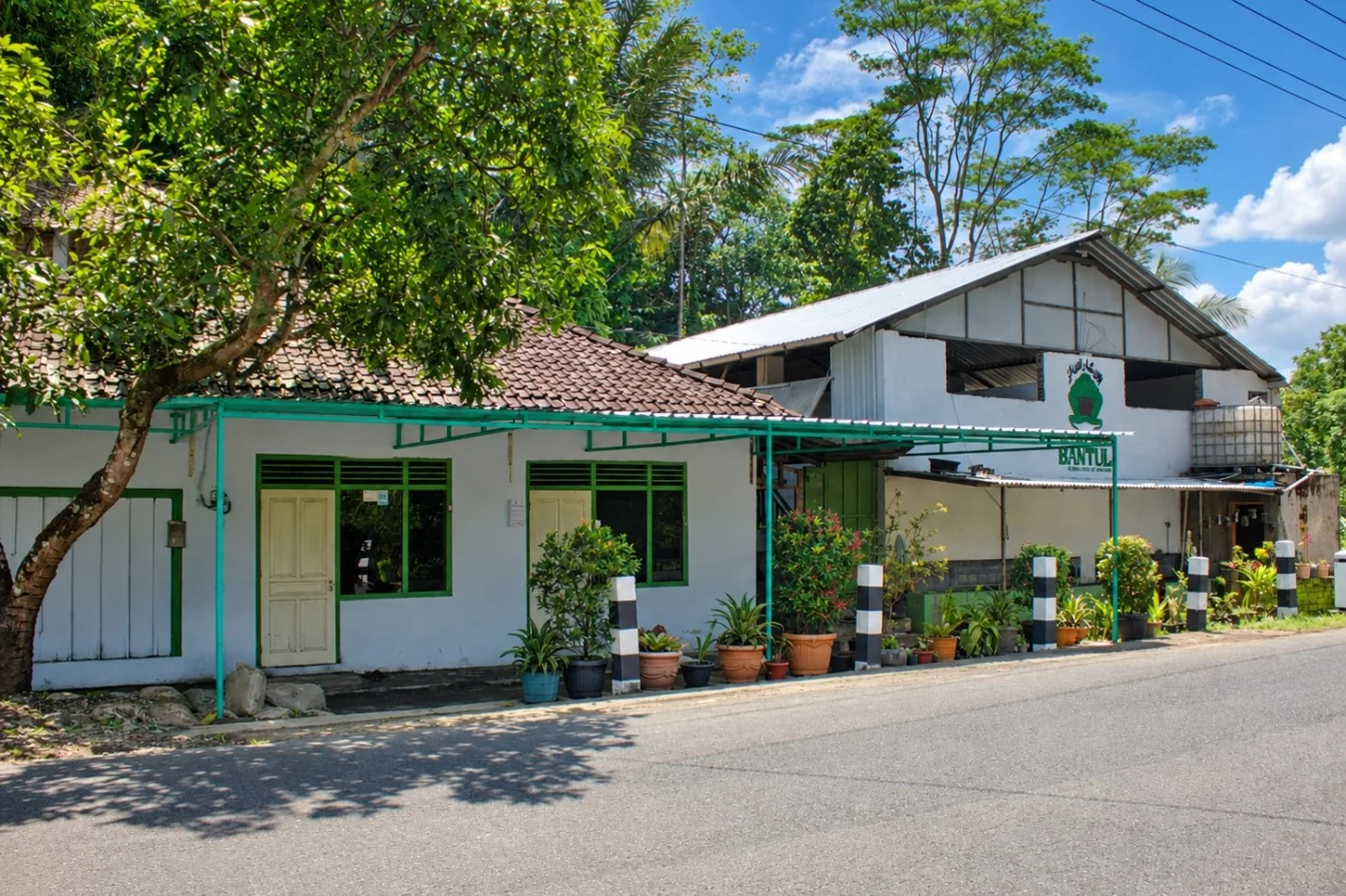
JurnalPost.com - At four in the morning at the Nurul Maghfiroh Islamic Boarding School, no one is shouting yet. All that can be heard are the soft rhythmic footsteps, the trickling of water for ablution, and the whispers of students waking their peers.
At the boarding school, national values are not just memorized; they are lived out day by day. Justice is learned through the distribution of food in the kitchen, unity through communal meals attended by students from various regions, and deliberation through long conversations on the dormitory porches.
The walls of the boarding school are indeed high, the schedule is packed, and the rules may sound strict to outsiders. However, behind them grows a sense of belonging to one another, to the homeland, and to the values that unite us as a nation.
Dawn That Teaches Discipline
The prayer room lights turn on first, as if signaling that the day has begun before the sun rises.
For the students, waking up at dawn is not just a habit. Here, they learn that time does not entirely belong to the individual. If one person is late, they not only miss the congregational prayer but also make the entire line wait.
There are no slogans about responsibility. Only a repeated habit: wake up, purify, pray in congregation, and then go through the day in an orderly fashion.
The first principle of Pancasila is present not as writing on the wall, but as a rhythm of life that guides students to know themselves and their God.
Broomsticks and Water Buckets
Every Sunday, the boarding school turns into a stage for community service. Some sweep the prayer room, carry buckets to mop the floor, fix chairs, organize footwear, or clear away cobwebs.
No one counts who works the most. There is only the occasional joke and casual calls:
"Come on, help carry this bucket!"
This spirit is in line with Surah Al-Ma'idah verse 2, where Allah commands believers to help one another in virtue and piety, not in sin and hostility.
When students clean the prayer room together, they are learning about a just and civilized humanity.
Everything starts with small things: the courage to share someone else's burden, even if it is just a bucket of water.
One Table, Many Accents
In the communal kitchen, differences are almost never a problem. There are Javanese students with their soft accents, those from Sumatra with a more assertive way of speaking, and others who bring stories from their respective hometowns.
They all sit on the floor in the same place, enjoying the same portions of food, and laughing at the same jokes.
Differences do not disappear; they are recognized. From there, students learn that friends who have different habits and perspectives are not strangers.
Surah Al-Hujurat verse 13 reminds us that humans were created as nations and tribes so that they may know one another, not to belittle each other. Nobility is measured by piety, not by tribe, status, or background.
In simple language familiar to the students, the message is not to judge a friend just because they are different.
The unity of Indonesia is not born from uniformity, but from the ability to live side by side and still feel like one family, no matter how far away one's hometown is.
Deliberation on the Dormitory Porch
On certain nights, the dormitory porch becomes the most honest space for deliberation. The students discuss speech events, inter-room competitions, or unfinished cleaning duties.
Some talk a lot, some only listen, and others only dare to raise their hands after long hesitation.
Interestingly, decisions are rarely determined by the loudest voice. After a sufficiently long debate, someone usually mediates calmly:
"In that case, let's just agree on this."
Everyone accepts the decision, not because they feel defeated, but because they feel heard.
Boarding schools may rarely use the term "democracy," but the practice has long been alive. Students learn that leading is not about commanding, but about listening.
The best decision is not the one made the fastest, but the one capable of maintaining togetherness.
Love for the Homeland, Part of Faith
There is one expression familiar to the students' ears: hubbul wathan minal iman, which means love for the homeland is part of faith.
This expression is closely tied to the nationalistic tradition of boarding schools and the spirit of struggle of Hadratussyaikh KH. Hasyim Asy'ari, a great figure who fought for the unity of the people and the independence of Indonesia.
He combined the spirit of Islam with nationalism and encouraged Muslims to unite against colonial oppression.
For the students, that message is more than just history. Loving Indonesia does not mean abandoning faith. The two can actually strengthen each other.
Students who study diligently, keep their promises, and do good to their environment have practiced love for the homeland in its simplest form.
When students raise the flag, sing the national anthem, or defend a friend from unfair treatment, they are not doing something foreign to religious values.
They are bringing to life the legacy of the boarding school founders that faith and nationalism can walk hand in hand.
Values That Never Retire
Pancasila is often imagined as five principles that must be memorized. At the boarding school, its values are much more alive.
Those values are present when students wake up before dawn, sweep the yard together, accept friends who are different, deliberate, and help without expecting anything in return.
Pancasila does not always appear through political language, but also through habits: hands accustomed to working, ears accustomed to listening, and hearts accustomed to caring.
So, if one day you pass by a boarding school, do not just look at the walls.
Imagine the students waking up before dawn, the brooms moving in the yard, the laughter in the dining hall, and the long discussions on the dormitory terrace.
That is where the nation's values grow and are passed down in the most human way possible.
Author Profile
Nashichatunnafisah is a distance learning student of Islamic Religious Education (PAI) at UIN Siber Syekh Nurjati Cirebon and a teacher at the Nurul Maghfiroh Islamic Boarding School, Tegalrejo, Magelang, who accompanies students in their daily learning activities. From the classroom to the dormitory, she writes about the small values that quietly teach great things.





Comments 0
Write a Comment Share your response