

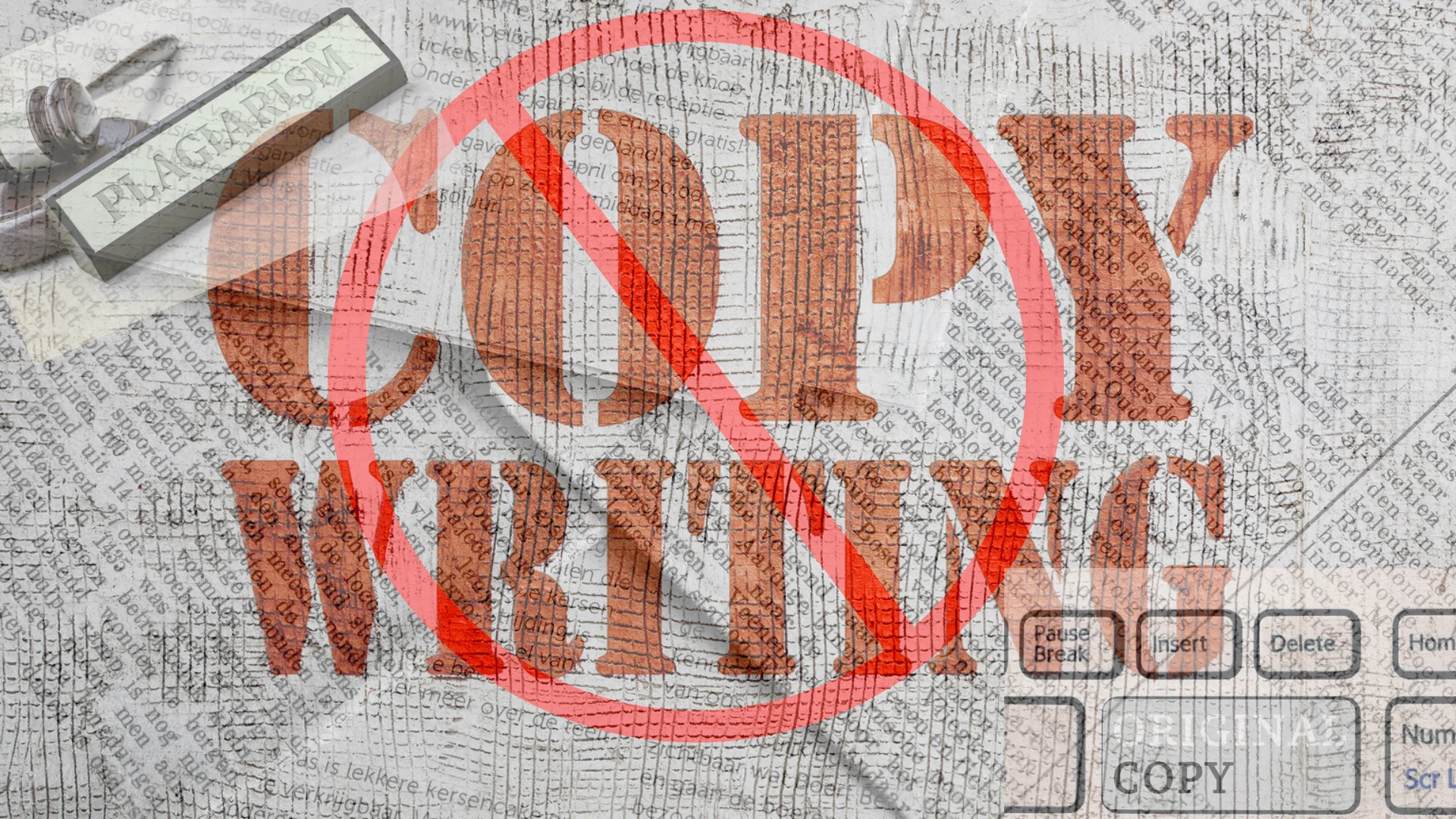
Higher education institutions are not merely places for students to acquire knowledge and improve their skills; they are also environments for cultivating character, responsibility, and honesty. One way these values are reflected is through how students complete assignments and produce scholarly work while maintaining academic integrity.
However, the advancement of digital technology, which facilitates easy access to information, also presents new challenges. Students can obtain various references from the internet in a very short time. Conversely, this convenience can lead to plagiarism, particularly when someone uses another person's writing or ideas without properly citing the source.
According to the Regulation of the Minister of Education, Culture, Research, and Technology Number 39 of 2021, academic integrity is a principle that must be upheld in the creation of scholarly work. Plagiarism is an act that violates this principle (Kemendikbudristek, 2021). Plagiarism is not just a technical writing error, but also a matter of honesty and responsibility held by students.
Student Understanding Has Not Been Fully Followed by Proper Practice
The issue of plagiarism in the academic world remains a concern for many. The 2024 Education Integrity Survey conducted by the Corruption Eradication Commission (KPK) found that 44.59 percent of students admitted to having committed plagiarism, even though they knew the act was wrong (KPK, 2024).
These findings indicate a gap between the understanding of academic honesty and its application during studies.
A similar picture was found through a survey of 38 students from various majors. Based on the questionnaire results, 78.9 percent of respondents stated they understood or highly understood plagiarism, while another 21.1 percent stated they understood it sufficiently.
Furthermore, 94.7 percent of respondents knew that copying text without citing the source constitutes plagiarism. Nevertheless, this understanding has not been fully followed by mastery of academic writing rules. Regarding the question of paraphrasing without citing the source, 21.1 percent of respondents were still hesitant, and 15.8 percent considered such an act not to be plagiarism.
These results show that although most students understand the basic concept of plagiarism, there is still a deficiency in understanding the proper use of reference sources. One important point to note is that changing the sentence structure of someone else's writing does not eliminate the obligation to cite the original source.
Paraphrasing Difficulties and Academic Pressure as Challenges
One essential skill in academic writing is summarizing information in a different way. This skill allows students to convey ideas from a specific source using their own words while maintaining the original meaning and citing the source.
However, this process is not always easy to execute.
Several factors that may lead someone to commit plagiarism include a lack of understanding of citation methods, the high volume of academic assignments, limited time, and the use of artificial intelligence (AI) technology without knowing the rules applicable in the academic world.
Research by Ampuni et al. (2020) on academic dishonesty among Indonesian students from a moral psychology perspective also emphasizes the importance of moral integrity in understanding acts of academic dishonesty.
AI technology can indeed assist students in searching for information, understanding lessons, and writing. However, its use still requires responsibility. When students merely copy the results provided by technology without verifying the content, understanding the material, or noting the information sources, the likelihood of academic integrity violations increases.
Therefore, the issue of plagiarism does not depend solely on a student's honest attitude, but is also related to their ability to write and manage time in completing academic assignments.
Academic Integrity as an Application of Pancasila Values
Plagiarism cannot be viewed merely as a violation of writing rules. The act also demonstrates a lack of regard for the thoughts and efforts of others.
From the perspective of Pancasila, the act of plagiarism contradicts the values of honesty, responsibility, and justice.
The second principle, Just and Civilized Humanity, teaches us to respect the dignity and rights of others, including the right to intellectual property. Meanwhile, the fifth principle, Social Justice for All Indonesian People, highlights the importance of providing fair recognition according to the effort and work produced by each individual.
Students who cite reference sources accurately demonstrate that they respect the ideas of others and are responsible for their own work.
Therefore, applying Pancasila values in the academic environment is not enough through understanding theory in lectures. These values must be applied through daily habits, such as doing assignments independently, paraphrasing correctly, recording reference sources, and using technology responsibly.
Academic Literacy Education as a Plagiarism Prevention Effort
To address this problem, efforts are needed that do not focus solely on punishment, but also on improving the understanding and skills of students.
One approach is to hold workshops or academic writing training as a preventive measure against plagiarism in higher education institutions.
These activities can focus on correct paraphrasing practices, citation procedures, bibliography compilation, and the responsible use of artificial intelligence technology.
Through these activities, students can gain a better understanding of how to use references without appropriating others' ideas. Training can also provide direct examples of the differences between copying text, paraphrasing, and citing sources accurately.
In addition to workshops, education can be conducted through outreach and digital media. Infographics and educational content on social media can be utilized to convey information regarding forms of plagiarism, paraphrasing techniques, and the importance of maintaining academic integrity.
Higher education institutions also play a crucial role in providing continuous education so that students not only understand the rules but are also able to apply them in their coursework.
Building an Academic Culture with Integrity
Preventing plagiarism is a shared responsibility between students and higher education institutions. Students must cultivate honesty in every stage of learning, while universities are obligated to provide learning and facilities that support the development of a strong culture of academic honesty.
The survey results of 38 students show that most respondents have understood the basic concepts of plagiarism. However, there is still hesitation in understanding paraphrasing without citing sources. Difficulties in paraphrasing, lack of understanding regarding citations and bibliographies, heavy workloads, limited time, and the use of AI without understanding academic rules are also factors that need attention.
This serves as a reminder that understanding the meaning of honesty must be accompanied by the ability to apply it in concrete actions.
Ultimately, academic integrity is not just about not copying others' work, but also about respecting the learning process, acknowledging the efforts of others, and being responsible for every piece of work created.
Cultivating an anti-plagiarism attitude can start with small things, such as writing honestly, recording sources accurately, and utilizing technology wisely. By becoming accustomed to these practices, students can not only produce good academic work but also form an honest character and integrity in accordance with the values of Pancasila.
REFERENCES
Ampuni, S., Kautsari, N., Maharani, M., Kuswardani, S., & Buwono, S. B. S. (2020). Academic dishonesty in Indonesian college students: An investigation from a moral psychology perspective. Journal of Academic Ethics, 18(4), 395–417. https://doi.org/10.1007/s10805-019-09352-2
Corruption Eradication Commission. (2024). Education Integrity Assessment Survey 2024: Higher education. https://aclc.kpk.go.id/pendidikan/spipendidikan/hasil/2024?level=dikti&map_by=indeks_total&view_mode=focused
Ministry of Education, Culture, Research, and Technology of the Republic of Indonesia. (2021). Regulation of the Minister of Education, Culture, Research, and Technology of the Republic of Indonesia Number 39 of 2021 concerning Academic Integrity in Producing Scholarly Work. https://lldikti3.kemdikbud.go.id/wp-content/uploads/2024/07/Permendikbudristek-No.-39-Tahun-2021-Integritas-Akademik-dalam-Menghasilkan-Karya-Ilmiah.pdf


Comments 0
Write a Comment Share your response