English Home Latest About Us Editorial Team Bahasa Indonesia ID | EN

Sign in / Join

Explore

Home Latest Stories National International Business Education Opinion Bahasa Indonesia
Information
About JurnalPost Editorial Team Privacy Policy Media Kit
Sign in / Join
Follow us
ID ENGLISH
Home Latest National International Business Education Opinion

Latest

  1. Bringing Premium Service to Your Doorstep: How Rumi Home Spa Builds Customer Loyalty

  2. Navigating Adjustment Dynamics in Indonesian Intercultural Marriages

  3. Behind the 'Ordal' Phenomenon: Failures in Ethics and Recruitment Governance

  4. Social and Ethical Dimensions of Information Systems: Responsibility in the Digital Age

  5. More Than Just Physical Pain: How the Body and Mind Interact in Somatic Symptom Disorder

  1. Home
  2. Environment
  3. UPN Veteran Jatim Researchers Test Mangroves as Natural Microplastic Filters in Constructed Wetlands

UPN Veteran Jatim Researchers Test Mangroves as Natural Microplastic Filters in Constructed Wetlands

R
Writer: R Mohammad Alghaf Dienullah
October 30, 2026, 14:23 WITA Editor: Hasbi
Oct 30, 2026, 14:23 WITA · 4 min read
4 min read
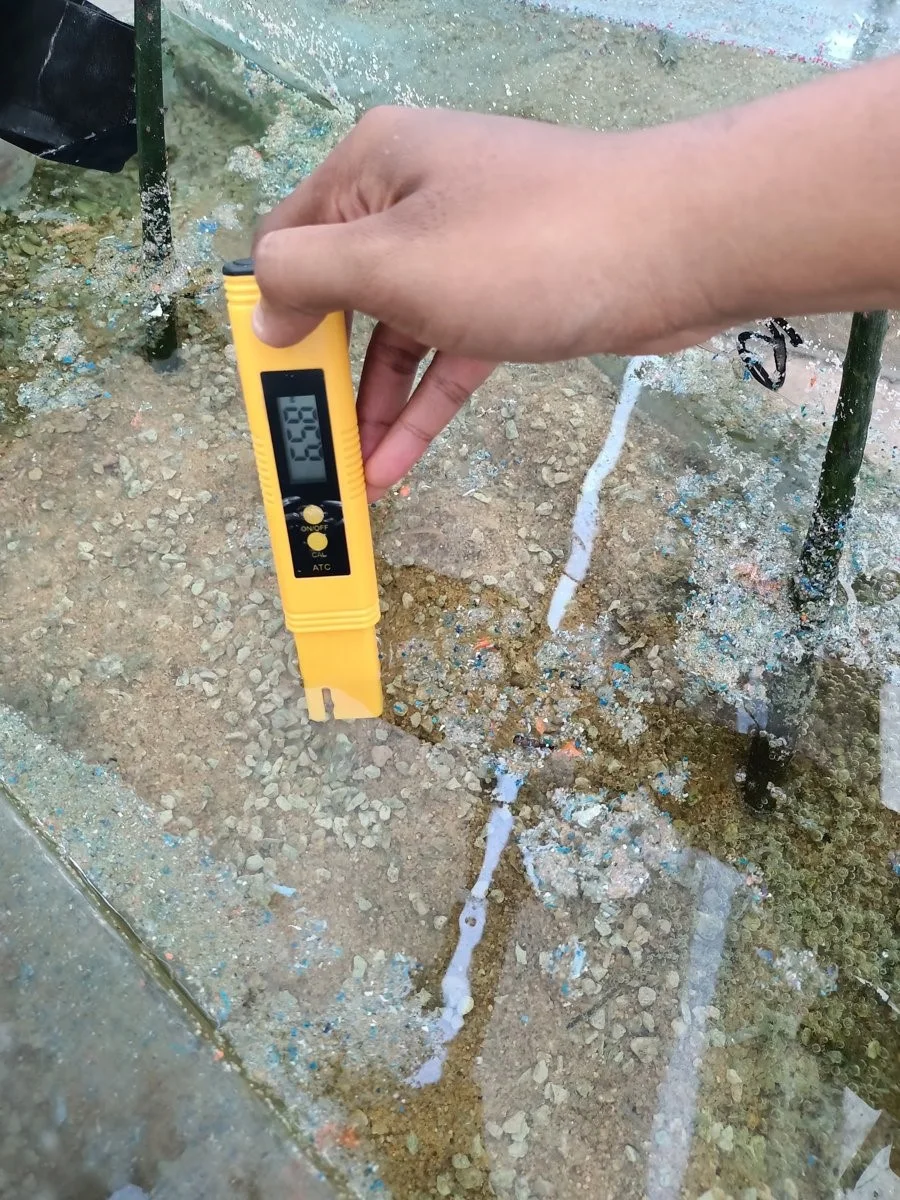
Water pH measurement in a mangrove reactor as part of daily water quality monitoring
Water pH measurement in a mangrove reactor as part of daily water quality monitoring Photo: Dok. Tim Peneliti UPN “Veteran” Jawa Timur

SURABAYA, JurnalPost.com – A research team from the Universitas Pembangunan Nasional (UPN) “Veteran” Jawa Timur is testing the ability of mangroves to act as natural filters for microplastics. Mangrove seedlings were planted in mini reactors using a constructed wetland concept and then supplied with water intentionally contaminated with plastic particles.

Microplastics are plastic fragments measuring less than 5 millimeters. These particles are difficult to decompose and are now found in oceans, sediments, and even mangrove areas. Domestic and industrial waste flowing into coastal regions is one of the primary sources of this pollution.

IKLAN

“Mangrove roots naturally trap particles carried by water. We want to determine if this ability can be utilized in controlled wastewater treatment systems,” said the lead researcher, R. Mohammad Alghaf Dienullah, S.T., M.T., a lecturer in the Environmental Engineering Study Program at the Faculty of Engineering and Science, UPN “Veteran” Jawa Timur.


The research began with an acclimatization phase from July 17–31, 2026. Three mangrove species, namely Avicennia alba, Rhizophora mucronata, and Bruguiera cylindrica, were adapted to water with gradually increasing salinity. The results showed that only R. mucronata remained healthy until the end of the observation, while the other two species lost all their healthy leaves after the salinity increased.

IKLAN

“Species selection is key. This system will not work if the plants are unable to survive,” Alghaf stated.
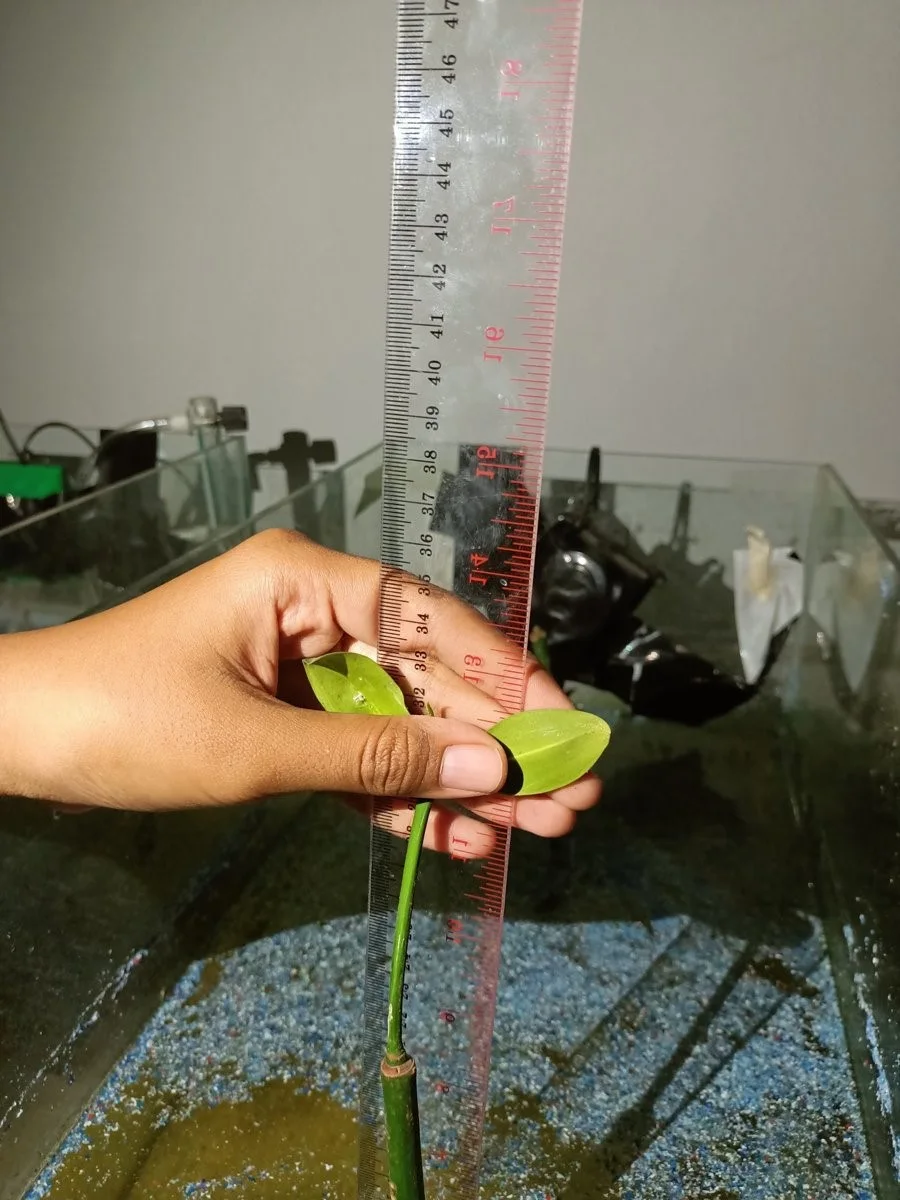
Foto 2
Peneliti mengukur tinggi bibit Rhizophora mucronata di dalam reaktor constructed wetland pada hari pertama pengamatan, 16 Oktober 2026.Foto: Dok. Tim Peneliti UPN “Veteran” Jawa Timur

R. mucronata was then planted in eight batch reactors from October 16–27, 2026. The reactors contained artificial water contaminated with polypropylene (PP), high-density polyethylene (HDPE), and polyethylene terephthalate (PET) microplastics, with variations of gravel, silica sand, and adsorbent media. Plant condition and water quality, including pH and TDS, were monitored daily.

During the ten-day observation period, all plants in the reactors survived despite exposure to microplastics. The highest growth, reaching 2.7 centimeters, was recorded in reactors containing gravel and silica sand media.

The next stage involves analyzing microplastic content in the water, sediment, and roots using a microscope and FTIR. This analysis will reveal how many plastic particles were trapped within the system. The team also aims to develop a pilot-scale model for communal wastewater treatment installations in coastal areas.

This research was funded through the 2026 Internal Research Grant of UPN “Veteran” Jawa Timur under the Thematic Research scheme. In addition to Alghaf, the team includes Ariesta Sulistyo Asih, S.T., M.T., Ir. Pertiwi Andarani, S.T., M.T., M.Eng., Ph.D., IPP from the Department of Environmental Engineering at Diponegoro University, as well as UPN “Veteran” Jawa Timur students Dinda Surya Inayah and Bagaskara Irsyad Prasetya. The research findings will be showcased at the RISE-2026 event at UPN “Veteran” Jawa Timur on November 4–5, 2026.


Bahasa Indonesia Read in Bahasa Indonesia →
  • #Environment
  • #Research
  • #UPN Veteran Jatim
  • #Mangrove
  • #Microplastics
  • #Constructed Wetland
  • #Waste

Share article

Share WhatsApp Tweet

Comments 0

Write a Comment Share your response

Comments appear after editorial approval.

  1. No comments yet. Be the first to respond.

Related Articles

Navigating Adjustment Dynamics in Indonesian Intercultural Marriages

Social and Ethical Dimensions of Information Systems: Responsibility in the Digital Age

Turning Used Bottles into Economic Value: Simple Technology for Ampel Residents

Simple Innovation, Real Steps Toward a Clean and Sustainable Environment

JURNALPOST RECOMMENDS

Selected for You

Rumah Makan Adrin 2 Ponorogo Prioritizes Excellent Service and Customer Satisfaction

More Than Just Physical Pain: How the Body and Mind Interact in Somatic Symptom Disorder

Faculty of Economics and Business at Universitas Pancasakti Tegal Welcomes International Student from Ghana

Crowded Chats, Lonely Lives: Addressing Adolescent Loneliness Through School Counseling

Article source: https://jurnalpost.com/index.php/en/upn-veteran-jatim-researchers-test-mangroves-as-natural-microplastic-filters/98422/

Printed from JurnalPost.com on November 28, 2026, 23:34 WITA

Most Popular

  1. 1 UNTAG Surabaya Communication Student Gains Professional Experience Through Internship at RRI Madiun
  2. 2

    Revisiting Menstrual Leave: Between Presence and Absence

  3. 3

    Chaotic Campus Parking: A Discipline Issue or Poor Planning?

  4. 4

    Indonesia Falls to Myanmar in CAEC MLBB 2026 Final, RRQ Hoshi Takes Runner-Up

  5. 5

    UPN Veteran East Java Law Faculty Guides Kedungdowo Residents on Protecting Plant Varieties and Technological Innovations

IKLAN
JurnalPost

Independent reporting, public voices, and stories from Indonesia.

Explore

Advertorial Articles News Business Citizen Reporter Regional Economy English Version Essay Featured
Law International Opinion National Sports Education Politics Profiles Technology Travel

Information

About Us Citizen Journalism Cookie Policy Data Policy Submit an Opinion Submit an Article Media Kit Guidelines Editorial Team

Follow us

Facebook X/Twitter Instagram Threads TikTok Pinterest LinkedIn YouTube
© 2026 - PT Jurnal Post Indonesia. All Rights Reserved.