

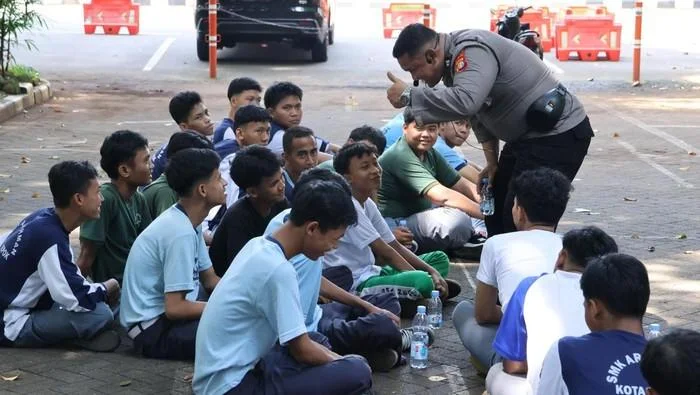
JurnalPost.com – Student brawls remain a recurring social issue that frequently draws public concern. These incidents typically involve two or more groups of students fighting due to disputes, misunderstandings, long-standing animosity, or the influence of their social circles.
This phenomenon is deeply concerning, as youth should be a time dedicated to pursuing knowledge, developing skills, and preparing for the future.
A brawl is not merely a fight between students; it is deeply linked to character development, emotional regulation, and the social lives of adolescents.
Adolescence and Peer Influence
Adolescence is a transitional period from childhood to adulthood. During this phase, individuals undergo significant physical, cognitive, and emotional changes.
Teenagers begin to assert their independence, seek their own identity, and crave validation from their surroundings. In this process, the influence of peers becomes exceptionally strong.
Students often adopt the habits of their peer group to gain acceptance. If that group is accustomed to negative behavior, a student may be influenced to follow suit, even if they know the actions are wrong.
The desire for peer validation is a major factor driving students to participate in brawls.
Some students equate courage with the ability to fight, while those who refuse are labeled cowards. Fearing social exclusion, students sometimes engage in actions they do not actually want to perform.
In reality, true courage is the ability to make the right decisions despite pressure from one's environment.
Intergroup Animosity and Misguided Solidarity
One common cause of brawls is intergroup hostility. This animosity can stem from previous fights, school rivalries, or personal issues that eventually escalate to involve many people.
Old conflicts are often remembered and used as justifications for retaliation. Even students who are unaware of the original issue sometimes get involved because they feel obligated to defend their group.
As a result, problems that could have been resolved instead repeat and escalate.
Simple issues can also trigger a brawl. Mockery, sarcasm, or derogatory remarks can easily offend someone.
If emotions are not controlled, minor issues can spiral into fights, becoming more complex as friends join in to defend their respective sides.
Misguided solidarity also fuels these brawls. Some students believe that defending a friend means fighting anyone who has a conflict with them.
In truth, helping a friend can be done by offering advice, de-escalating the situation, and encouraging a peaceful resolution, rather than resorting to actions that harm others.
The Influence of Social Circles and Family
Social circles have a profound impact on student behavior. While friendships can be positive, not all environments support healthy character development.
Some groups view rule-breaking as normal and treat violence as a symbol of strength.
Students in such environments are more likely to view fighting as acceptable, significantly increasing their risk of involvement in brawls.
Another factor is poor emotional regulation. During adolescence, feelings of anger, disappointment, shame, and offense can arise rapidly. Many students have not yet learned to think calmly before acting.
They feel compelled to retaliate against insults to avoid appearing weak. Yet, violence does not solve problems and often exacerbates conflict.
Family conditions are also linked to a child's behavioral development. The family is the primary environment where children learn values, rules, and responsibility.
Disharmonious relationships and poor communication can make it difficult for children to express their problems, leading them to seek attention and validation from their peer groups instead.
However, family conditions are not the sole cause of brawls, as every student has a different background and life experience.
Social Media and Rising Conflict Risks
Technological advancements have influenced how students interact.
Social media, when used unwisely, can trigger disputes through sarcasm, harsh comments, insults, or intergroup provocation.
Disputes that begin online sometimes escalate into physical confrontations.
The spread of fight videos can also lead some students to hold the mistaken belief that violence is a way to demonstrate courage or gain popularity.
In reality, the attention gained through violence is nothing to be proud of. Sharing such videos often intensifies animosity because the parties involved feel humiliated.
Brawls are not always spontaneous. Conflicts involving large groups can become increasingly difficult to control, raising the risk of serious injury.
Therefore, students must develop the awareness to use social media responsibly and resist being easily swayed by provocation.
The Impact of Brawls on Health and Education
The most immediate impact of brawls is the harm caused to health and safety.
Students involved may suffer bruises, injuries, broken bones, severe wounds, or even lose their lives. Bystanders in the vicinity also risk becoming victims despite having no involvement in the conflict.
Psychologically, victims of brawls may experience fear and anxiety when passing the scene of the incident or encountering the group that attacked them.
Meanwhile, students involved as perpetrators may face regret, shame, and anxiety about their future.
In the realm of education, brawls disrupt the learning process. Involved students risk losing educational opportunities due to police investigations, school sanctions, or legal proceedings.
If brawls continue to recur, a student's focus on their education may decline.
The school atmosphere becomes uncomfortable due to fear, suspicion, and hostility. Education should be a means to develop knowledge, cooperation, and mutual respect.
The Impact of Brawls on Family and Society
Brawls do not only harm the students involved; they also impact families and the broader community.
Parents may experience sadness, disappointment, and worry regarding their child's safety and future. Families may also face the burden of medical costs or legal issues.
In the community, brawls cause unrest, disrupt public order, hinder road users, and potentially damage public facilities.
Such conditions diminish public safety and negatively affect the image of the younger generation.
The Importance of Character Education in Preventing Brawls
The phenomenon of student brawls highlights the importance of character education in a student's life.
Education is not just about pursuing academic grades; it is about forming individuals who are responsible, capable of emotional regulation, and respectful of others.
The violence committed by students underscores the need to strengthen social values such as tolerance, empathy, responsibility, and the ability to resolve conflicts peacefully.
Brawls are also linked to how one perceives differences. Differences in opinions, habits, schools, or backgrounds are a natural part of life in society.
However, some students use these differences as a reason for hostility, believing their group must always be defended while others are enemies.
In reality, attending a different school or belonging to a different group should never be a barrier to mutual respect.
Ultimately, youth should be an opportunity to develop potential, build character, and prepare for the future. Students need to understand that courage and solidarity are not shown through violence, but through the ability to make sound decisions, maintain friendships, and resolve differences wisely.




Comments 0
Write a Comment Share your response