

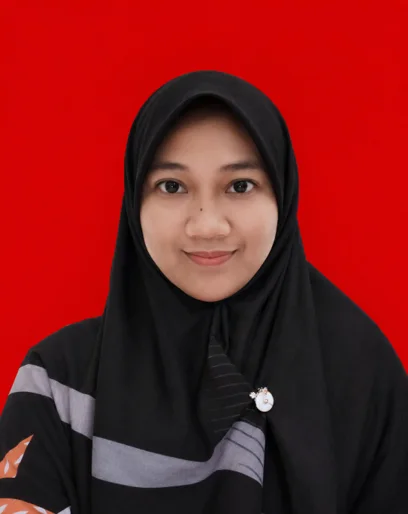
Dewi Kurniawati, S.S., M.Pd. is a lecturer at the Faculty of Tarbiyah and Teacher Training at the State Islamic University (UIN) Raden Intan Lampung. She is currently pursuing a doctoral degree in Language Education at the Faculty of Languages and Arts, Semarang State University (UNNES). Through her writing, she highlights issues of education, language learning, character building, and the importance of an educational environment that is safe and supportive of student development.
JurnalPost.com - In recent years, the trust some parents place in Islamic boarding school (pesantren) education has faced serious challenges. Various reports regarding violence, bullying, harassment, and other forms of child rights violations in several residential educational institutions have raised a very human question: Are Islamic boarding schools still the right environment for a child's education?
Such concerns should not be viewed as a lack of faith in religious education. On the contrary, parental concern indicates an awareness that a child's education is a far more complex issue than simply choosing an institution with a good reputation.
When parents send their children to a boarding school, they are not just choosing a school. They are choosing a world: a place where their child wakes up every morning, learns, prays, makes friends, faces conflict, receives guidance, and grows without being constantly accompanied by their parents.
Concerns regardingbullying, physical violence, harassment, and various other forms of danger in residential educational institutions deserve serious attention. This issue does not require blind defense, but neither does it warrant sweeping condemnation.
As parents, we also need to ask: What do the children experience there? What do they learn from the people around them? Do they feel safe enough to be themselves?
Therefore, the quality of an Islamic boarding school should not be measured solely by exam scores, academic achievements, the ability to read classical texts, or the success of its graduates in entering universities. We also need to ask: What kind of person is shaped by the daily life within it?
My argument is simple: In our current understanding, the Islamic boarding school is a holistic educational space where academic knowledge, life experience, character building, critical thinking skills, communication and language proficiency, emotional development, and child protection reinforce one another.
In the context of communication and language skills, students in Islamic boarding schools are typically taught two international languages: Arabic and English. Language becomes a means to build an educational culture.
Particularly in English language learning, students not only learn to use English but also learn to engage in dialogue, think critically, and respect others.
When the Learning Environment Becomes the Lesson Itself
We often judge the success of education through easily visible results: exam scores, competition trophies, university admissions, language certificates, and various academic achievements. All of these are important. However, they only tell part of the educational story.
A child might earn excellent grades but be afraid to speak. A student might memorize hundreds of English vocabulary words but struggle to express disagreement politely. A learner might be able to explain the meaning of "respect" in English but experience humiliation in the classroom.
Contradictions like these are important because education is not just about what the teacher says. Children also learn from what adults do.
They learn from how teachers respond when they make mistakes. They learn whether questions are welcomed or punished. They learn whether senior students are allowed to humiliate juniors. They learn whether authority means responsibility or domination.
This is known as the hidden curriculum: lessons that students receive through culture, relationships, habits, and daily practices, even though those lessons are never written in the syllabus.
A school may formally teach honesty but informally reward dishonesty. A school may teach compassion but simultaneously normalize humiliation. A school may teach critical thinking but prevent students from questioning authority.
Children are very sensitive to the difference between what adults say and what they do. This becomes increasingly important in Islamic boarding schools because students do not just learn there; they live there.
Thus, the entire life of the boarding school becomes part of the educational process.
When Child Protection Becomes Part of Education
Fortunately, there are examples in Indonesia showing that child protection and educational quality do not have to be conflicting goals.
At the Sultan Hasanuddin Islamic Boarding School in Gowa, South Sulawesi, for example, efforts to strengthen child protection include teacher training on violence and sexual exploitation prevention, positive discipline, psychosocial support, and reporting procedures.
The school has also developed reporting mechanisms, including a complaint box, and established a Student Forum.
Interestingly, these changes do not mean abandoning discipline. Instead, they change how we understand discipline.
According to UNICEF documentation, before the program, some forms of sanctions applied included cleaning toilets, standing outside, and reading the Quran under the scorching sun.
Through a new approach, the school began moving from punitive sanctions toward positive discipline. This is where the philosophy of education becomes tangible.
The question is no longer just, "Is the student obedient?"
The deeper question is, "What does the student learn from how we handle their mistakes?"
If a child makes a mistake and is humiliated, they may learn that power means humiliating others.
If a mistake is handled with dialogue and responsibility, they may learn that every action has consequences as well as an opportunity for self-improvement.
That is the far more important educational question.
From Experience to Learning
One of the strengths of Islamic boarding schools is that learning takes place not only in the classroom but also in daily life.
Students learn to share rooms, maintain cleanliness, respect turns, resolve conflicts, overcome homesickness, and take responsibility without being constantly accompanied by their parents.
However, experience does not automatically become a lesson. Conflict can teach maturity, but it can also trigger aggressive behavior. Discipline can build self-control, but it can also make students merely afraid of punishment.
Failure can foster resilience, but it can also make a child feel incapable.
Therefore, students need to be helped to reflect on their experiences. After a conflict, for example, teachers can invite them to understand what happened, why it happened, how each party felt, and what could be done differently.
Through reflection, daily experiences can become opportunities to learn and grow.
When Experience Changes Perspectives
Meaningful learning does not just change behavior, but also how students view themselves and others.
Children who initially felt incapable can realize their potential. Those who viewed differences of opinion as hostility can learn to remain respectful of one another.
Those who considered asking for help a weakness can understand that seeking assistance is a form of responsibility.
This is what is called transformative learning, a process where someone reviews their assumptions and perspectives so they can understand themselves and the world differently.
When the Hidden Curriculum Fails
UNICEF once documented the experience of a student at a dayah (Islamic boarding school) in Aceh who faced bullying and harsh disciplinary practices.
One student, identified in the report as Ai, shared her experience of being bullied, including having her money taken and her belongings destroyed.
She also described how the experience made her feel isolated and choose to distance herself from others.
This story shows that education does not only take place through classroom lessons. A school might teach friendship, compassion, and respect, but those values lose their meaning if daily life allows for intimidation and the abuse of power.
Child protection is not just a supplement to education. Child protection is part of the educational process itself.
When Discipline Turns into Violence
The importance of this issue is even more apparent in serious cases.
In September 2024, the Indonesian Child Protection Commission (KPAI) highlighted a case of violence at an Islamic boarding school in Sukoharjo, Central Java, involving a 13-year-old student that resulted in death.
KPAI also pushed for an evaluation of child protection governance in Islamic boarding schools.
One case cannot be used as a reason to generalize all Islamic boarding schools. However, the good reputation of an institution should not hinder oversight and evaluation.
Cases like these should prompt us to ask fundamental questions: When does discipline turn into violence? When does authority become an abuse of power? And who protects the child when the person hurting them holds authority over them?
These questions are not a form of opposition to religion, but part of an effort to improve education so that it continues to uphold the dignity and safety of children.
English Is Not Just a Subject
This issue is also related to how we teach English.
Language learning often focuses on vocabulary, grammar, and exams. In reality, language is also a means to express opinions, convey feelings, ask for help, resolve conflicts, and understand others.
Therefore, English classes can be a space to train students to communicate while participating responsibly.
Learning is not enough if it only pursues linguistic accuracy; it also needs to provide opportunities for students to discuss, provide reasons, and respect differences of opinion.
For example, through English learning using debate methods or techniques, students not only learn to use English but also learn to engage in dialogue, think critically, and respect the opinions of others.
Imagine a lesson with the question: "Should students be allowed to disagree with school rules?"
Instead of just memorizing the phrases I agree or I disagree, students are invited to present reasons, listen to friends' views, and respond to ideas without attacking the person.
They can practice using expressions such as "I understand your point, but..." or "Could you explain why you think so?"
These expressions are not just linguistic functions. Within them lies the ability to act, make decisions, take responsibility, and protect oneself.
Therefore, an English classroom that encourages students to ask questions and express opinions politely can support broader educational goals: forming students who are capable of thinking independently while respecting others.
This is very important in residential-based education, where social relationships and authority structures become part of daily life.
Students need to understand that respect is not synonymous with silence. Obedience does not mean surrendering the ability to judge. And asking questions does not always mean rejecting authority.
A healthy educational culture should be able to teach all three: respect, responsibility, and critical thinking.
English and the Global Future of Islamic Boarding Schools
English is increasingly important in Islamic education in Indonesia.
In January 2025, Minister of Religious Affairs Nasaruddin Umar announced the expansion of the Fulbright program for students and educators within the Ministry of Religious Affairs, including madrasas and Islamic boarding schools. He also highlighted the need for English teachers in these schools.
This development raises the question: If English is increasingly important in Islamic boarding schools, what skills should be developed through its instruction?
The goal is not enough to just help students pass exams. They need to be able to communicate with people from different backgrounds, think critically, evaluate information, and participate in the global community.
They also need to be able to share their faith, culture, and community experiences with the world, while understanding the perspectives of others.
Thus, English is not just a tool for communication, but also a means to understand the world and participate in it.
Character Education Must Be Visible in Action
Character education is not enough if it only produces students who are obedient when supervised. Character is reflected when someone remains responsible even when no one is watching.
Therefore, students not only need to understand moral values but also learn to feel care and apply it in action.
The life of an Islamic boarding school provides many opportunities to develop these values: working together, helping friends, admitting mistakes, and resolving conflicts responsibly.
English lessons can also support this process. Group assignments train cooperation, peer feedback teaches how to deliver criticism politely, reflective journals help students understand themselves, and debates train them to disagree without belittling others.
Thus, students not only learn English but also learn to communicate, take responsibility, and live with others.
The Islamic Boarding School We Want
The future of Islamic boarding schools does not require us to abandon tradition, religious education, discipline, or residential life. What is needed is to ensure that all these elements support the child's development as a whole.
Quality Islamic boarding schools need to pay attention to five dimensions of education: intellectual development, experiential learning, transformative development, character formation, and child protection and well-being.
These five dimensions are interrelated.
In English lessons, for example, reading can expand knowledge, group projects train cooperation, reflective journals develop self-awareness, and discussions teach students to respect differences of opinion.
All of this needs to take place in an environment that is safe and respects every student.
Thus, the philosophy of education does not stop as an idea but is present in daily practice. Character education is not enough if it is only conveyed through advice; its values must be visible in daily relationships.
Therefore, the success of education is not enough to be measured by how much knowledge a child has mastered. We also need to ask: What kind of human being are we helping to grow?
Islamic boarding schools should be places where children learn to be independent without losing their sense of belonging, to be resilient without losing their dignity, to think critically without losing their values, and to learn discipline without losing their sense of safety.
This is the kind of education that not only makes children strong but also ensures that they can grow up safe, dignified, and responsible.
Bibliography
Indonesian Child Protection Commission. (2024, March 8). Cases of violence against children in educational units continue to occur: KPAI conducts FGD with stakeholders and agrees on several recommendations. https://www.kpai.go.id/publikasi/kasus-kekerasan-terhadap-anak-pada-satuan-pendidikan-terus-terjadi-kpai-lakukan-fgd-dengan-stakeholder-dan-sepakati-beberapa-rekomendasi
Indonesian Child Protection Commission. (2024, September 19). KPAI's pressure regarding the violence case at a Sukoharjo Islamic boarding school. https://www.kpai.go.id/publikasi/desakan-kpai-terhadap-kasus-kekerasan-di-ponpes-solo
UNICEF Indonesia. (2023, November 3). Child-friendly Islamic boarding schools: Creating safe learning places in educational institutions. https://www.unicef.org/indonesia/id/pendidikan-dan-remaja/cerita/pesantren-ramah-anak-mewujudkan-tempat-belajar-yang-aman-di-lembaga-pendidikan
UNICEF Indonesia. (2024, May 3). Islamic boarding schools in Aceh fight violence with compassion: Child-friendly approaches foster positive discipline and social-emotional learning. https://www.unicef.org/indonesia/id/stories/pesantren-di-aceh-melawan-kekerasan-dengan-kasih-sayang
Cahyono, B. Y., & Widiati, U. (2006). The teaching of EFL speaking in the Indonesian context: The state of the art. Jurnal Ilmu Pendidikan, 13(3). https://doi.org/10.17977/jip.v13i3.40
Daniswara, L. D., & Cahyono, B. Y. (2023). Investigation of university students' critical thinking in debate: Justification for the AREL argumentation process. Journal of English Educators Society, 8(2). https://doi.org/10.21070/jees.v8i2.1766
The Jakarta Post. (2025, January 10). Indonesia, US expand Fulbright program to students under religious ministry. https://www.thejakartapost.com/indonesia/2025/01/10/indonesia-us-expand-fulbright-program-to-students-under-religious-ministry






Comments 0
Write a Comment Share your response