

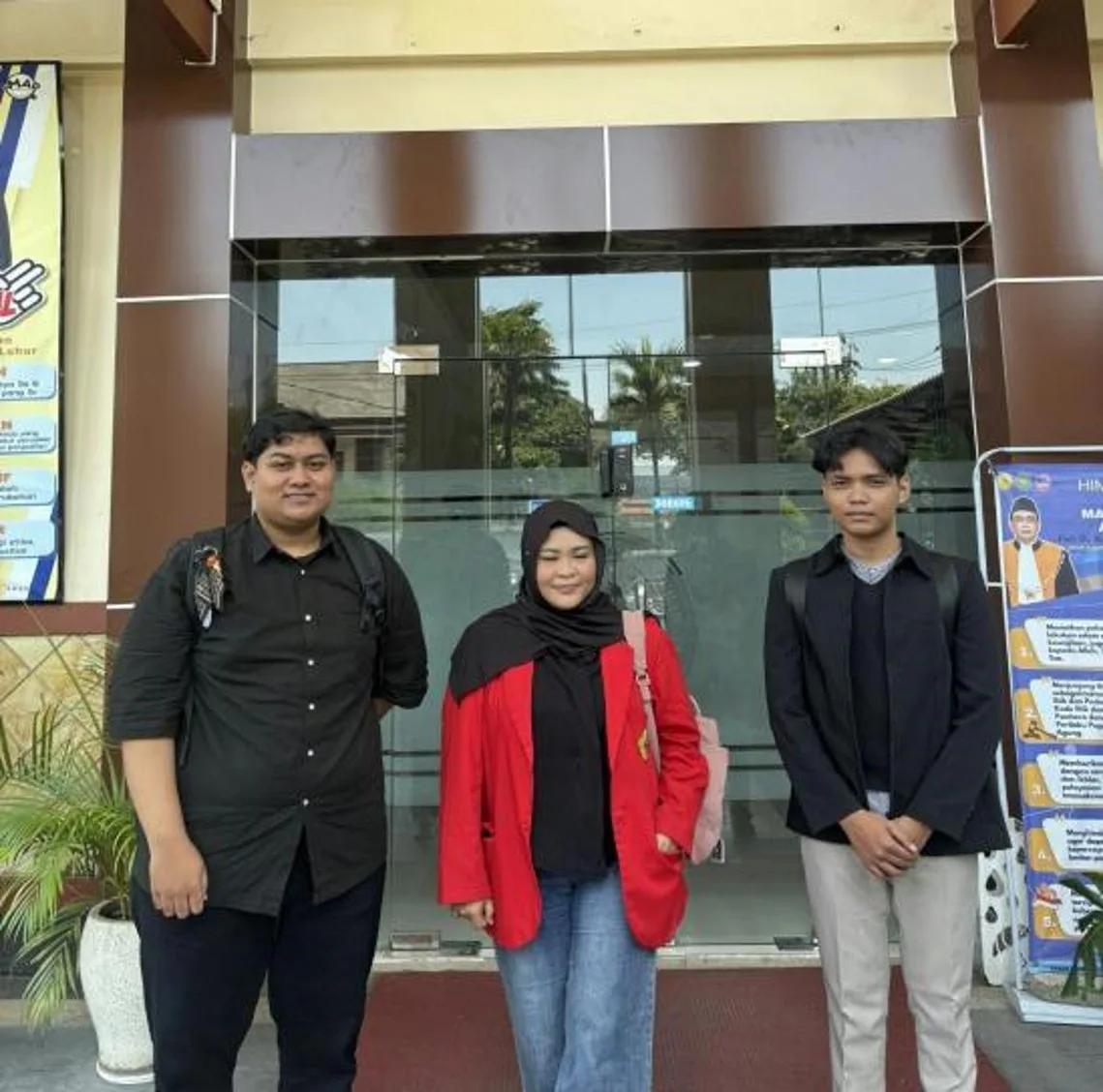
SURABAYA, JurnalPost.com — Law students from the University of 17 Agustus 1945 (Untag) Surabaya participated in a court observation session at the Surabaya Religious Court on Monday, October 5, 2026. This activity is part of their academic curriculum, designed to introduce students to procedural law and the mechanisms of case resolution within the religious court system.
Through this activity, students had the opportunity to witness firsthand how court proceedings are conducted. This observation serves as a means to connect the legal theories learned in the classroom with their application in judicial practice.
While at the Surabaya Religious Court, the students observed various stages of the proceedings, ranging from case examination procedures and the role of the panel of judges to the involvement of the parties in the trial process.
The experience provided a clearer understanding of the implementation of procedural law, including the importance of precision, order, and compliance with procedures at every stage of case resolution.
The Religious Court is a judicial body under the Supreme Court of the Republic of Indonesia authorized to examine, decide, and resolve specific cases in accordance with statutory regulations.
For law students, understanding the mechanisms of the Religious Court is an essential foundation for recognizing the Indonesian judicial system, particularly regarding cases under the jurisdiction of religious courts.
One of the students participating in the activity, Putra Chinto Chamicho, expressed that observing the trial provided a valuable experience in understanding the direct application of the law.
According to him, legal education should not rely solely on lecture materials and the study of legislation. Students also need to see how these rules are applied in actual court proceedings.
Through direct observation, students can gain a more concrete picture of the relationship between procedural law theory and the practice of case resolution in court.
Beyond broadening their horizons, this activity also serves as an opportunity for students to develop their legal analysis skills. By witnessing the trial process, students can understand the importance of each stage of case examination and the responsibilities of the parties involved in the judicial process.
This court observation activity highlights the importance of experience-based learning in higher education, especially in the field of law, which requires a balance between theoretical mastery and practical skills.
The experience of being directly in the court environment is expected to foster critical thinking, increase sensitivity to legal issues, and strengthen students' understanding of the principles of professionalism and integrity in law enforcement.
Through this observation activity at the Surabaya Religious Court, Untag Surabaya law students are expected to be better prepared for the professional world, equipped with both academic knowledge and practical understanding of the judicial system.
This activity also serves as a reminder that legal education does not only take place in the classroom, but also through direct experience to understand how the law is implemented in the lives of the community.




Comments 0
Write a Comment Share your response