


Sidoarjo, JurnalPost.com – Fish scale waste, often dismissed as mere trash, is being transformed into products with both utility and economic value. This effort is being led by the PPK Ormawa team from the Science Education Student Association (HIMA) at UMSIDA through two training sessions held for Nasyiatul Aisyiyah and the Muhammadiyah Student Association (IPM).
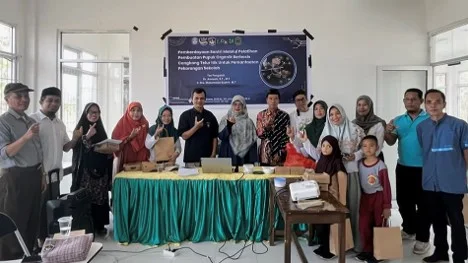
The activities took place on Saturday, September 19, 2026, at the Penatarsewu Village Hall, Tanggulangin District, Sidoarjo Regency.
This training is part of a community empowerment program aimed at enhancing skills in utilizing fish scale waste. Through these sessions, residents and youth are encouraged to see that fish scales, which are typically discarded, can be processed into various useful products with economic development potential.
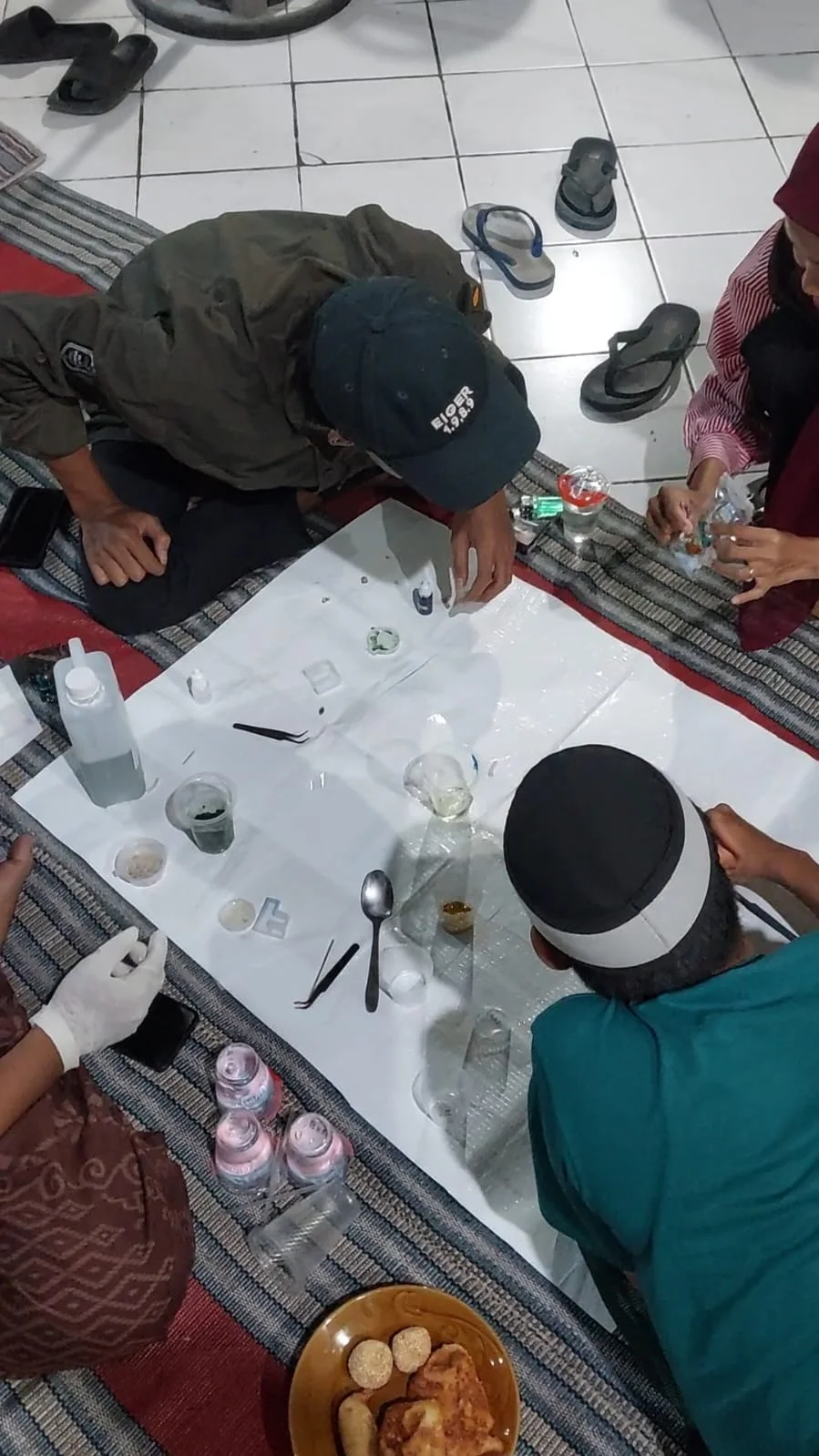
The initiative was led by Abdi, the head and coordinator of the UMSIDA Science Education PPK Ormawa team. All team members were involved in the execution, from preparing materials and equipment to mentoring participants and assisting with the practical sessions.
The involvement of the entire team reflects a spirit of collaboration in implementing this waste-utilization community empowerment program.
Nasyiatul Aisyiyah Trained to Produce Fish Scale Flour
The first training session was conducted with Nasyiatul Aisyiyah, focusing on processing fish scales into flour. Approximately 15 participants attended the session, guided by trainer Anggita.
During the training, Anggita provided explanations and demonstrated the stages of processing fish scales so that participants could easily grasp each step.
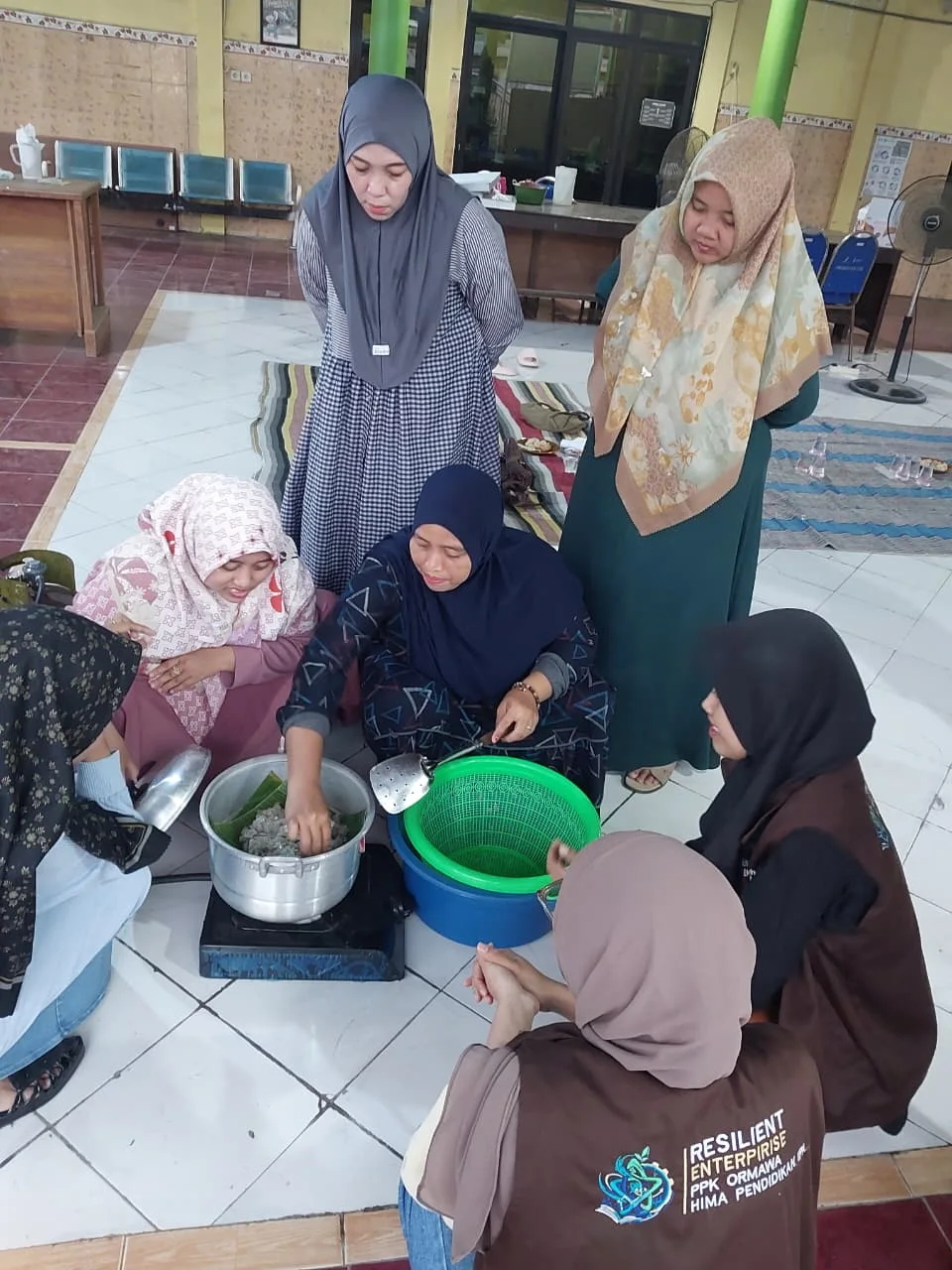
The flour production begins with cleaning the fish scales to remove any remaining impurities. Once cleaned, the scales are dried thoroughly to prepare them for the next stage.
After drying, the fish scales are ground using a machine into a finer consistency. The resulting powder is then sifted to separate the fine particles from any remaining coarse texture.
Sifting ensures the flour reaches the desired consistency. The finished fish scale flour is then packaged in pouches for convenient storage and a professional appearance.
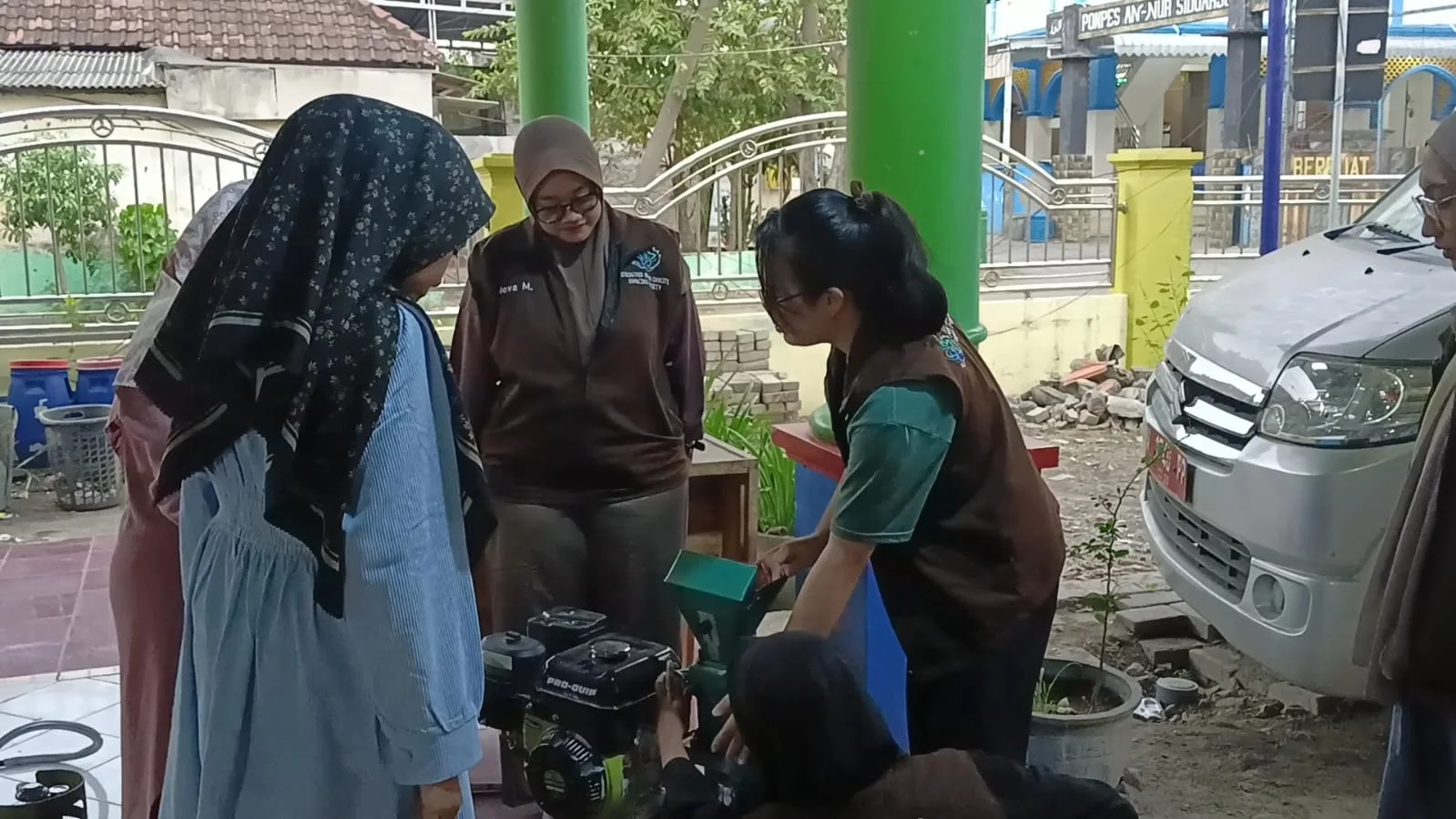
Nasyiatul Aisyiyah participants were directly involved in every stage of the process. Consequently, they gained not only knowledge about waste utilization but also hands-on experience in creating a new product.
This direct practice is intended to enable participants to replicate the process independently after the training concludes.
IPM Youth Learn to Make Keychains
In addition to the flour production training, the UMSIDA Science Education PPK Ormawa team also held a keychain-making workshop for the IPM youth.
Approximately 10 IPM members participated in the session, with Alfina serving as the trainer. In this activity, participants were introduced to using fish scales as a base material for handicrafts.
Alfina provided guidance on the keychain production process and mentored participants throughout the practice. The participants had the opportunity to try firsthand how fish scales can be crafted into attractive and functional items.
Using fish scales for keychains is an example of waste processing that prioritizes creativity. Materials that were previously unused can be transformed into value-added products with potential for further development as handicrafts.
The session with the IPM youth also serves as an effort to engage the younger generation in developing the potential available in Penatarsewu Village.
Through these skills, the youth are expected to identify business opportunities from materials available in their immediate environment, including waste that has not yet been optimally utilized.
Promoting a Circular Economy in Penatarsewu Village
The two training sessions held on the same day share a common goal: to improve participant skills while promoting the transformation of fish scale waste into products with economic value.
Processing fish scales into flour and keychains demonstrates that this waste can be utilized in various ways according to the creativity and needs of the community.
This activity is also part of implementing the circular economy concept within the UMSIDA Science Education PPK Ormawa program. Waste that was previously discarded is now reused and processed into products with new functions and added value.
As a result, waste processing not only helps reduce refuse but also potentially opens doors for new products that can be developed into community-based businesses.
The involvement of the team leader, trainers, participants, and the entire implementation team strengthened the spirit of collaboration. Each member played a specific role in supporting the training, ensuring the activities were carried out collectively.
This collaboration also serves to increase the capacity of student organizations in executing empowerment programs that directly engage the community.
Through the training with Nasyiatul Aisyiyah and the IPM youth, the UMSIDA Science Education PPK Ormawa team hopes that the skills provided will continue to be practiced and developed.
The fish scale flour and keychains are expected to be more than just training outcomes; they could be further developed into products that highlight the local potential of Penatarsewu Village.
This activity is a step toward encouraging the community and the younger generation to be more creative in identifying the potential available in their surroundings. Through mentoring and the skills provided, it is hoped that fish scale waste will continue to be utilized as a valuable product, supporting the economic development of the Penatarsewu village community.


Comments 0
Write a Comment Share your response