


Depok, JurnalPost.com – Spent coffee grounds, which are typically discarded immediately after brewing, hold significant potential for repurposing. Recognizing this opportunity, Industrial Engineering students from Universitas Mercu Buana (UMB) are assisting Zainn Coffee & Roastery in Depok, West Java, in processing coffee waste into an alternative component for planting media.
This initiative is part of a community service program under the "Impactful Students" scheme, themed “Utilizing Zainn Coffee’s Spent Coffee Grounds as an Alternative Planting Medium.”
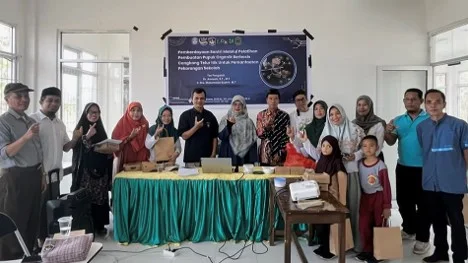
The program was carried out in August 2026 at the Zainn Coffee location in the Leuwinanggung area of Depok. The project received funding support from the Institute for Research and Community Service (LPPM) at Universitas Mercu Buana, while Zainn Coffee served as a partner by providing the raw coffee waste and necessary facilities.
Underutilized Coffee Waste
In its daily operations, Zainn Coffee generates several kilograms of wet coffee grounds. Previously, this waste was collected and disposed of with other organic trash without any sorting or further processing.
While the management of Zainn Coffee had expressed interest in repurposing the grounds, a lack of knowledge regarding processing techniques and limited equipment served as barriers to implementation.
If left to accumulate, these coffee grounds contribute to the volume of organic waste. Organic waste decomposing in landfills also has the potential to generate greenhouse gases, including methane.
In reality, spent coffee grounds contain nutrients beneficial to plants. According to the student team's research, these grounds contain approximately 2.28 percent nitrogen, 0.06 percent phosphorus, and 0.6 percent potassium—all essential nutrients for plant growth.
Introducing Coffee Waste Processing
Through this program, the students introduced a simple method for processing coffee grounds before they are used as a planting medium mixture.
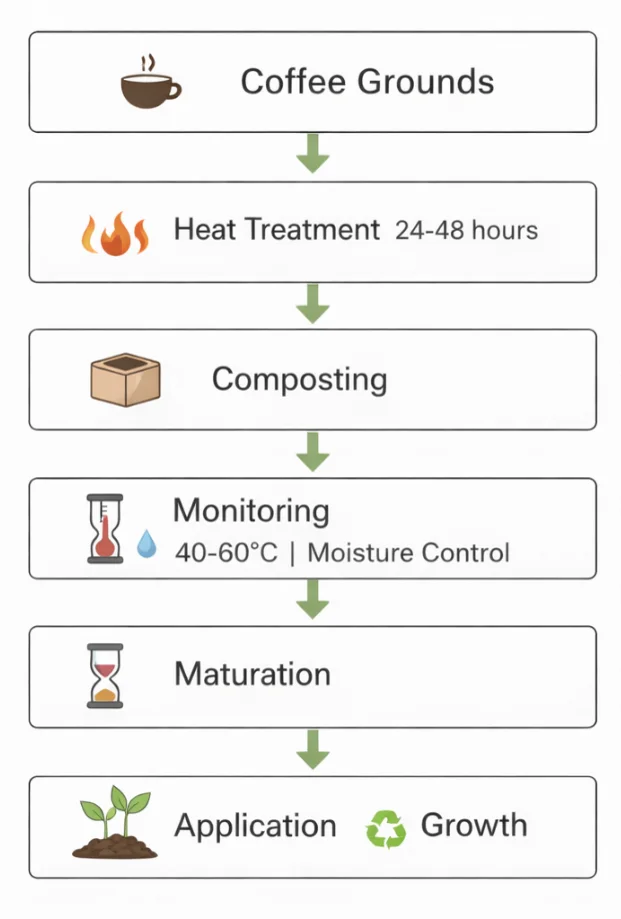
The process begins by collecting the grounds after brewing. They are then dried to reduce moisture content and minimize the risk of mold growth.
Once dry, the coffee grounds are mixed with supporting materials and an EM4 solution. The mixture then undergoes a fermentation process until it is ready to be used as a planting medium.
This processing stage is crucial, as using raw coffee grounds in excessive amounts can hinder plant growth due to residual caffeine and acidity levels.
In addition to providing technical knowledge on waste management, the student team introduced the concepts of circular economy and green supply chain to the Zainn Coffee management.
Through these concepts, waste from business activities is no longer viewed merely as trash, but as a resource that can be repurposed to create new value.
The team also encouraged the management to begin tracking the daily volume of coffee waste produced. This record-keeping is intended to help the business monitor waste levels and evaluate the effectiveness of their processing efforts.
During the implementation, some of the material delivery and presentations were conducted online.
Supporting the SDGs
This coffee waste utilization program is also aligned with several Sustainable Development Goals (SDGs), Sustainable Development Goals (SDGs).
The activity supports SDG 12 on Responsible Consumption and Production by reducing waste and repurposing business byproducts.
Furthermore, the program relates to SDG 13 on Climate Action, primarily through the reduction of organic waste that could otherwise generate greenhouse gas emissions.
The use of processed coffee grounds as a planting medium also aligns with SDG 15 on Life on Land.
For the students, this activity serves not only as a form of community service but also as an opportunity to apply Industrial Engineering principles directly to help solve problems faced by MSMEs.
Approaches such as waste management, process efficiency, circular economy, and green supply chain can be applied to small-scale businesses using relatively simple methods.
Looking ahead, the student team hopes that Zainn Coffee will be able to carry out the coffee waste processing independently and sustainably.
This implementation is also expected to serve as a model for other coffee shop owners to begin managing their operational waste into something more beneficial and value-added.



Comments 0
Write a Comment Share your response