

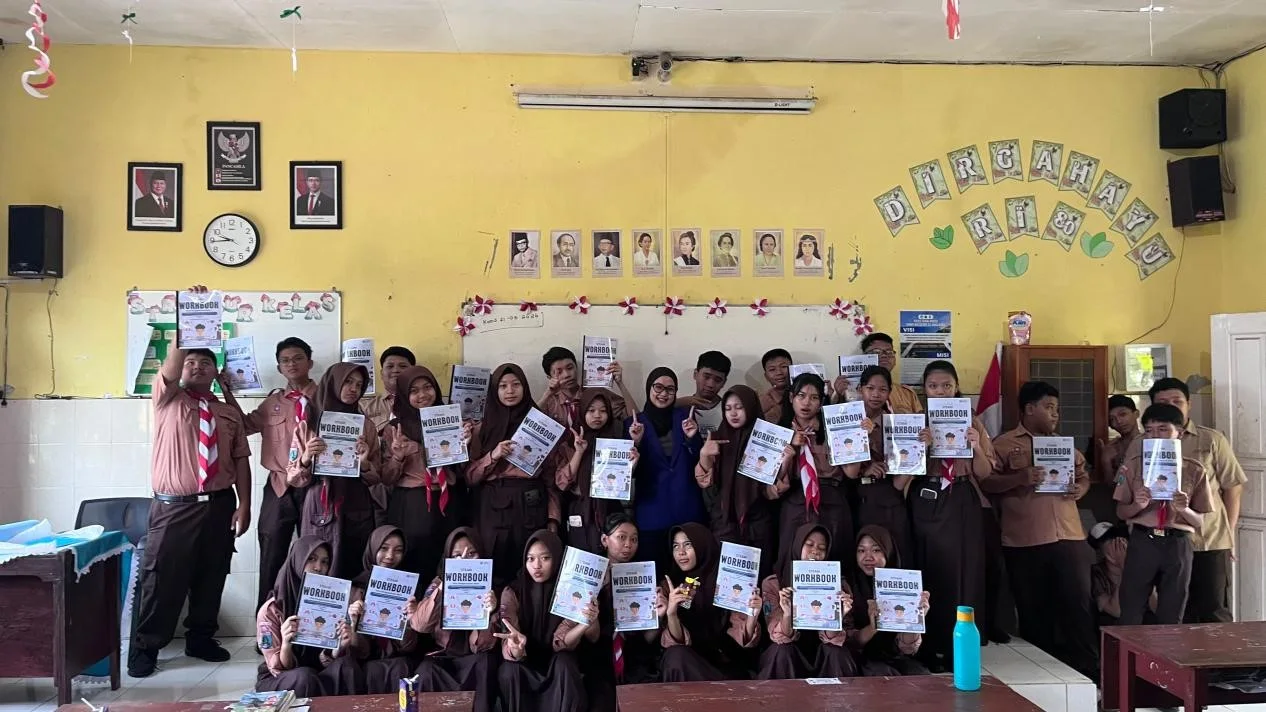
Malang, JurnalPost.com — Faculty and students from the Department of Science Education at Universitas Negeri Malang (UM) have developed the DIGESTA teaching material (Digestive and Respiratory System STEAM-Workbook) to support science learning while fostering collaboration skills among eighth-grade middle school students.
This workbook covers human digestive and respiratory systems using a STEAM approach, integrating science, technology, engineering, arts, and mathematics. Through group activities, students are encouraged to grasp concepts, solve problems, share responsibilities, and produce collaborative work.
The development of DIGESTA is led by Erni Yulianti, S.Pd., M.Pd., Ph.D., a lecturer in the UM Department of Science Education, alongside Arnita, a student from the same department.
This project was carried out through the Book Publication Scheme research program, supported by the 2026 Universitas Negeri Malang Internal Non-APBN Book Grant, under grant contract number 14.04.1296/UN32.14.1/LT/2026.
Connecting Science Material to Daily Life
The development of DIGESTA stems from the need for teaching materials that provide space for students to learn together. Science education is expected to not only assist in mastering the material but also to habituate students to communicating, sharing ideas, and respecting the opinions of group members.
The digestive and respiratory system topics were chosen because they are closely related to daily life. Both subjects also offer opportunities to explore health issues through discussion, problem-solving, and group projects.
The development process included identifying learning needs, designing the workbook structure and activities, drafting materials and worksheets, and implementing them in science lessons. Each stage was directed to ensure that the materials, activities, and learning objectives were interconnected.
“This workbook summarizes essential material regarding the human digestive and respiratory systems. We designed the learning to be interactive through various group activities, problem-solving, and creative projects. Consequently, students are required to actively contribute, be flexible, take responsibility, and respect the opinions of other group members,” said Erni Yulianti, the lead researcher.
Arnita explained that DIGESTA does not just ask students to read material and complete exercises. Students are also guided to apply their knowledge through activities that combine elements of technology, engineering, arts, and mathematics within a daily context.
From GERD Analysis to Respiratory Measurement
Activities in DIGESTA include analyzing health issues such as gastroesophageal reflux disease (GERD), calculating daily caloric needs, and designing environmental illustrations that support bodily health.
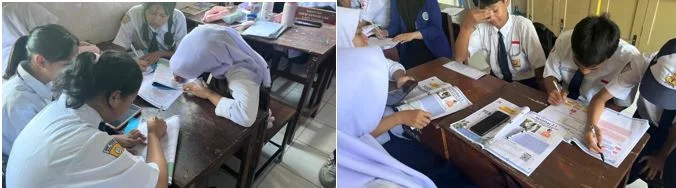
Students also practice measuring respiratory rates under various physical activity conditions. This series of activities is designed to help them connect science concepts to real-world situations while training critical thinking and communication skills regarding their observations.
In practice, students work in groups with assigned roles and responsibilities. They discuss, express opinions, complete tasks, and produce work together.
The assessment of collaboration skills refers to indicators developed by Greenstein (2012), which include active contribution, work productivity, responsibility, flexibility and compromise, and mutual respect.
With these indicators, the assessment focuses not only on the final task results but also on the interaction process and the engagement of each group member during the learning session.
Supporting Quality Education
The development of DIGESTA is aimed at supporting Sustainable Development Goal (SDG) Number 4 regarding Quality Education.
Through contextual activities, this workbook is expected to help teachers provide more active, student-centered science learning. The integration of STEAM also provides opportunities for students to develop creativity, problem-solving abilities, and teamwork skills.
Although designed to train collaboration, this development manuscript does not yet contain results from measuring improvements in student skills. Its utilization is part of an effort to provide alternative teaching materials for science learning at the middle school level.
Book Entering Editing Phase
The book titled “DIGESTIVE STEAM-Workbook: Fostering Students' Collaboration Skills” which consists of over 100 pages, is now entering the final language review or proofreading stage and is currently in the process of applying for an ISBN.
In addition to publishing the book, the team plans to disseminate the development results through educational posters and social media to reach teachers, students, and the wider community.
DIGESTA is expected to become a preferred teaching material for middle school science teachers to present contextual science learning and provide broader space for students to collaborate.


Comments 0
Write a Comment Share your response