

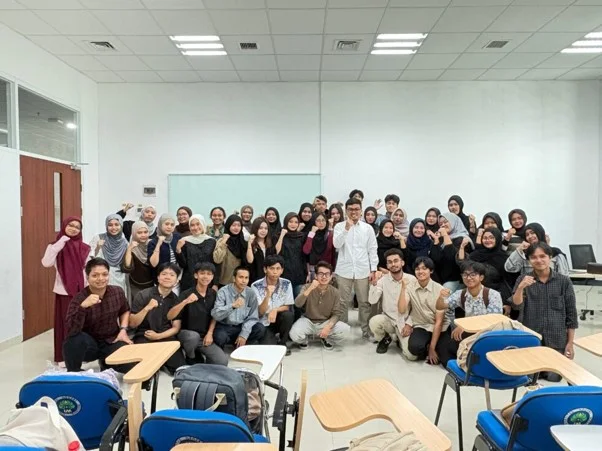
MALANG, JurnalPost.com – The transition of learning materials from print to digital formats depends not only on technological advancements but also on the psychological readiness of students to utilize them. This was revealed in a recent study conducted by a research team from Universitas Negeri Malang (UM) regarding the factors influencing the acceptance of digital learning materials in higher education.
The study, titled “Determination of Digital Learning Material Acceptance Among Students: The Role of Self-Efficacy and Perceived Usage,” was carried out under the Decentralized Research scheme of the Faculty of Economics and Business, funded by the Non-APBN Universitas Negeri Malang for the year 2026.
The research was led by Fuad Abdul Fattah, S.Pd., M.Pd., alongside two team members, Ika Zutiasari, S.Pd., M.Pd., and Dr. Iva Khoiril Mala, S.Pd., M.Pd. The study involved 116 students from Universitas Negeri Malang and Universitas Sebelas Maret (UNS) as respondents.
This research stems from the increasingly widespread use of digital learning materials in higher education. Although technology allows students to access learning materials more flexibly, acceptance is not always determined by the availability of digital devices and facilities.
Fuad explained that the success of digital learning transformation is closely linked to students' confidence in their ability to utilize technology.
“The transformation of learning materials into digital formats is not just about replacing printed books with digital files; it concerns the psychological readiness of students to accept them. We wanted to understand what actually drives students to be willing and able to use digital learning materials as a learning resource,” said Fuad.
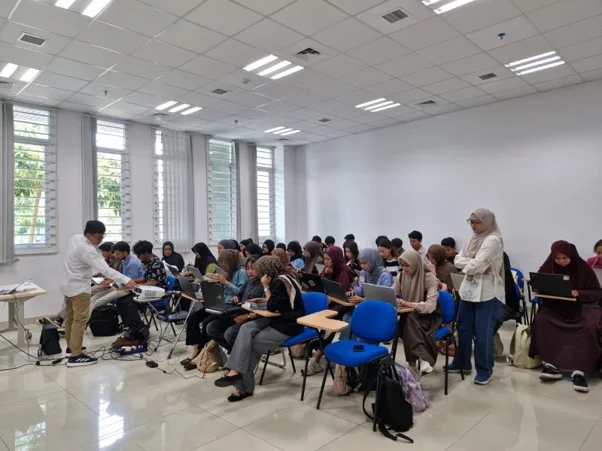
Self-Efficacy Influences Technology Acceptance
To identify the factors influencing the acceptance of digital learning materials, the research team adapted the Technology Acceptance Model (TAM) framework. This model is used to understand how individuals accept and use technology based on their perceptions of its usefulness and ease of use.
In this study, self-efficacy was positioned as an initial variable influencing students' perceptions of digital learning materials. The data obtained were then analyzed using the Structural Equation Modeling based on Partial Least Squares (SEM-PLS) method.
The analysis results indicate that self-efficacy has a significant influence on the perceived usefulness and perceived ease of use of digital learning materials.
Self-efficacy is an individual's belief in their ability to complete tasks or face specific challenges. In the context of digital learning, students with higher levels of self-efficacy tend to have a more positive outlook on using technology as a learning tool.
These findings suggest that the successful implementation of digital learning materials is not sufficiently supported by the mere provision of platforms or technology-based learning materials. Higher education institutions must also pay attention to the students' capabilities and confidence in operating such technology.
Ease of Use as a Critical Factor
One of the interesting findings of this study is the significant role of perceived ease of use in shaping student attitudes toward digital learning materials.
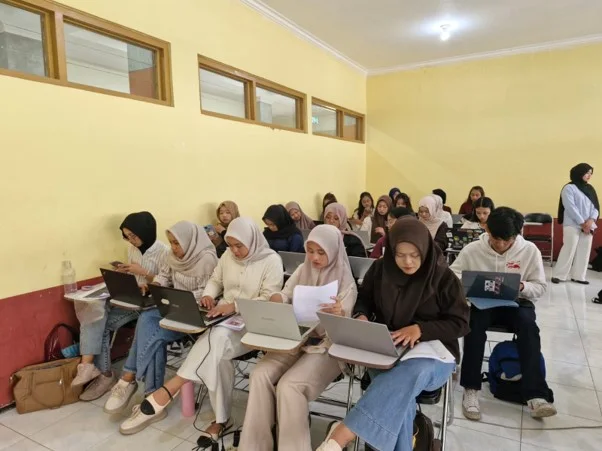
Based on the research results, perceived ease of use has a more dominant influence than perceived usefulness in shaping student attitudes.
This means that students tend to respond more positively to digital learning materials when the technology used is easy to understand, access, and operate in daily learning activities.
This positive attitude subsequently plays a role in increasing students' intentions to continue using digital learning materials as part of their learning process.
“These findings confirm that ease of access and use are primary considerations for students in their daily learning lives, rather than solely the long-term benefits offered,” explained Fuad.
The research results illustrate that the development of digital learning materials needs to consider the user experience. Materials presented through digital technology should not only contain high-quality content but also be designed to be easily used by students with varying levels of technological proficiency.
Providing Input for Digital Learning Development
The findings of this study are expected to serve as a consideration for lecturers, study program managers, and higher education institutions in formulating digital learning transformation strategies.
The development of digital learning materials must be carried out comprehensively by considering aspects of technology, ease of use, and the readiness of students as the primary users.
In addition to providing digital learning facilities, higher education institutions can also consider mentoring activities and digital competency strengthening to help students increase their confidence in their ability to utilize technology.
This approach is expected to encourage the use of digital learning materials more effectively while simultaneously improving the student learning experience.
This research also emphasizes the importance of understanding user needs before implementing technology-based learning innovations on a broad scale.
By paying attention to psychological factors and student perceptions, the development of digital learning materials has the potential to provide more optimal benefits for the higher education process.
Supporting SDGs 8 and Strengthening Student Digital Competency
In addition to contributing to the development of learning in higher education, this research is also linked to the achievement of Sustainable Development Goals (SDGs), specifically the eighth goal or SDG 8 regarding decent work and economic growth.
Strengthening students' digital competency is an important aspect of preparing human resources capable of adapting to the changing needs of the world of work.
Students who have confidence in using technology are more likely to be prepared to face a work environment that increasingly relies on digital systems and devices.
The ability to utilize technology effectively can also support increased productivity, creativity, and the competitiveness of higher education graduates.
Through the results of this study, the UM research team hopes that the development of digital learning will not only focus on the modernization of learning materials but also pay attention to improving students' capabilities as technology users.
Thus, digital transformation in higher education is expected to make a long-term contribution to the formation of human resources that are adaptive, innovative, and competitive in facing the developments of the world of work.







Comments 0
Write a Comment Share your response