

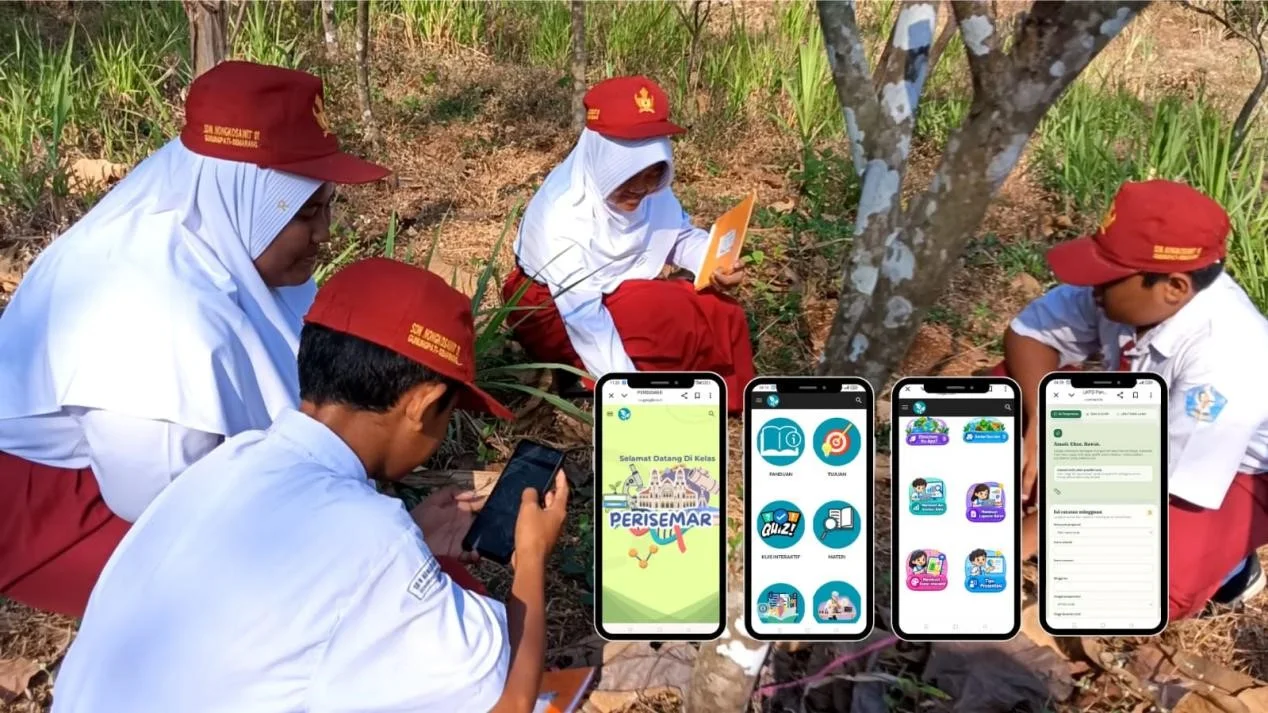
SEMARANG, JurnalPost.com – The land behind SD Negeri Nongkosawit 01, in the Gunungpati District of Semarang, is no longer just an empty space. The area has been repurposed as a productive garden and a learning laboratory for students through an innovation called Lumbung Petani Cilik (Little Farmers' Granary) supported by PERISEMAR.
This program invites students to learn about agricultural processes while conducting simple research by utilizing the potential of the environment around the school.
The idea for the Little Farmers' Granary stemmed from the students' curiosity about the food they consume daily. After participating in the Free Nutritious Meal (MBG) program, various questions arose, ranging from the origins of food ingredients to the processes and people involved in producing them.
This curiosity was then developed into a learning activity utilizing the land behind the school. The area, which was previously underutilized, was transformed into a garden where students can observe plants, the environment, and the growth processes of various types of vegetation.
Through this activity, Phase C students do not just learn from textbooks. They are directly involved in observing the environment, identifying plants, recording surrounding conditions, conducting simple research, processing data, and presenting their findings.
The school garden has become an open learning space that allows students to connect the theories learned in class with various phenomena they encounter in daily life.
Supported by PERISEMAR Digital Media
The learning process in this program is strengthened by PERISEMAR, or Mini Research Learning Based on Semarang's Local Potential.
PERISEMAR is a digital medium designed to help students navigate the stages of research-based learning. It features various tools, such as learning materials, videos, interactive activities, educational games, a virtual laboratory, plant tracking, data analysis, and reflection activities.
The use of technology in this program is not intended solely to provide learning in a digital format. Technology is used as a tool to help students find information, record observations, analyze data, and build understanding based on the experiences they gain firsthand.
In Natural and Social Sciences (IPAS) lessons, for example, students can study ecosystem concepts by observing the biotic and abiotic components found in the school garden.
They are then guided to understand the relationships between ecosystem components, energy flow, material cycles, natural resources, technology, and various efforts to maintain environmental sustainability.
This learning is also integrated with several other subjects.
In Mathematics, students perform measurements and process observation data. In Indonesian Language, they practice conducting interviews, compiling research reports, and presenting their findings. Meanwhile, in Art, students can express their ideas through posters or other creative works.
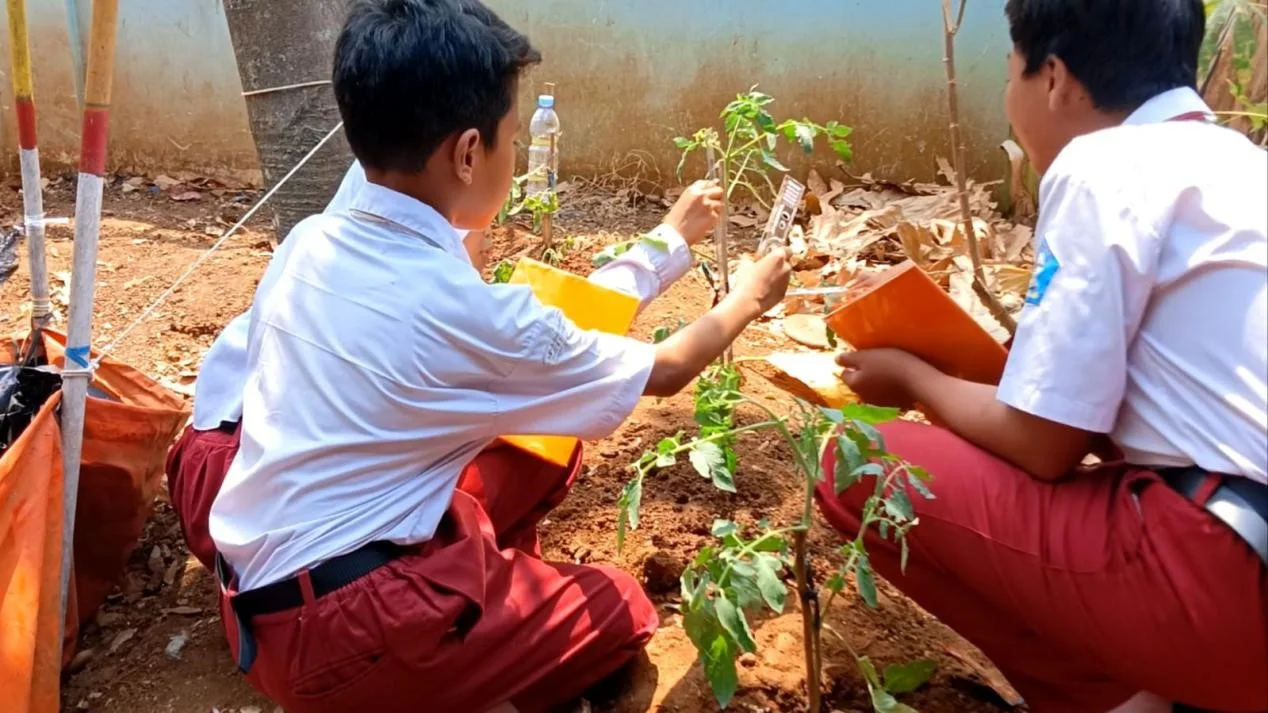
From Compost to Eco-Enzyme
Learning does not stop at observation and research activities. Students are also directed to produce various simple works related to environmental issues.
Some of the activities carried out include making plant watering tools from used bottles, processing organic waste into compost, and learning the process of making eco-enzyme from fruit peel waste.
The results of these various activities can subsequently be introduced through a Market Day event at school.
Through this approach, students not only gain theoretical knowledge but also see firsthand how the knowledge they learn can be used to create simple works and solutions that provide benefits.
Training Research Skills Early On
The Little Farmers' Granary program also serves as a means to develop various student competencies.
Through activities such as observing, researching, discussing, creating works, and presenting research results, students have the opportunity to practice critical thinking, creativity, communication, and collaboration skills.
Activities in the school garden also provide experience regarding the importance of protecting the environment and recognizing the agricultural sector and local resource potential around where they live.
Introduction to the world of agriculture is important, especially for children growing up amidst urban development and increasingly limited direct interaction with food production activities.
The innovation developed by SD Negeri Nongkosawit 01 shows that research-based learning does not always have to be done using complex laboratory facilities.
The immediate environment can be a source of learning when utilized in a planned manner and connected to learning materials.
The school garden, which was previously just a part of the school grounds, has now developed into a learning space where students learn about nature, technology, data processing, and the process of creating a product.
Through the Little Farmers' Granary supported by PERISEMAR, students' curiosity is met with real-world experience and the use of technology. This approach is expected to make the learning process more contextual, enjoyable, and relevant to daily life.



Comments 0
Write a Comment Share your response