

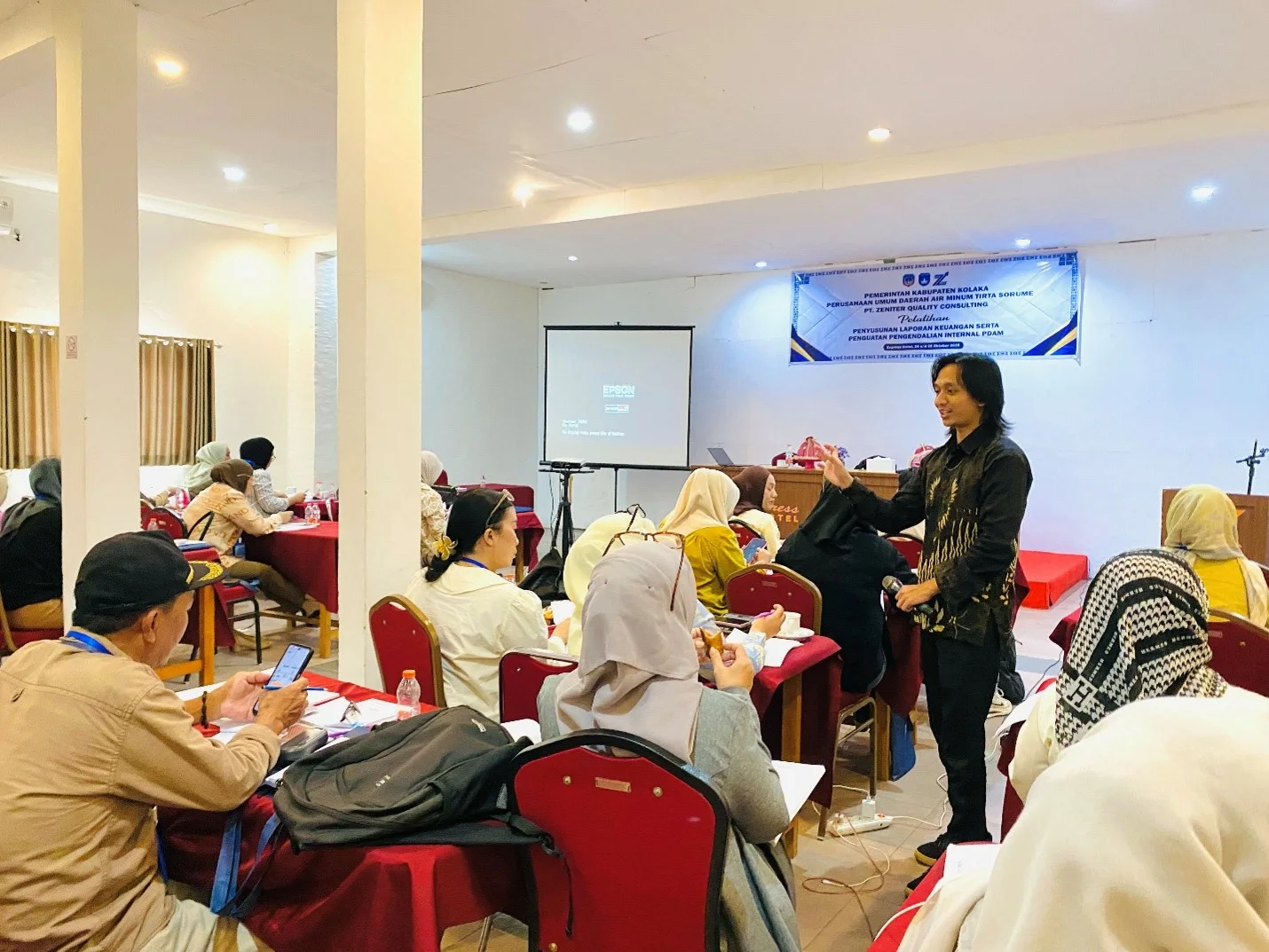
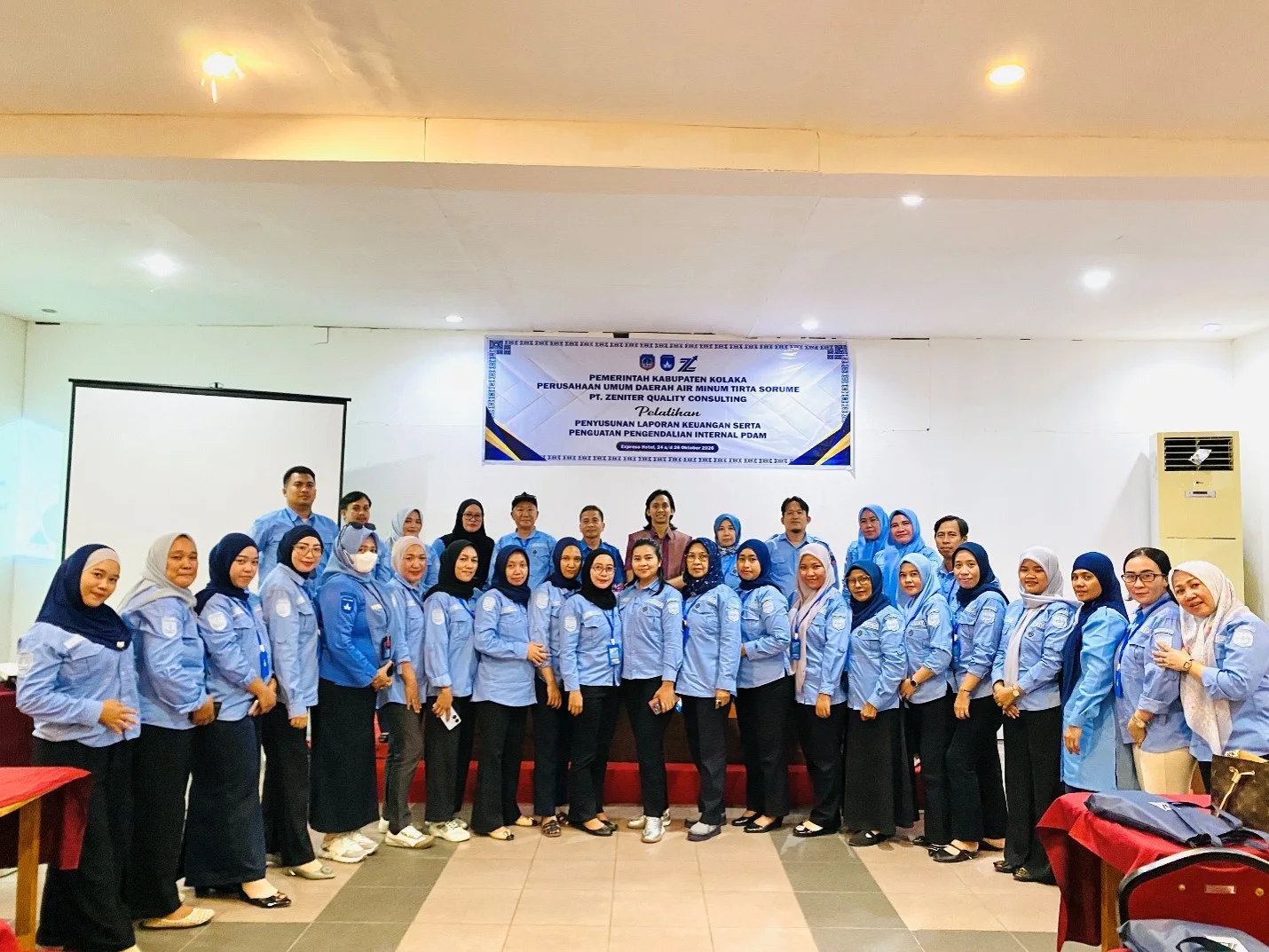
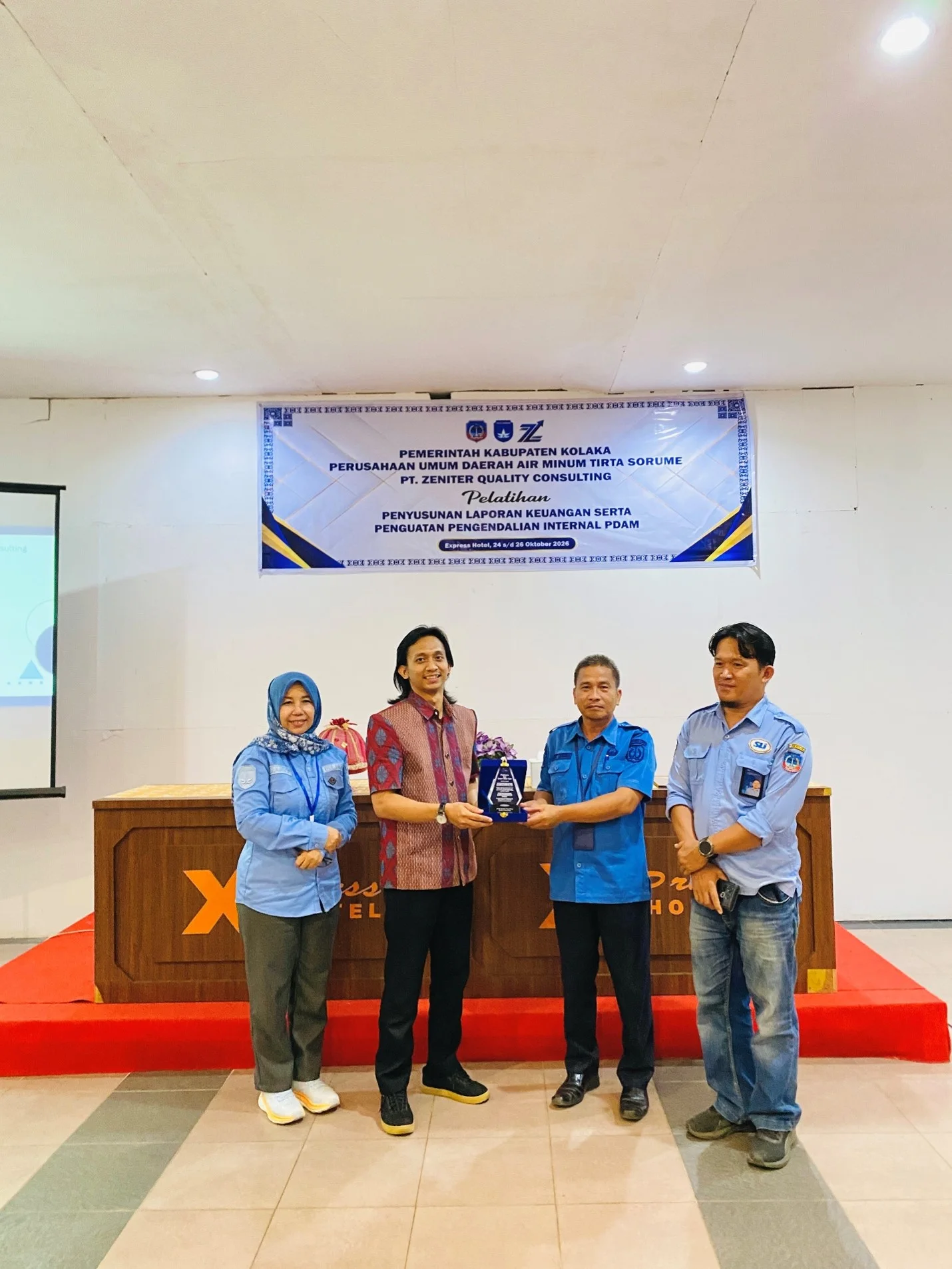
KOLAKA, JurnalPost.com – A total of 35 employees from the Regional Public Water Utility Company (Perumdam) Tirta Sorume in Kolaka Regency participated in a three-day training on financial report preparation and internal control strengthening, held from October 24–26, 2026.
The training featured Ari Utomo Saputra, a lecturer from the Institut Teknologi Sains dan Bisnis Muhammadiyah (ITSBM) Selayar, as the keynote speaker. The activity aimed to improve employees' abilities in managing financial administration, preparing reports according to accounting standards, and strengthening the company's internal control systems.
During the training, participants not only received theoretical material but also engaged in practical exercises involving transaction recording, financial report preparation, risk identification, and the design of internal control systems.
Strengthening Accounting Understanding and Financial Reporting
The training material was structured in stages so that participants could understand the entire financial management process, from recording transactions to presenting financial statements.
On the first day, participants gained an understanding of the characteristics of the water supply business, source documents for transactions, accounting policies, and the transaction recording process leading to the trial balance.
Entering the second day, the learning continued with the preparation of adjusting entries, reconciliations, and the drafting of financial statements based on the Financial Accounting Standards (SAK) for Private Entities.
Interestingly, the participants' enthusiasm led to adjustments in the learning method. At the request of the participants, Ari provided additional exercises using 15 new transactions to reinforce their understanding of the financial recording process.
These exercises were conducted sequentially, starting from journal entries, posting transactions to the general ledger, creating adjusting entries, and finally preparing the financial statements.
Through this hands-on approach, participants are expected to not only understand accounting concepts but also be able to apply them in their daily work.
"A good financial report is not just about being balanced. Every figure must originate from valid documentation, be recorded in the correct period, and be safeguarded by controls that are truly implemented," said Ari Utomo Saputra.
Strengthening Internal Control as a Training Focus
In addition to the ability to prepare financial reports, this training also gave special attention to the importance of internal control in managing regional companies.
On the third day, participants studied risk assessment, the segregation of duties and responsibilities, the preparation of Risk-Control Matrix, testing the effectiveness of controls, and planning follow-up improvements.
This material was considered essential to help the company identify potential weaknesses in operational and financial administration processes at an early stage.
With internal controls running consistently, the company is expected to minimize the risk of recording errors, improve accountability, and ensure that every financial process is carried out according to procedure.
To support the application of the training results, participants were also provided with learning modules, workbooks, and Microsoft Excel-based tools.
These tools can be used directly in the work environment, specifically for compiling risk registers, control matrices, and follow-up plans for identified findings or weaknesses.
Encouraging SOP Development and Continuous Supervision
Ari emphasized that improving the quality of financial management cannot be achieved through training alone. According to him, the company needs to ensure the existence of written policies, clear operational procedures, and continuous supervision.
He hopes that Perumdam Tirta Sorume can use this activity as an initial step in strengthening the company's financial governance.
"The first step is to establish written accounting and financial policies that do not yet exist, then translate them into SOPs executed by every work unit. After that, the Internal Audit Unit (SPI) must supervise and test the implementation of these SOPs, so that weaknesses can be found and corrected early," explained Ari.
The consistent application of standard operating procedures (SOPs) in every work unit is a crucial aspect of building a transparent and accountable financial management system.
Meanwhile, the Internal Audit Unit (SPI) is expected to ensure that every procedure is carried out according to regulations and to provide recommendations for improvement if weaknesses are found.
Expected Impact on Service Quality
The series of training sessions concluded with a post-test to measure the participants' understanding of the material provided over the three days.
This evaluation is part of an effort to determine the extent to which participants understand the process of preparing financial reports and implementing internal controls.
Through this training, the employees of Perumdam Tirta Sorume are expected to become more skilled in preparing accurate, reliable, and timely financial reports.
Furthermore, the ability to identify risks and execute internal control procedures is expected to support more effective and accountable company management.
Strengthening human resource capacity in the financial sector is expected to not only impact the improvement of the company's administrative quality but also contribute to better water supply services for the people of Kolaka Regency.




Comments 0
Write a Comment Share your response