


SURABAYA, JurnalPost.com — Accompanying a patient to a healthcare facility involves more than just ensuring they arrive at their destination. Throughout the journey, the patient's condition must be monitored, any changes must be identified, and critical information regarding their status must be effectively communicated to healthcare professionals.
This understanding was a key focus of a community service program titled “Strengthening Medical Escort Protocols: Integrating Best Practices for Patient Transportation for Health Volunteers in Wonocolo District” organized by Nahdlatul Ulama University of Surabaya (UNUSA) on Saturday, September 19, 2026.
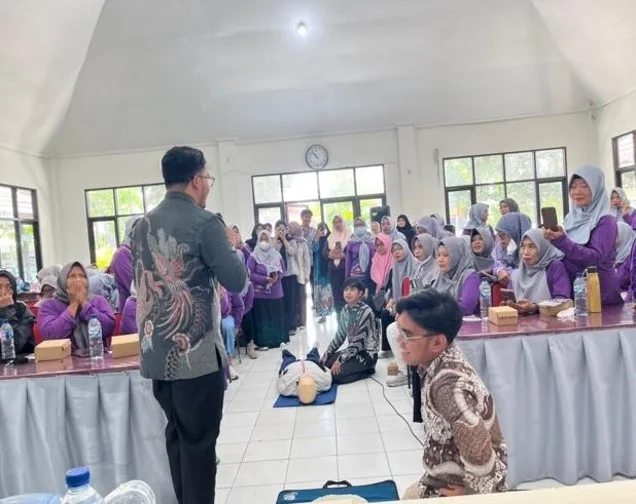
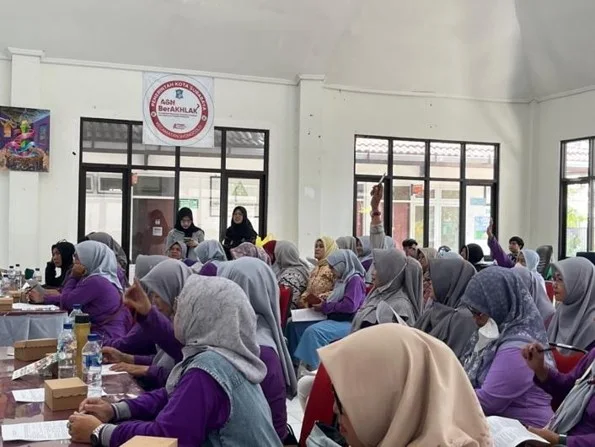
A total of 48 health volunteers participated in the event, which featured presentations, discussions, and practical training on patient accompaniment during transport.
From the start, participants were encouraged to understand that being a patient escort involves specific roles, responsibilities, and boundaries that must be respected to ensure patient safety.
Medical Escort Is More Than Just Transporting Patients
In the concept of medical escort, the escort assists the patient during travel to and from healthcare facilities while remaining attentive to the patient's condition and safety.
However, this role does not mean that volunteers should take over the duties of healthcare professionals.
Volunteers can help by observing changes in the patient's condition, maintaining the patient's comfort and positioning during the trip, relaying information to medical staff, and assisting with coordination when necessary.
Meanwhile, medical procedures that require professional competence and authorization must remain the responsibility of healthcare workers.
Understanding these boundaries is crucial because a patient's condition during transit is not always predictable. A patient who initially appears stable may experience a change in status, requiring volunteers to know when they can continue to provide support and when they must immediately seek help from medical professionals.
Before Departing, Ensure the Patient's Condition
A vital part of the material presented to participants was the preparation required before transporting a patient to a healthcare facility.
Escorts were introduced to the check firstprinciple, which involves conducting an initial assessment of essential factors before the journey begins.
The patient's identity must be verified first. The patient's general condition must also be observed, including ensuring that necessary documents or referral letters are ready.
Medications and any special needs for the journey must also be prepared. Furthermore, the patient's positioning and vehicle safety must not be overlooked.
Educational leaflets distributed to participants summarized these steps in a simple and practical format.
With these leaflets, the knowledge gained by participants does not end when the event concludes, but can be referenced whenever volunteers need to assist patients in their community.
During the Journey, Monitor the Patient's Condition
Once the vehicle begins moving, the escort's responsibility is not over.
The patient's condition must be continuously monitored throughout the trip. Key aspects to observe include the level of consciousness, breathing, pain or discomfort, bleeding, and any changes in the patient's general state.
A simple principle introduced to the volunteers during this event was “Monitor, Communicate, and Protect.”
Volunteers need to monitor the patient's condition, communicate any changes observed, and protect the patient from various risks during the journey, including the risk of falls or injury.
The training session was designed to be interactive so that participants did not just listen to theoretical material.
Participants also gained insights through examples of situations that might occur while transporting patients to healthcare facilities.
Volunteers Must Recognize Warning Signs
The ability to recognize warning signs is a critical part of the patient accompaniment process.
Certain conditions should not be treated as minor complaints, including a decrease or loss of consciousness, severe difficulty breathing, heavy or uncontrollable bleeding, seizures, and severe chest pain.
Sudden physical weakness, difficulty speaking, facial drooping, or a rapidly deteriorating condition are also signs that require immediate attention.
Some of these warning signs were included in the leaflets as a practical guide for volunteers when providing assistance.
Nevertheless, volunteers are not expected to take over medical treatment.
In fact, one of the most important competencies for volunteers is understanding the limits of their capabilities and knowing when to immediately seek help from healthcare professionals or emergency services.
Do Not Lose Patient Information During Handover
The accompaniment process is not fully complete when the patient arrives at the healthcare facility.
The process of handing over information to medical staff plays a vital role, as it helps medical personnel understand the patient's condition prior to arrival.
Escorts must be able to explain the patient's identity, the symptoms experienced, the time when changes in condition began, actions already taken, and any significant changes that occurred during the journey.
Simple but accurate information can help healthcare workers obtain an initial overview of the patient's condition.
The discussion also provided a space for participants to connect the material learned with real-life situations they might encounter while assisting community members.
Various questions from the volunteers helped clarify actions that can be taken within their capacity versus conditions that require immediate involvement from healthcare professionals.
Prepared Volunteers, Safer Patients
Strengthening the understanding of medical escort is a crucial step toward ensuring health volunteers can perform their roles in a more focused and safe manner.
Volunteers do not need to be medical professionals to help ensure patient safety.
However, they must understand what to look for, what information to relay, how to maintain patient safety during transit, and when professional help must be requested immediately.
Strengthening the capacity of health volunteers is also aligned with efforts to achieve the Sustainable Development Goals (SDGs), specifically Goal 3: Good Health and Well-being.
Understanding medical escort can support improved responses to emergency conditions before patients reach healthcare facilities, help reduce the risk of deterioration during transport, and support access to safer, higher-quality healthcare services.
Through presentations, discussions, demonstrations, and educational leaflets, participants gained practical tools that can be applied when assisting patients in the community.
Ultimately, the goal of accompaniment is not just to get the patient to the healthcare facility.
The patient must arrive safely.
Prepared volunteers, safer patients.









Comments 0
Write a Comment Share your response