


JurnalPost.com Students from Yogyakarta State University (UNY) participating in the Community Service Program (KKN-R 13005), known as Semai Kedundang, have launched an education and mentoring program on digital payment systems for Micro, Small, and Medium Enterprises (MSMEs) in Padukuhan Kedundang III, Kedundang, Temon, Kulon Progo Regency, Yogyakarta Special Region.
The program, titled GEMA QRIS or Education and QRIS Installation Movement aims to help MSME owners understand and adopt QRIS (Quick Response Code Indonesian Standard) as a cashless payment method.
Through QRIS, business owners can accept payments from various digital payment applications and service providers using a single QR code. The implementation of this system is expected to simplify transactions while supporting the growth of the digital payment ecosystem among MSMEs.
This activity is also part of a community service program based on the Sustainable Development Goals ( Sustainable Development Goals ), specifically SDG 8 regarding Decent Work and Economic Growth.
In its execution, the program utilizes the Technology Acceptance Model (TAM) as a framework to assess the readiness and willingness of MSME owners to adopt digital payment technology.
The GEMA QRIS program is an individual project initiated by Khaylani Putri Aulia, a Management student at UNY. The program targets 11 MSMEs in the Kedundang III area across various business sectors.
Most of these MSMEs operate in the culinary and processed food sectors, such as meatball skewer sales, tofu production, goat milk, aloe vera products, and butterfly pea flower tea. These businesses generally have high daily transaction frequencies.
Additionally, there are businesses in the service and craft sectors, including tent rentals, laundry, clothing alterations, fashion, accessories, and tombstone manufacturing.
The implementation of GEMA QRIS was carried out independently in four stages. The first stage involved preparation, including coordination with the Head of Kedundang III to obtain permission, conducting an initial survey of the 11 target MSMEs, and preparing socialization materials.
The next stage was direct socialization to each MSME owner. During these sessions, students explained the definition of QRIS, its benefits, registration requirements, and information regarding the Merchant Discount Rate (MDR).
Explanations regarding the MDR were provided to ensure business owners had clear information and avoided misconceptions about the costs associated with using the QRIS payment system.
The third stage involved door-to-door door-to-doorassistance with registration, installation, and education on using QRIS. This support covered the entire process from data entry and QR code generation to printing and transaction simulation.
Once QRIS was successfully activated, the activity continued with monitoring and evaluation to ensure the payment system could be effectively used in daily transactions.
Of the 11 initial target MSMEs, six were successfully reached in person. This limitation was due to the busy schedules of the business owners and the limited time available for the program.
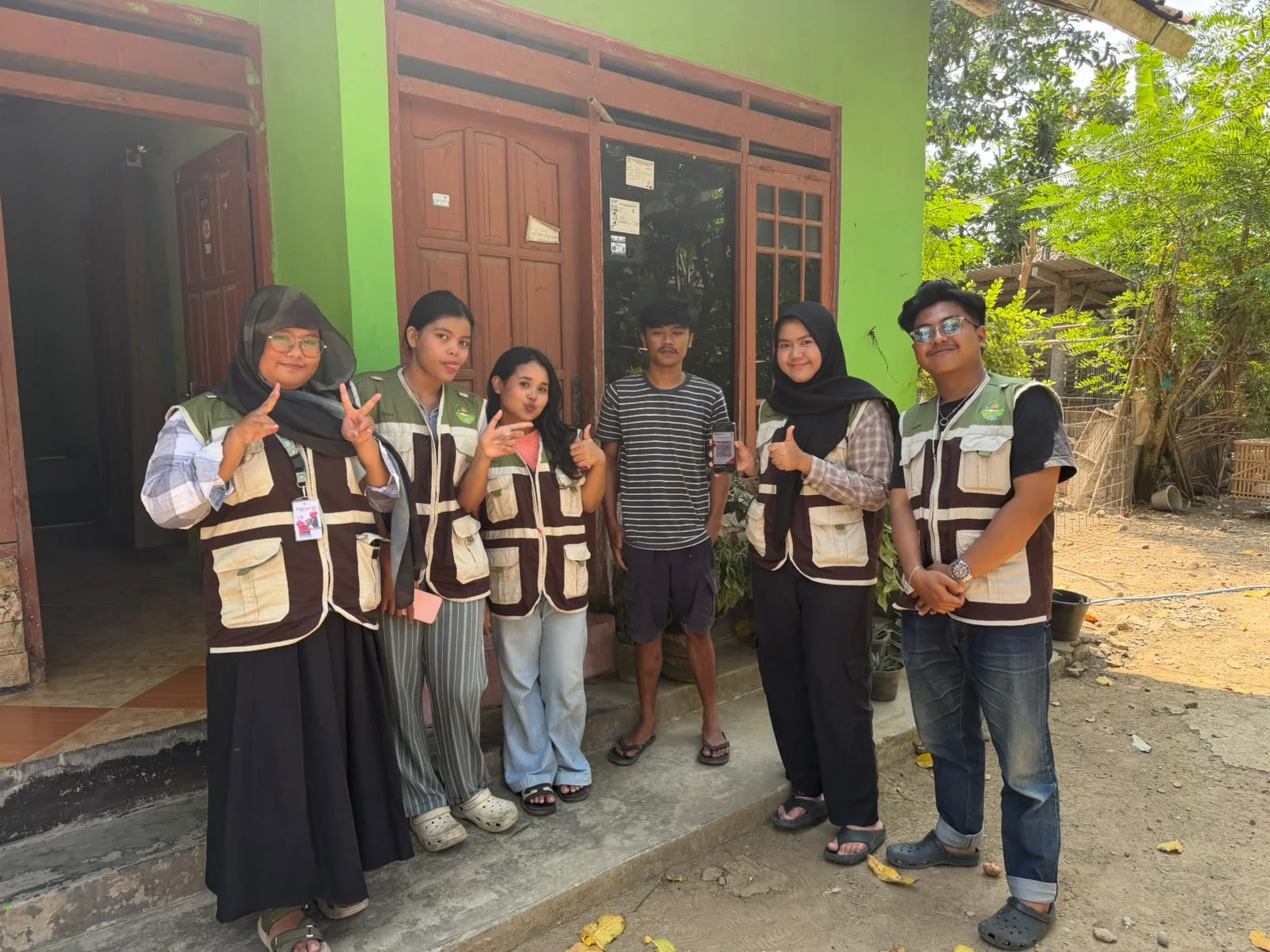
Of the six MSMEs visited, three agreed to register and successfully obtained an active QRIS. One of the businesses that received assistance was Warung Mbah Menik.
Meanwhile, three other MSMEs were not yet willing to register. Reasons included the relatively small scale of their transactions, long-standing habits of using cash, and the need to further consider the adoption of QRIS.
Khaylani Putri Aulia explained that the activity focused not only on the technical aspects of using QRIS but also on increasing the trust of MSME owners in digital payment systems.
“I carried out the GEMA QRIS program to help MSME owners in Kedundang III become better prepared for cashless transactions. This direct assistance is important because the willingness to adopt QRIS is not just about technical understanding, but also about building the business owners' trust in digital payment systems,” said Khaylani Putri Aulia, the person in charge of the GEMA QRIS individual project.
For MSMEs that successfully registered, the KKN students provided education on using QRIS for transactions. The material covered how to display the QR code to customers, check payment notifications, read transaction history, and withdraw funds to their bank accounts.
Transaction security was also a key focus during the mentoring. MSME owners were reminded not to share OTP codes or PINs with anyone.
In addition to using digital payments, business owners were advised to keep cash on hand as an alternative in case of internet network disruptions or other technical issues.
Several factors supported the implementation of the GEMA QRIS program, including the openness of some MSME owners to new technology, the ease of the QRIS registration process via the application, and the support of the Head of Kedundang III in facilitating access to business owners.
However, the program also faced several obstacles, including limited visit time due to the individual nature of the project, varying operational schedules of the MSMEs, and the need for some business owners to consult with family members before deciding to use QRIS.
The results of the GEMA QRIS activity will be included in the final community service report for the UNY KKN program.
As a follow-up, the students recommended that future visits to MSMEs be scheduled earlier and conducted in a more structured manner. Follow-up visits are also considered necessary for MSMEs that could not be reached during the program's implementation.
Furthermore, coordination with village officials could ensure that the mentoring process continues after the KKN period ends. Providing additional educational media, such as written guides or simple videos, is also considered helpful for MSME owners to understand how to use QRIS independently.
Photo Caption: Installation of QRIS and handover of the printed QR code to one of the MSME owners in Padukuhan Kedundang III, Kedundang, Temon, Kulon Progo.





Comments 0
Write a Comment Share your response