

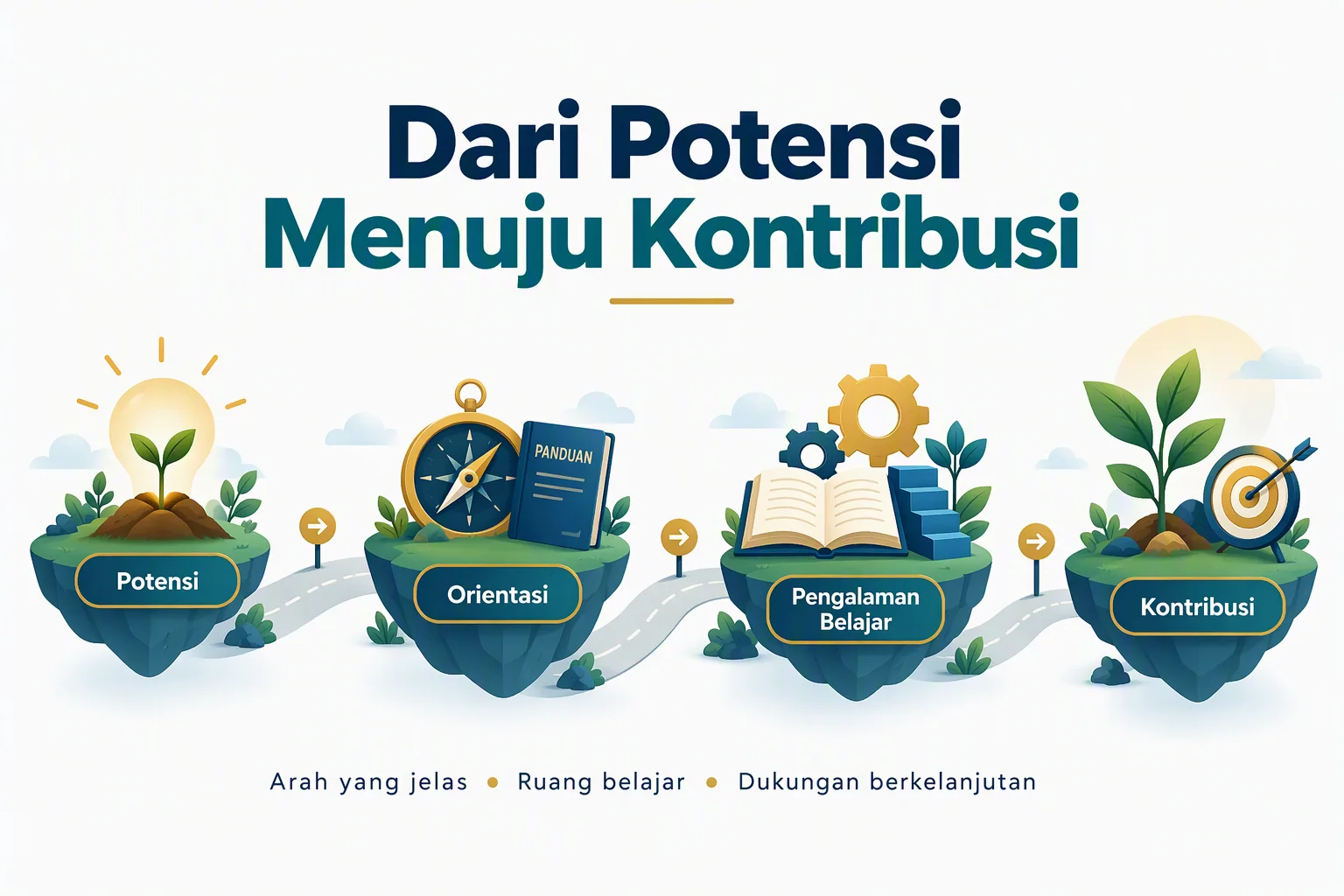
JurnalPost.com - Potential does not always manifest as visible achievement. Sometimes, it emerges through curiosity, the courage to try new things, or simple ideas that have yet to find room to grow. Without proper guidance and opportunity, these abilities risk remaining unrealized.
Therefore, building superior human resources (HR) is not just about finding talented individuals, but also about creating an environment that allows that talent to develop into real skills and contributions.
In this context, a Talent Orientation Program plays a vital role as the initial step in HR development. Such a program should not be viewed merely as a welcoming event or an introduction to organizational rules, but as a learning process that helps participants understand the work environment, recognize their roles, and determine the direction of their skill development.
An effectively designed orientation can serve as a bridge between an individual's potential and the organization's needs in achieving shared goals.
Understanding Roles and Objectives in the Work Environment
Introduction to organizational structure, procedures, and work facilities is an important part of orientation activities. However, this process needs to be complemented by a deeper understanding of the goals and responsibilities of the job.
Participants need to know who the organization serves, the problems it aims to solve, and the quality and ethical standards that must be maintained in carrying out tasks.
This understanding helps participants see their work not just as a series of obligations, but as part of a broader contribution.
Therefore, a Talent Orientation Program is ideally implemented through two-way communication. The organization conveys expectations, responsibilities, and available support, while participants have the opportunity to express their interests, experiences, and development needs.
Through this approach, orientation does not just introduce the work environment, but also helps individuals understand their position and opportunities for contribution within the organization.
Connecting Potential with Real Experience
An effective orientation program needs to provide participants with opportunities to learn through direct experience.
Activities such as case discussions, observation of work processes, problem-solving simulations, and phased assignments can be part of the learning process.
However, implementation must consider job characteristics, participant readiness, and available support. Every individual has different abilities and learning needs, so the approach used does not always have to be uniform.
For example, participants can be involved in simple activities to analyze the flow of information between departments. From these activities, participants can be asked to propose improvements to make communication processes more effective and easier to understand.
Although seemingly simple, such activities can train attention to detail, communication skills, critical thinking, and problem-solving abilities.
The most important thing is not the magnitude of the task assigned, but the clarity of the learning objectives and the opportunity for participants to evaluate the process and the results of their work.
Thus, potential is not only identified through initial assessment but also developed through experiences relevant to the organization's needs.
The Importance of Mentorship in Talent Development
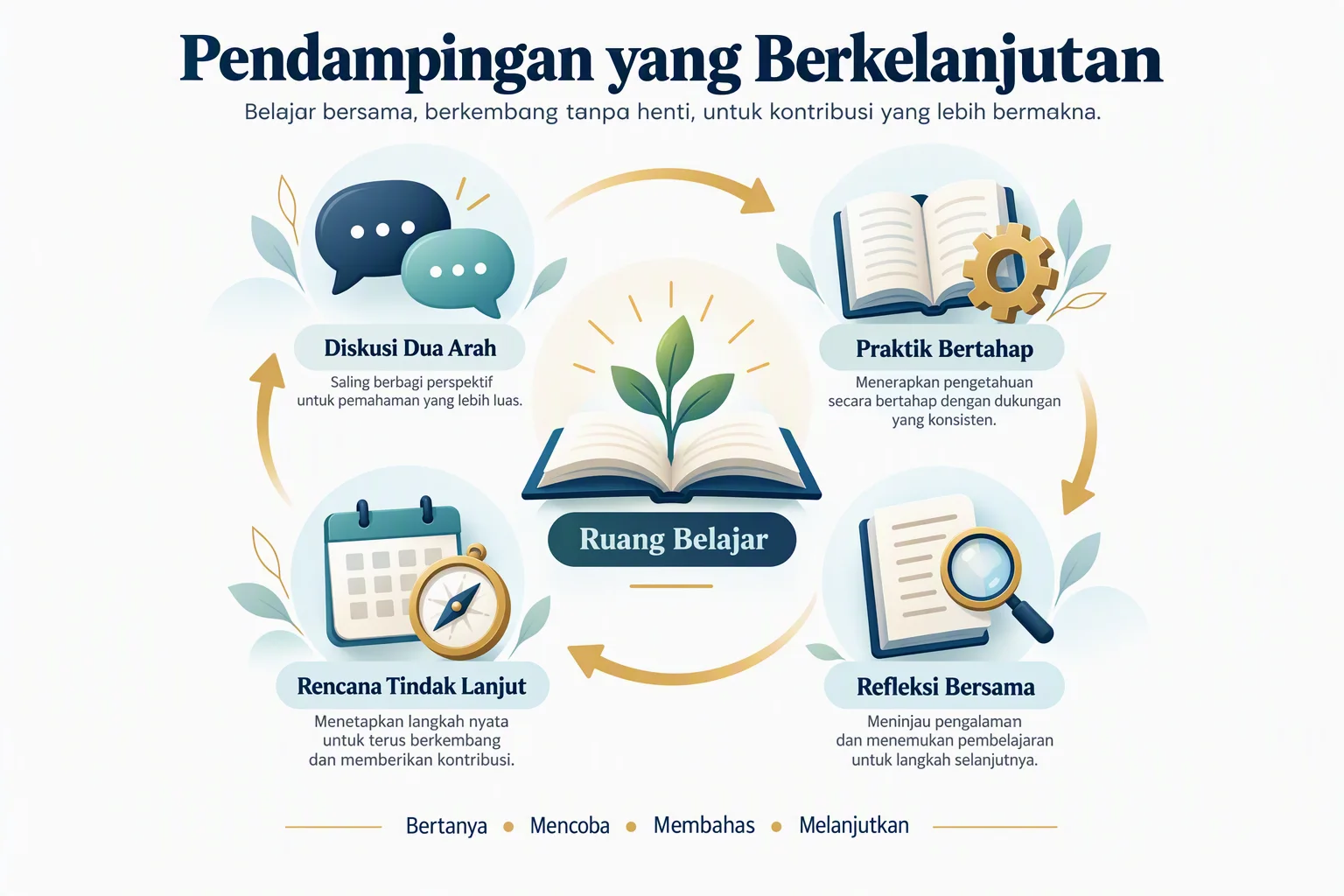
Learning experiences will provide greater benefits if accompanied by ongoing mentorship.
In a Talent Orientation Program, a mentor or supervisor should not only act as a director but also serve as a resource for questions, a discussion partner, and a bridge connecting participants to relevant learning resources.
Mentorship can be carried out through periodic conversations regarding material that has been understood, difficulties encountered, and the support needed to continue the development process.
In addition, the learning environment needs to provide space for participants to ask questions, share ideas, and express different viewpoints.
Participants should not be expected to master all aspects of the job from the first day. The adaptation process requires time, experience, and opportunities to correct shortcomings.
Nevertheless, the freedom to learn must still go hand-in-hand with individual responsibility in understanding procedures, maintaining work ethics, and following up on the guidance provided.
Through this process, orientation becomes not only a means of introducing organizational culture but also an opportunity to apply values of professionalism, cooperation, and responsibility directly.
Program Success Is Not Measured Solely by Certificates
The success of a Talent Orientation Program should not be measured solely based on the number of activities, the completeness of materials, attendance rates, or certificates received by participants.
More important indicators are the extent to which the program provides an understanding of roles, expands access to learning, and helps participants prepare the necessary skills.
To determine program effectiveness, organizers can conduct evaluations through participant feedback, reviews of material relevance, and checks on the implementation of mentorship.
Evaluation also needs to consider whether participants gained relevant learning opportunities and understood the development steps they can take after the orientation activities end.
Therefore, the program should be equipped with a clear follow-up plan, such as setting learning targets, skill development, and a schedule for periodic mentorship.
This step is important so that the talent development process does not stop when the orientation activities are finished.
Achievement must be understood as the result of a continuous learning and development process, not something that can be promised instantly through an introductory activity.
Preparing Superior HR that is Adaptive and Has Integrity
Superior HR is not determined only by technical ability in completing work. Excellence also includes integrity, a willingness to continue learning, the ability to work together, and awareness of the impact of every task performed.
Amid changing organizational needs and the evolution of the world of work, the ability to adapt becomes one of the important aspects of talent development.
Individuals who possess skills need to be supported so they can face new challenges, accept feedback, and develop more effective approaches to work.
A Talent Orientation Program can be the initial foundation for building these capabilities if it is implemented in a planned, open, and long-term development-oriented manner.
Organizations also have a responsibility to provide fair learning opportunities, adequate mentorship systems, and a work environment that encourages every individual to develop their abilities.
Ultimately, potential is a starting point, not the finish line of someone's journey toward achievement.
The organization's task is not just to identify talented individuals, but to provide direction, learning space, and trust so that those abilities can develop into real contributions.
Because talent is not enough to just be welcomed on the first day. Talent needs to be given the opportunity to learn, grow, and create in the days that follow.







Comments 0
Write a Comment Share your response