

JurnalPost.com - Every day, millions of meal portions are distributed through the Free Nutritious Meal (MBG) Program. This massive scale reflects the government's commitment to improving public nutrition, particularly for children. However, behind every meal reaching a beneficiary, one vital question remains: is the food truly safe to consume?
The success of a school meal program cannot be measured solely by the number of meals distributed or the number of beneficiaries. Equally important is how the government ensures every dish meets food safety and quality standards.
Since its launch in January 2025, the MBG program has continued to evolve into a national-scale initiative. The expansion of the Nutrition Fulfillment Service Units (SPPG) demonstrates the government's significant efforts to reach the public. Yet, as the program scales up, the responsibility to manage food safety risks grows accordingly.
Several reports of suspected food poisoning in various regions serve as a reminder that nutritional fulfillment must go hand-in-hand with public health protection.
Food Safety as a Challenge for the MBG Program
Data from the Ministry of Health, as cited by the Associated Press on 5 September 2026, recorded that 50,059 people were affected in 560 incidents linked to the implementation of the MBG program from its inception through early September 2026.
This figure refers to incidents suspected to be related to the MBG program and does not mean that the cause of every case has been confirmed through laboratory testing. Nevertheless, the high number of reports is a compelling reason to strengthen evaluation and oversight.
On 3 September 2026, the National Nutrition Agency (BGN) also presented the results of an internal evaluation regarding several health-related incidents. Based on this mapping, approximately 80–90 percent of the analyzed cases were linked to non-compliance with standard operating procedures (SOPs).
Issues identified include those related to the receipt of food ingredients, food storage, temperature control, and consumption time limits.
These findings indicate that food safety depends not only on the quality of raw materials but also on how food is handled from the moment it arrives in the kitchen until it is consumed by the beneficiaries.
Food that appears clean and smells normal is not necessarily free from microbiological hazards. Microorganisms such as Salmonella, Escherichia coli, Staphylococcus aureus, and Bacillus cereus can cause health issues if food is processed, stored, or distributed under improper conditions.
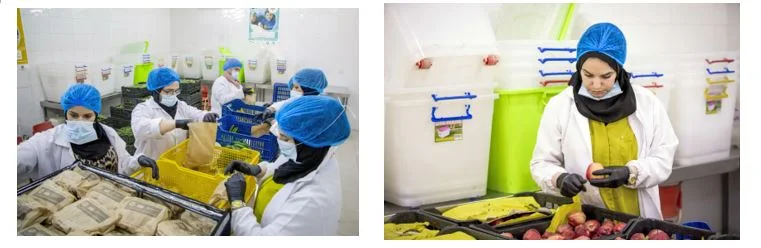
Therefore, food safety oversight must be conducted at every stage, starting from the inspection of raw materials, the hygiene of workers and equipment, the separation of raw and cooked ingredients, temperature control, and food distribution.
Indonesia already has a regulatory foundation through the National Nutrition Agency Regulation Number 4 of 2026 concerning the Food Safety and Quality Assurance System within the National Nutrition Agency.
The regulation governs various stages of food safety control, including the storage of cooked food samples at temperatures below 5 degrees Celsius for 2 × 24 hours.
With this regulation in place, the primary issue is no longer just the availability of rules, but how to ensure all provisions are applied consistently and that their implementation can be verified.
Learning from the School Meal Program in Jordan
The experiences of other countries can serve as a learning resource to strengthen the implementation of the MBG program in Indonesia. One country with extensive experience in running school meal programs is Jordan.
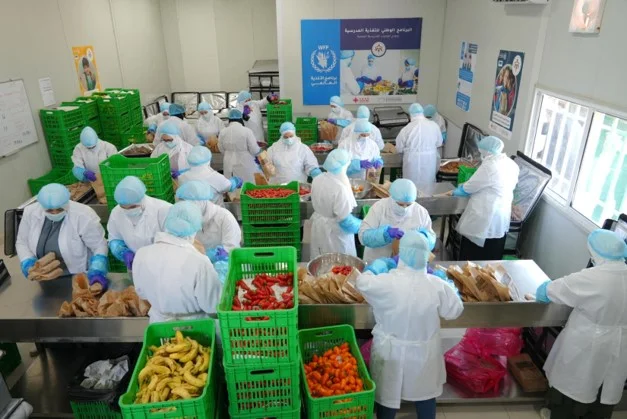
The National School Feeding Program in Jordan has been operating since 1975. According to a report by the World Food Programme (WFP), the program reaches approximately 520,000 children through several forms of food assistance.
One approach developed is the Healthy Mealsmodel, which serves approximately 90,000 children by providing meals consisting of pastries, fruits, and vegetables.
This model was developed through a pilot process starting in 2015 before being implemented through ten community kitchens across six regions.
What is interesting about Jordan's experience is not just the type of food provided, but also the attention paid to the food safety system and the oversight of its production processes.
One approach described in the WFP report is the implementation of a traceability system or traceability. Meal boxes are equipped with QR codes that allow access to testing information related to agricultural products and soil.
The report also describes food safety training for kitchen managers and the introduction of Hazard Analysis and Critical Control Points (HACCP) principles to workers.
This approach demonstrates that food safety cannot be guaranteed solely through final product inspection. Clarity regarding the origin of ingredients, processing documentation, worker competency, and oversight at critical points are essential parts of a prevention system.
Jordan's experience also highlights the importance of program evaluation based on scientific evidence.
The WFP, together with the Government of Jordan and the World Bank, conducted an evaluation using a randomized controlled trial approach to assess the impact of changes to the school meal provision model.
The evaluation covered aspects of dietary diversity, behavior, education, learning outcomes, and the socio-economic conditions of kitchen workers.
Although the scale and characteristics of the program in Jordan differ from Indonesia's MBG, the approach of phased development, training, documentation, traceability, and evidence-based evaluation remains relevant to consider.
Food Safety from the Perspective of the Philosophy of Science
The issue of MBG safety is not only related to the technical aspects of food processing. It also involves questions about how knowledge is constructed, tested, and used as a basis for decision-making.
In the philosophy of science, Heather Douglas, through the concept of inductive risk , explains that accepting a scientific conclusion always carries the possibility of error. Such errors can have real consequences when scientific assessment results are used to make decisions.
In the context of the MBG program, declaring that food is safe for consumption is not merely an administrative decision. This statement has direct consequences for the health of the children who are the beneficiaries.
If a food safety assessment turns out to be incorrect, the impact can be health issues that should have been preventable.
Therefore, decision-making should not only consider available evidence but must also account for the risks if the conclusion reached turns out to be wrong.
This line of thinking relates to the precautionary principle or precautionary principle.
Principle 15 of the Rio Declaration of 1992 emphasizes the importance of preventive action when there is a threat of serious damage, even if scientific uncertainty persists.
Although this principle was originally formulated in the context of environmental protection, its precautionary approach can be a relevant perspective for understanding the importance of health risk prevention in school meal programs.
Its application can be carried out through food temperature monitoring, kitchen hygiene maintenance, distribution time control, improvement of worker competence, and rapid response to reports of suspected contamination.
The precautionary principle does not mean halting a program with important social goals. Instead, it emphasizes that the expansion of benefits must be accompanied by the ability to control risks.
The Importance of Scientific Accountability in MBG Implementation
In addition to the precautionary principle, the implementation of a national-scale food program also requires scientific accountability or scientific accountability.
This means that every claim regarding the safety of a system must be supported by evidence that can be examined and held accountable.
The existence of SOPs, certificates, or administrative documents is indeed important. However, these are not enough if they are not accompanied by evidence that the procedures are actually carried out in daily activities.
Storage temperature logs, raw material inspections, distribution documentation, laboratory test results, and oversight reports are examples of evidence that can be used to assess compliance with food safety standards.
Thus, public trust in the program is not built solely through statements that food meets standards, but through transparency regarding the evidence of its implementation.
In the Indonesian context, strengthening the MBG program requires coordination between the BGN, the Food and Drug Monitoring Agency (BPOM), health offices, local governments, SPPG managers, and all parties involved in the food supply chain.
Worker training needs to be followed by monitoring of practices in the kitchen. Raw material inspections must be accompanied by adequate record-keeping, while every suspected contamination needs to be followed up through a clear investigation.
The success of the program should not only be assessed based on the number of portions successfully distributed, but must include food safety, nutritional quality, the health status of beneficiaries, and the long-term impact on public welfare.
MBG Must Be Safe, Not Just Free
The Free Nutritious Meal Program has an important social goal, particularly in improving nutritional fulfillment and supporting the health of Indonesian children.
Various issues that arise in its implementation do not negate the program's importance. However, these issues show that the food safety oversight system must be continuously strengthened as the program's reach expands.
Jordan's experience provides a lesson that the sustainability of school meal programs requires attention to processing, worker competence, documentation, food traceability, and evidence-based evaluation.
Indonesia can learn from this approach while adapting it to its geographical conditions, institutional capacity, and the much larger scale of MBG implementation.
Ultimately, the success of the Free Nutritious Meal Program is not determined solely by how many millions of meal portions are successfully distributed each day.
True success must also be reflected in how strong the systems and evidence are in ensuring that every portion of food received by Indonesian children is truly safe, high-quality, and nutritious.
References
Associated Press. (2026, 5 September). Nearly 2.000 Fall Ill in Suspected Food Poisoning Linked to Indonesia's Free School Meals Program. https://apnews.com/article/fc1dfade9dca3b819a907fbbc0d63f98
National Nutrition Agency. (2026, 3 September). BGN Strengthens SPPG Governance, SOP Compliance Becomes a Main Concern. https://www.bgn.go.id/news/siaran-pers/bgn-perkuat-tata-kelola-sppg-kepatuhan-sop-jadi-perhatian-utama
National Nutrition Agency. (2026). National Nutrition Agency Regulation Number 4 of 2026 concerning the Food Safety and Quality Assurance System within the National Nutrition Agency. https://peraturan.bpk.go.id/Details/350932/peraturan-bgn-no-4-tahun-2026
World Food Programme. (2025). School Feeding in Jordan: Healthy Meals Investment Case – Cost-Benefit Analysis Report. https://jordan.un.org/en/306252-school-feeding-jordan-healthy-meals-investment-case-cost-benefit-analysis-report
World Food Programme. (2024, 22 November). Jordan School Meal Programme: Impact Evaluation. https://www.wfp.org/publications/jordan-school-meal-programme-impact-evaluation
Douglas, H. (2000). Inductive Risk and Values in Science. Philosophy of Science, 67(4), 559–579. https://doi.org/10.1086/392855
United Nations. (1992). Rio Declaration on Environment and Development, Principle 15. https://digitallibrary.un.org/record/141565








Comments 0
Write a Comment Share your response