

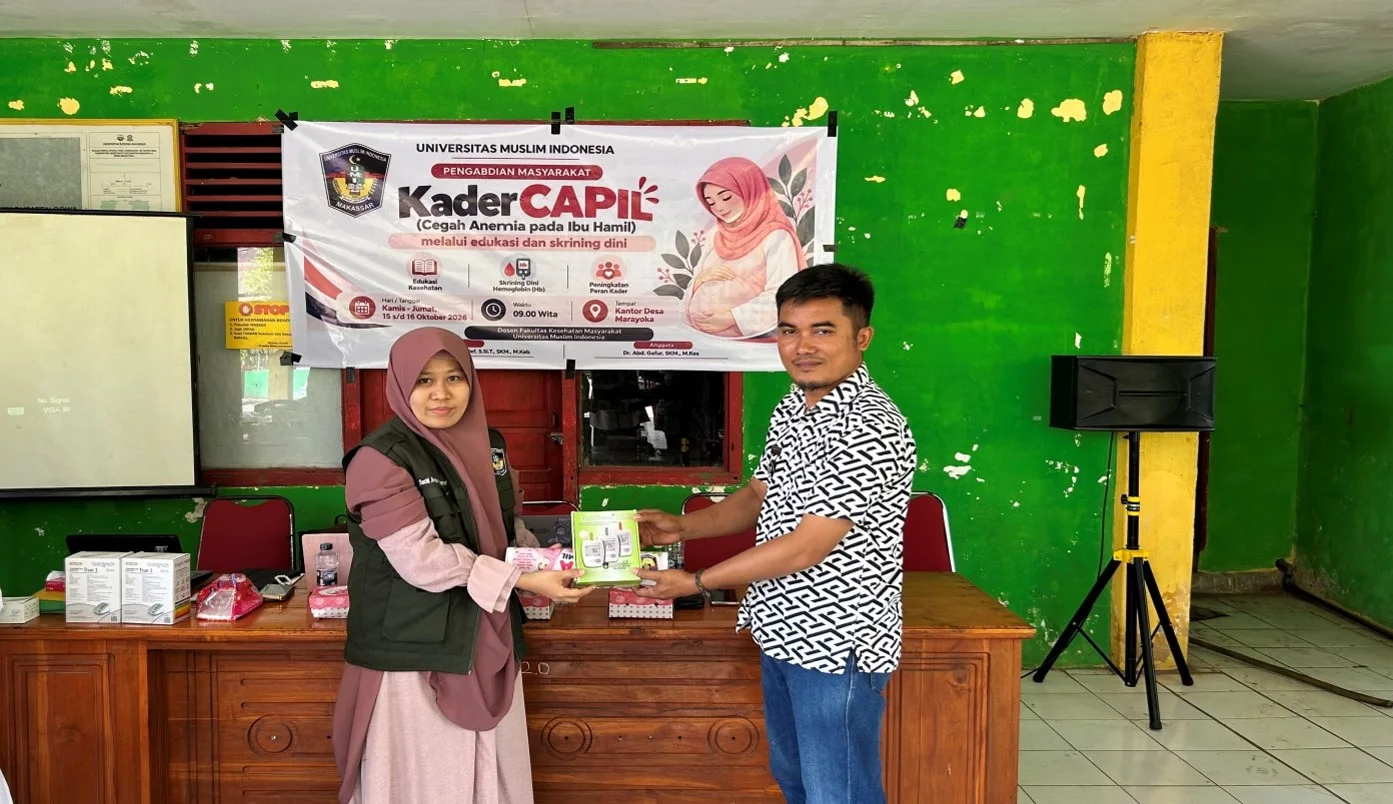
JENEPONTO, JurnalPost.com — A team of lecturers from the Faculty of Public Health (FKM) at Universitas Muslim Indonesia (UMI) held a community service activity through the CAPIL (Preventing Anemia in Pregnant Women) Cadre program in Marayoka Village, Jeneponto Regency, South Sulawesi, on Thursday and Friday, October 15–16, 2026.
The activity, which took place in one of UMI's partner villages, focused on improving the knowledge and skills of health workers in providing education and conducting early screening for anemia in pregnant women.
This community service program was carried out by a team of FKM UMI lecturers consisting of Dr. Bd. Suchi Avnalurini Sharief, S.Si.T., SKM., M.Keb. and Dr. Abd. Gafur, SKM., M.Kes.
The activity received a positive response from the Marayoka Village Government. Approximately 30 participants, consisting of health workers and members of the Marayoka Village Family Welfare Empowerment (PKK) group, participated in the training.
Health Workers Encouraged to Play an Active Role in Anemia Prevention
The Head of Marayoka Village, Sirajuddin, S.Pd., opened the event and emphasized the importance of increasing the capacity of health workers in supporting pregnant women.
In his remarks, Sirajuddin noted that similar training had never been provided to the workers in his village before. He expressed hope that the activity would serve as a foundation for the workers to assist pregnant women in preventing anemia.
Through the CAPIL Cadre program, participants received education regarding risk factors, signs and symptoms, impacts, and prevention efforts for anemia during pregnancy.
The training material also emphasized the importance of meeting nutritional needs and adherence to consuming Iron Tablets (TTD) as part of efforts to prevent anemia in pregnant women.
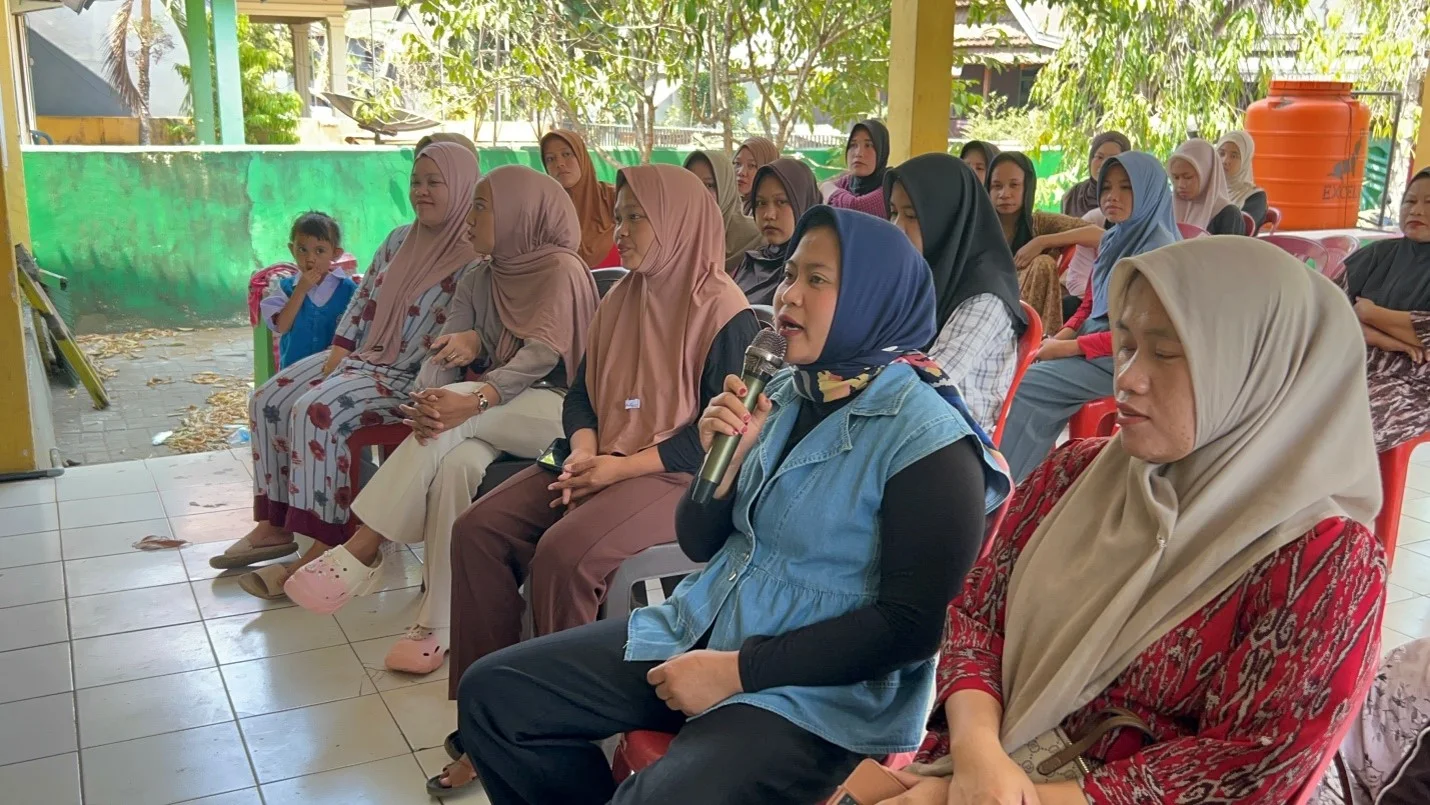
With this understanding, workers are expected to be able to convey health information to the community, especially to pregnant women who require support during their pregnancy.
Early Screening Training Using Digital Hemoglobinometers
In addition to health education, the program included training on the use of the Easy Touch GCHb digital hemoglobinometer.
The device is used for hemoglobin level testing as part of early anemia screening efforts. Through this training, workers were introduced to the use of simple testing tools to help identify pregnant women who require further examination by health professionals.
These skills are expected to support public health service activities, especially through integrated healthcare centers (posyandu) and home visits.
The workers were also encouraged to be more active in providing health education, supporting pregnant women, and helping to monitor the consumption of iron tablets.
In this way, the presence of health workers plays a role not only in conveying information but also in helping to connect the community with the necessary health services.
Strengthening the Role of Workers at the Village Level
The CAPIL Cadre training is one of the efforts to increase community involvement in preventing health problems for pregnant women, particularly anemia.
Through this activity, health workers and Marayoka Village PKK members are expected to have better knowledge regarding the importance of health monitoring during pregnancy.
Ongoing support is also an important part of ensuring that the information obtained during the training can be applied in health service activities at the village level.
The program is part of the implementation of community service supported by the Institute for Community Service (LPkM) of Universitas Muslim Indonesia.
Through this community service activity, FKM UMI seeks to implement one of the pillars of the Tri Dharma of Higher Education while supporting the improvement of community knowledge and skills in the field of maternal and child health.



Comments 0
Write a Comment Share your response