


Malang, JurnalPost — Volunteering is often synonymous with a spirit of giving, being present to help, and prioritizing the needs of others. However, behind this role, volunteers also have limits, emotions, and a need to maintain their own well-being.
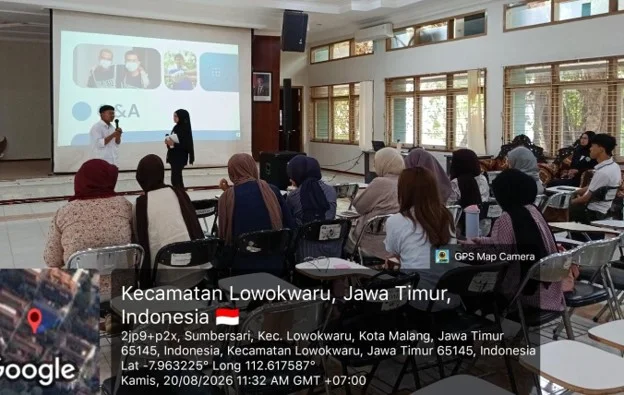
This awareness was a key message during the 'Bangkit Hati' (Rise of the Heart) Self-Compassion Psychoeducation for Volunteers held in Malang, East Java.
This community service project was led by Dr. Anjarie Dharmastuti, S.Psi., M.Sc., alongside a team of psychology lecturers and students. The 'Bangkit Hati' program was designed to increase volunteers' understanding of the importance of self-compassion in facing the various pressures and challenges that come with humanitarian work.
The name 'Bangkit Hati' is an acronym for 'BANGun diri KITa dari HATI' (Building ourselves from the heart). The philosophy illustrates that caring for others must go hand-in-hand with caring for oneself.
Through this activity, volunteers were encouraged to recognize their own limitations, accept experiences without being overly self-critical, and build habits of treating themselves with greater kindness.
“Being a volunteer does not mean you have to be strong all the time. Volunteers are still human beings who can feel tired, sad, and overwhelmed. The most important thing is to be able to remain present for others without losing yourself,” was the spirit promoted during the event.
Volunteers Also Need Care
During the psychoeducation session, participants were invited to understand that caring for others does not have to be manifested through excessive self-sacrifice.
The urge to constantly help can sometimes lead volunteers to ignore their own physical or emotional conditions. If this continues, it can trigger emotional exhaustion and affect one's ability to carry out social activities.
Through the material on self-compassion, participants were introduced to the understanding that self-care is not a form of selfishness. On the contrary, paying attention to oneself is a vital part of ensuring that volunteers can continue to help in a healthy and sustainable way.
In the concept developed by Kristin Neff, self-compassion is the attitude of treating oneself with kindness when facing difficulties, failures, or shortcomings.
The concept includes three main elements: self-kindness , or being kind to oneself; common humanity , or the awareness that difficulty is part of the human experience; and mindfulness , or the ability to be aware of thoughts and feelings in a balanced way.
Learning to Care Without Forgetting Oneself
One of the highlights of the 'Bangkit Hati' program was the participant reflection session.
The volunteers admitted to gaining a new perspective on how they treat themselves. They realized that, until now, they had found it easier to give attention, energy, and support to others than to themselves.
For some participants, the activity served as a reminder that being a caring person does not mean constantly setting aside one's own needs.
“I used to think that helping others was the most important thing, but it turns out that taking care of myself is also part of the process of helping. If we keep pushing ourselves, we might actually lose the ability to be there for others,” one participant shared during the reflection session.
This experience demonstrated that caring for others and caring for oneself can go hand-in-hand.
Volunteers can continue to provide support to others without having to ignore their own emotional and psychological needs.
Building More Resilient and Sustainable Volunteers
Through an educational and reflective approach, the 'Bangkit Hati' program not only provided an understanding of self-compassion, but also invited participants to practice how to treat themselves more gently.
Participants were trained to recognize excessive self-criticism and replace it with a more supportive and realistic response, just as they would offer support to others facing difficulties.
The activity also emphasized that taking a break is not a sign of weakness. Giving oneself time to recover is a crucial part of being able to sustain one's role in the long term.
Through the 'Bangkit Hati' psychoeducation, volunteers in Malang are expected to not only become stronger in carrying out humanitarian activities but also to have the awareness to maintain their own psychological health.
Ultimately, care for others can continue to grow when one is also able to provide space, attention, and kindness to oneself.




Comments 0
Write a Comment Share your response