


History, psychology, and the challenges of being an Indonesian in the digital era
Note: This article invites readers to revisit the G30S event and Pancasila Sanctity Day from the perspectives of education and psychology. The focus is not merely on how teenagers remember history, but on how the digital generation can learn to think critically, appreciate differences, filter information, and apply the values of Pancasila in their daily lives.
Author: Rahmah Hastuti, S.Psi., M.Psi., Psychologist
Doctoral Student in Psychology, Atma Jaya University, Jakarta
Permanent Lecturer, Faculty of Psychology, Tarumanagara University
“Mom, the G30S was in 1965, right? But why do we still have to discuss it?”
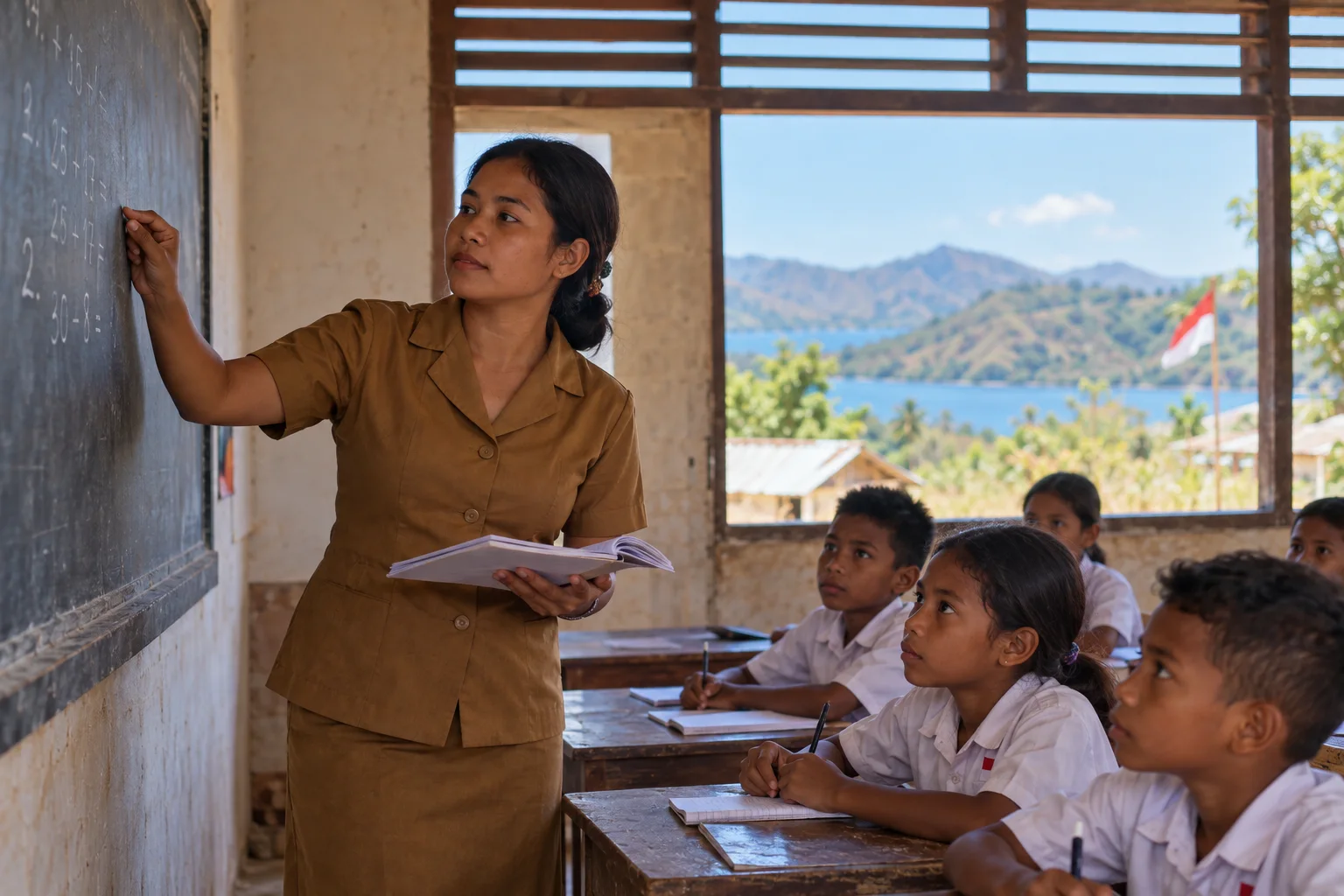
Imagine a teenage student asking that question to their teacher.
“Because you didn't live in 1965, you actually need to learn how to understand 1965.”
That answer might be simple. However, within it lies a much larger question: what exactly should a generation that did not experience a historical event learn?
Every October 1st, we are reminded of Pancasila Sanctity Day. There are ceremonies, flags, history lessons, names of figures, and a series of events studied in school. This commemoration has long been positioned as a moment for reflection and character education.
However, have we ever asked: after teenagers study the history of the G30S, what actually changes within them?
Do they become more critical? More capable of understanding differences? More sensitive to the consequences of conflict? Or are they merely able to answer exam questions?
This question is important because teenagers today did not experience the 1965 event directly. They know it through stories from parents, teachers, books, films, television, social media, YouTube, and now also artificial intelligence.
In other words, they did not experience the event. They experience the narrative regarding that event.
This is where history education meets psychology. History is related to past experiences, which can be positive or negative.
Not Just Remembering
Humans do not just receive information. We interpret, connect, compare, remember, and then form beliefs and meaning.
A teenager watching a history video on social media is actually performing a process far more complex than just viewing information. They are determining what captures their attention, what to believe, what to remember, and what is ultimately considered the truth.
The problem is that the digital world makes this process even more complicated.
Information that appears on the screen does not always appear because it is the most accurate. Information can appear because it is capable of attracting attention, matches the user's interests, or keeps someone on the screen longer.
Therefore, the ability that needs to be passed on to the younger generation is not just the ability to remember history, but the ability to think about historical information.
Where does that information come from? What is the evidence? Are there other sources? Is what is being conveyed a fact, an interpretation, or an opinion?
Those simple questions are actually exercises in critical thinking.
Karl Popper placed a critical attitude as an important part of the search for knowledge. For Popper, knowledge is open to testing and correction. An idea does not become true just because it seems convincing.
In the age of social media, such an attitude is increasingly important.
Because what is dangerous is not just when someone does not know history. What is more dangerous is when someone feels they already know the truth, even though they have not examined how that knowledge was obtained.
When Not Experiencing 1965
For the generation born decades after 1965, their experience is not a direct experience of that event.
What they encounter are stories, images, films, books, conversations, and various representations regarding that event.
This difference is important.
History is not just a matter of “what happened,” but also how people in the following era understand and give meaning to what happened.
Therefore, history learning should not stop at the question, “What happened back then?”
We also need to ask:
What can we learn about humans from that event?
How is conflict formed?
Why can humans so easily see other groups as “them,” rather than as fellow human beings?
Why can differences in ideas turn into opposition?
And no less importantly, how can the next generation learn so that conflict does not cause the same suffering?
Such questions bring history from textbooks into life.
Teenagers Do Not Learn Alone
Values education cannot be solely burdened on schools.
Teenagers grow up in a complex environment. Family, school, peers, media, community, and culture interact in shaping their development.
Bronfenbrenner, through an ecological perspective of development, reminds us that human development does not take place in a vacuum. The environment where someone grows up helps shape their experiences and development.
Imagine a teenager receiving a message about tolerance at school, but hearing hatred toward other groups at home every day. They learn to appreciate differences from a teacher, but see their friends belittling each other on social media.
The message they receive is never singular.
Therefore, when we ask why a teenager finds it difficult to apply Pancasila values, it is not enough to just ask, “What is taught in school?”
We also need to ask: in what kind of environment is that value learned?
This is the challenge of character education today.
From “I” to “We”
The next challenge is identity.
The digital world provides a very large space for self-expression. Teenagers can build identities, express opinions, upload achievements, seek recognition, and build communities.
All of that is not always bad.
However, there is a question that needs to be continuously nurtured: when “I” becomes stronger, does “we” still have a place?
Cultural psychology shows that the way humans understand themselves cannot be separated from the cultural context.
Markus and Kitayama, for example, show how culture is related to the way humans understand themselves, others, and the relationship between the self and others.
In the Indonesian context, the ideas of togetherness, mutual cooperation (gotong royong), deliberation, and living together are important parts of social life.
Therefore, Pancasila should not only be present as five principles to be memorized.
Pancasila needs to be present in simple questions.
When disagreeing with a friend, do I have to make them an enemy?
When finding information that does not match my beliefs, do I share it immediately or check it first?
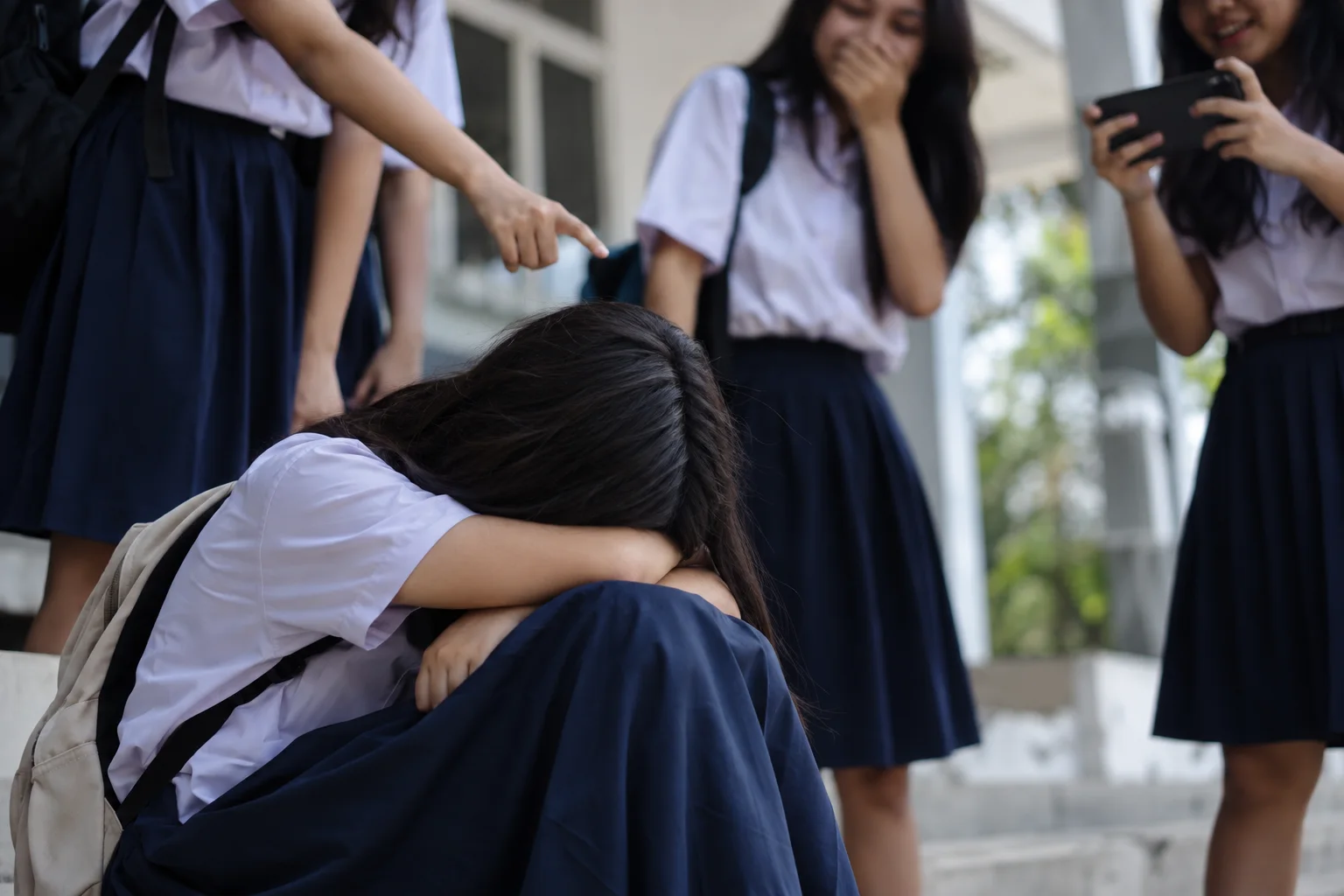
When seeing someone humiliated on social media, do I join in laughing or choose to stop it?
From there, the values of Pancasila begin to become behavior.
From Digital Safety to Digital Flourishing
When talking about how teenagers understand history, we also cannot separate it from the digital era and technology that live side-by-side with them.
So far, our attention has often been focused on various risks of internet use, such as cyberbullying, hoaxes, pornography, digital fraud, excessive social media use, or a reduced interest in history.
All of that is important. However, there is a further question:
Do we want teenagers to only be safe from technology, or actually be able to thrive through technology?
The second question brings us to the idea of digital flourishing.
Teenagers who are flourishing digitally are not just teenagers who do not experience problems due to the internet. They are able to use technology to learn, build healthy relationships, develop creativity, seek information, regulate themselves, and contribute to others.
Therefore, living in the midst of digital technology does not just mean “being able to use technology,” but also being able to understand information critically.
Digital self-regulation is not just about reducing screen time, but the ability to determine when technology helps life and when technology begins to dominate attention.
The role of parents is also not enough just in the form of prohibitions. Mentoring is needed so that teenagers learn to make digital decisions responsibly.
This is where Pancasila education, developmental psychology, cultural psychology, and digital education meet.
The Sanctity of Pancasila for the Digital Generation
Perhaps this is another way to interpret Pancasila Sanctity Day.
Not just by asking whether the younger generation still remembers a historical event, but whether they are able to learn from history to face the future.
The generation that did not experience 1965 does not need to be forced to have the same experience as the previous generation.
They need something different: the ability to understand history critically, appreciate different human beings, manage themselves amidst the rush of information, and use technology without losing their humanity.
Because the challenge for today's generation is not just to keep the memory of the past.
The challenge is to ensure that humans do not lose the ability to think, feel, and live together when the world is changing faster.
In the end, perhaps the most important question on Pancasila Sanctity Day is not:
“Do teenagers still memorize Pancasila?”
But rather:
“When disagreeing, when faced with information that is not necessarily true, and when behind a screen without anyone's supervision, are the values of Pancasila still alive in their behavior?”
If the answer is yes, history does not stop being the past.
It has become a lesson.
And the most meaningful lesson is not one that makes us just remember what happened, but one that makes us able to choose how we should live after knowing it.
Bibliography
Ministry of Education, Culture, Research, and Technology. (2024, October 1). Pancasila Sanctity Day 2024: Minister of Education, Culture, Research, and Technology emphasizes the importance of character education. Kemendikdasmen.
Markus, H. R., & Kitayama, S. (1991). Culture and the self: Implications for cognition, emotion.
About the Author
Rahmah Hastuti, S.Psi., M.Psi., Psychologist is a doctoral student in Psychology at Atma Jaya University, Jakarta, and a permanent lecturer at the Faculty of Psychology, Tarumanagara University.





Comments 0
Write a Comment Share your response