

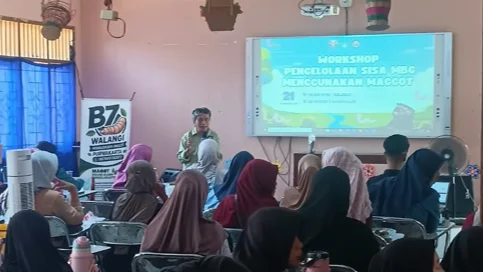
PURWAKARTA, JurnalPost.com — Food waste from the Free Nutritious Meal (MBG) program has become a significant challenge for organic waste management in school environments. To raise awareness and introduce solutions for food waste processing, Group 3 of the P3K program at the Universitas Pendidikan Indonesia (UPI) held a maggot cultivation workshop at SDN 3 Nagrikaler, Purwakarta Regency, on Wednesday (21/10/2026).
This activity is part of an effort to support the Sustainable Development Goals (SDGs), specifically Goal 12 regarding responsible consumption and production.
The workshop featured Kuswana, S.P., from the Maggot Cultivation Group B7 Walangi, Cipaisan, as the guest speaker. The event was attended by teachers, 25 student representatives from grades IV to VI, parents, and UPI students.
Through this activity, participants gained knowledge on managing MBG food waste using maggots as an alternative organic waste processing method that is more beneficial for the environment.
MBG Food Waste Becomes a Concern
The implementation of the MBG program in schools inevitably leads to leftover food that students do not consume. This can occur due to various factors, such as menus that are less preferred, portion sizes perceived as too large, or students simply feeling full.
If not handled properly, the accumulation of food waste has the potential to cause unpleasant odors and disrupt the cleanliness of the school environment.
Observing this situation, UPI Purwakarta Primary School Teacher Education (PGSD) students introduced the use of maggots as an alternative to help process organic waste.
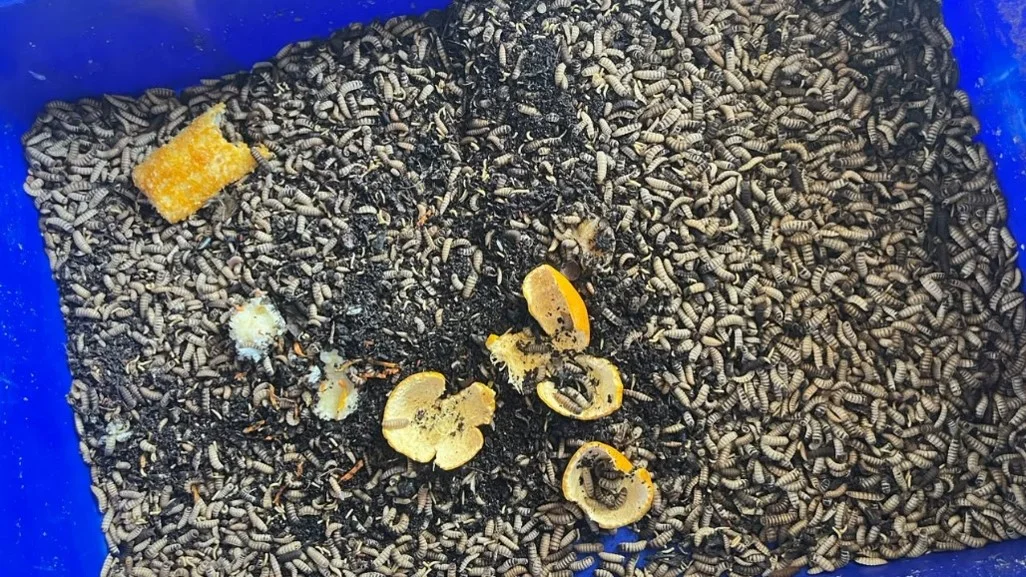
Maggots are fly larvae capable of decomposing various organic materials. In waste management, specific types of maggots can be utilized to help reduce the volume of organic waste suitable for the decomposition process.
In addition to assisting with waste management, maggots also have the potential to be used as animal feed, provided that safety regulations and usage guidelines are followed.
Participants Learn to Process Waste Using Maggots
The workshop series began with an opening ceremony, a prayer, and remarks from the project lead, the steering committee, and the school principal.
Entering the main session, Kuswana presented material on the issues surrounding MBG food waste and the importance of proper organic waste management.
Participants were then introduced to the characteristics of maggots, their benefits in waste decomposition, how to select high-quality maggots, and techniques for their care and maintenance.
The speaker also provided education on sorting MBG food waste suitable for maggot feed, the stages of organic waste processing, and the appropriate timing for harvesting.
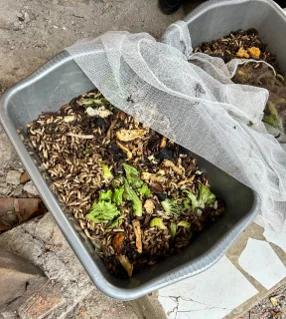
Beyond theoretical explanations, participants also witnessed a demonstration of food waste processing using maggots.
Through this demonstration, students, teachers, and parents were able to see the organic waste management process firsthand and understand the steps required for maggot cultivation.
The activity continued with a Q&A session, giving participants the opportunity to explore further information regarding the application of this method.
One parent representative noted that they gained new knowledge that could be applied in daily life.
"With this workshop, we as housewives feel very educated on how to process household waste," said the parent representative.
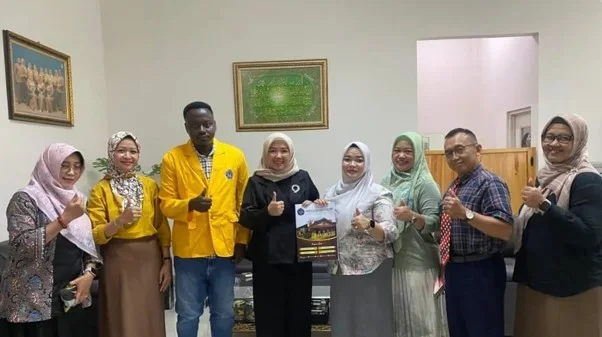
As a token of appreciation for the speaker's contribution, the event concluded with the presentation of a plaque to Kuswana.
Instilling Environmental Awareness from an Early Age
This organic waste management workshop had four main objectives: introducing the differences between organic and inorganic waste, increasing awareness of food waste, introducing alternative waste processing methods, and building habits to reduce food waste in the school environment.
The involvement of students, teachers, and parents is a crucial part of this activity because waste management is not solely the responsibility of the school.
Simple habits, such as taking only the food one needs, finishing served meals, and sorting waste by type, are also initial steps toward reducing waste generation.
By involving various members of the school community, it is hoped that education on waste management can be applied sustainably, both at school and at home.
Implementing SDGs 12 through Organic Waste Management
This workshop aligns with SDGs 12, which emphasizes the importance of responsible consumption and production patterns.
A key focus of this sustainable development goal is the reduction of food waste and waste generation through prevention, reduction, recycling, and reuse efforts.
Utilizing maggots to process MBG food waste is an example of applying these principles within an educational setting.
Through this approach, food waste that might otherwise be discarded can be sorted and utilized as organic material in the maggot cultivation process.
Furthermore, the activity provided a learning experience for students regarding the relationship between consumption habits, waste management, and environmental sustainability.
School Plans to Develop Maggot Cultivation
Following the workshop, SDN 3 Nagrikaler plans to involve students, teachers, and the school community in the ongoing care and cultivation of maggots.
This step is expected to serve as a follow-up to the material and practices introduced during the workshop.
In addition to helping reduce the accumulation of MBG food waste, this activity is expected to improve the skills of the school community in managing organic waste independently.
Through this initiative, UPI Purwakarta PGSD students hope that maggot-based waste management can inspire other schools to develop applicable environmental learning.
Thus, food waste is not merely viewed as trash to be discarded, but as a learning tool to build awareness, responsibility, and more environmentally friendly living habits from the primary school level.



Comments 0
Write a Comment Share your response