

SURABAYA, JurnalPost.com - Introducing Indonesian culture to children with special needs does not have to be done through formal instruction. Simple activities such as painting traditional scripts and making regional delicacies can serve as fun learning tools, while opening opportunities for children to explore according to their individual abilities.
This approach was implemented by the Faculty of Medicine at Nahdlatul Ulama University Surabaya (FK UNUSA) through a psychosocial support session for children with special needs at the Locus Medical Hub, Surabaya, on Saturday (17/10/2026).
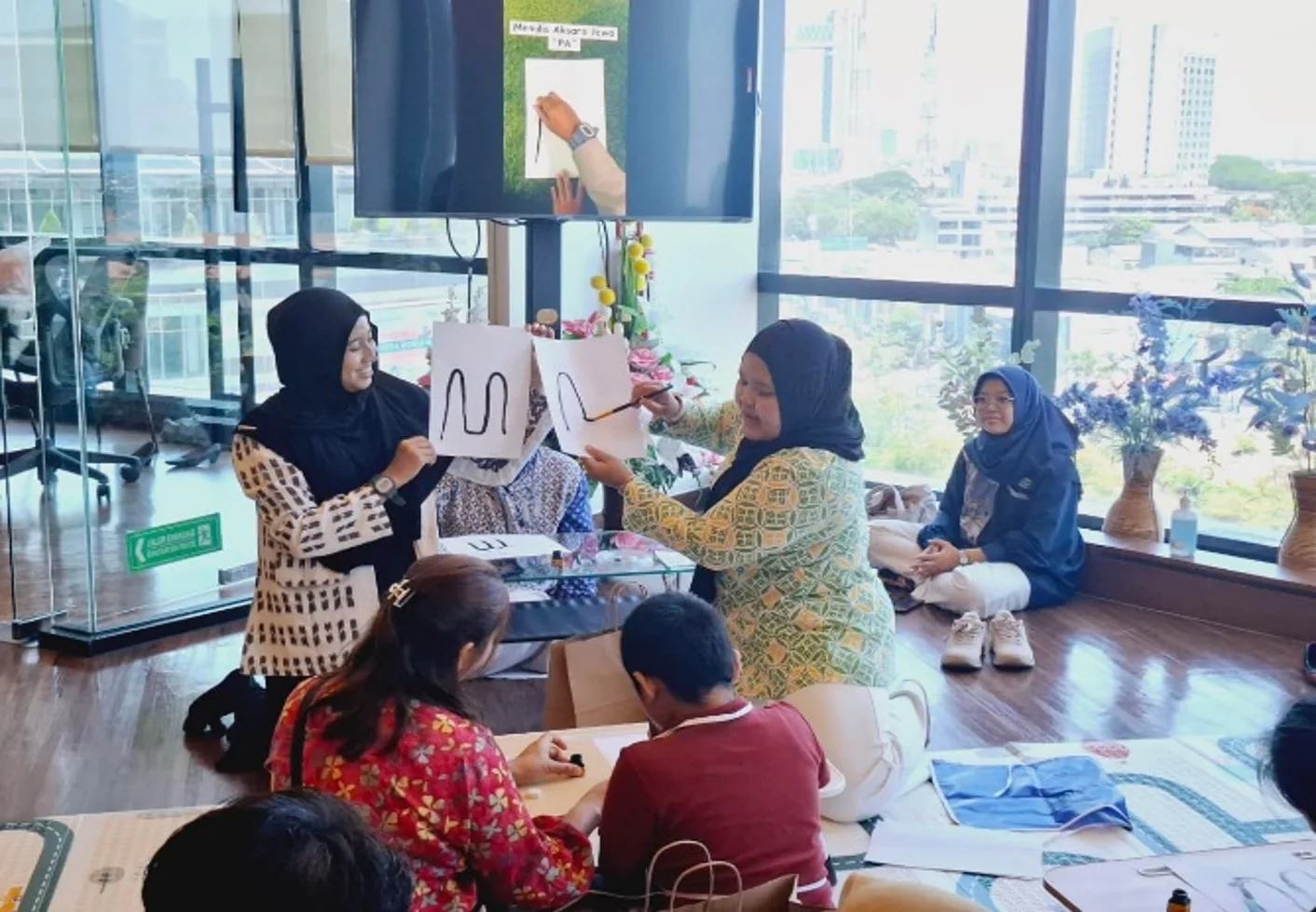
During the event, the children were introduced to the richness of Indonesian culture through two primary activities: painting Hanacaraka scripts and making lemper, a traditional snack widely known in Javanese society.
The activity is part of a community service program titled “Harmony of the Archipelago Inclusion: Empowering Parents and Children with Special Needs through Local Culture.”
The program was organized by FK UNUSA in collaboration with the Aljenna SiBertumbuh Surabaya Foundation (YASS), utilizing local culture as a learning medium that is familiar to the children and their families.
Local Culture as an Accessible Learning Medium
The team leader, Dr. Hafid Algristian, Sp.KJ., explained that the activity stemmed from the need to provide support activities that are easy for children to understand and feasible for parents to continue at home.
According to him, the learning process for children with special needs does not always require complex facilities or tools. Various daily activities can actually be utilized to provide meaningful learning experiences.
"We want to show that support activities for children with special needs do not always have to use complicated or expensive media. Local culture and daily activities can actually become a shared learning space with the children. We hope that parents will also gain inspiration to develop simple activities that can be replicated at home," said Dr. Hafid.
Four children with special needs and their parents participated in the event. Throughout the session, they received guidance from three YASS behavioral therapists.
The presence of the therapists was intended to help adjust instructions, activity stages, and the level of assistance based on each child's needs.
This approach allowed participants to follow the activities at their own pace, without the pressure to produce identical work or complete every stage in a uniform manner.
Painting Hanacaraka and Learning the Process of Making Lemper
One of the activities that drew attention was the introduction of Hanacaraka script through painting with ink on paper.
The children were first introduced to the shapes of the characters and then invited to make strokes according to their individual abilities and comfort levels.
This activity provided an opportunity for the children to learn about cultural elements through direct experience, rather than just observing or listening to explanations.
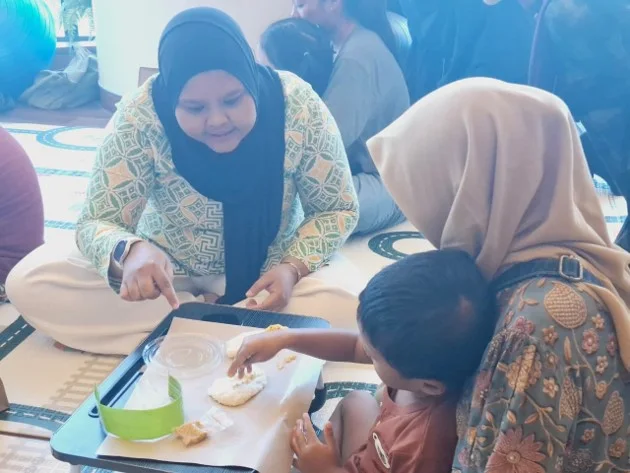
In addition to painting, the participants also engaged in a culinary activity by making lemper.
With the guidance of therapists and parents, the children were involved in several simple steps, ranging from placing ingredients into containers and adding the shredded meat filling to wrapping the snacks.
Each stage was carried out with consideration for the participants' abilities. Children who needed help were provided with assistance, while those capable of completing certain parts independently were given the opportunity to try.
YASS representative Raiza Aulia, S.Psi., M.Si., emphasized that the success of such activities should not be measured solely by the final result of the child's work.
"The important thing is not how perfect the child's work is, but how we provide them with the opportunity to try and participate. Mentors need to adjust instructions and assistance to each child's abilities so that the child still has space to do things independently," explained Raiza.
Parents Learn to Support Children According to Their Needs
Beyond providing new experiences for the children, this activity was also designed as a learning space for parents.
They did not just attend as companions but also observed how the therapists provided instructions, adjusted assistance, and opened opportunities for the children to complete activities according to their capabilities.
This experience is expected to serve as inspiration for families in designing simple activities at home by utilizing materials and tasks that are easily found.
During the event, the implementation team also observed the children's engagement and responses using structured observation sheets.
The observation was conducted to document the participants' participation process, including how the children followed the activities and responded to the support provided.
However, the results of the observations were not used as a basis to conclude any clinical changes in ability. The focus of the activity remained on the learning experience, the opportunity to participate, and the child's interaction within a supportive environment.
Building a More Inclusive Learning Space
Through the Harmony of the Archipelago Inclusion program, FK UNUSA and YASS are striving to expand the use of local culture as part of support activities for children with special needs.
The introduction of Hanacaraka and traditional culinary arts serves as an example of how cultural heritage can be presented through simple activities that involve children, families, and mentors directly.
This program also emphasizes the importance of providing equal opportunities for every child to try new things, be creative, and interact with their surrounding environment.
With an approach tailored to individual needs, local culture-based activities are expected to become a viable option for families to support their children's learning experiences at home.
For FK UNUSA and YASS, the child's involvement in every process is an important part of the effort to build a more inclusive environment, where every child has the space to learn and create without being compared to the abilities of others.




Comments 0
Write a Comment Share your response