

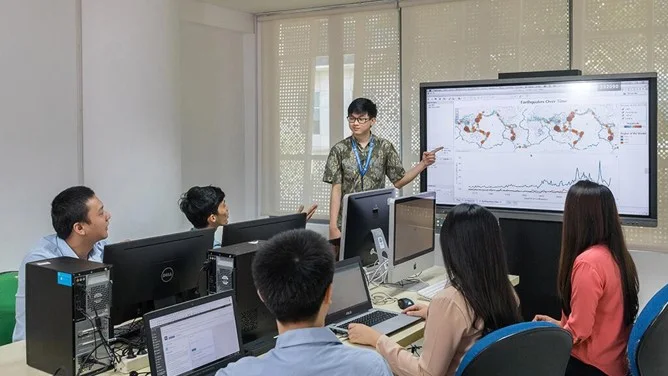
JAKARTA, JurnalPost.com – The rapid development of digital technology is driving significant changes across various sectors, including education, economics, industry, and business. Amidst these shifts, scientific research has become a strategic instrument for fostering innovation, improving the quality of human resources (HR), and strengthening organizational competitiveness in Indonesia.
A nation's ability to navigate global competition is determined not only by its mastery of technology but also by its capacity to generate knowledge, develop innovations, and utilize research findings to solve real-world problems.
In this context, research in management and economics plays a vital role, particularly in examining employee productivity, competency development, work motivation, leadership, and the utilization of technology to enhance organizational performance.
Numerous studies published by Indonesian academics and researchers demonstrate that innovation, motivation, resource management, and technology adoption are critical aspects of organizational development.
These research findings can serve as a reference for companies, educational institutions, and other organizations in formulating human resource development strategies and addressing the challenges of digital transformation.
Research Proves the Importance of Innovation and Work Motivation
One relevant study was conducted by Lukman Hakim Sangapan, Gerry Juan Carlos, and Adler Haymans Manurung in an article titled The Influence of Work Discipline, Employee Innovation, and Work Motivation on Employee Performance.
The study was published on 2025 in the Journal of Educational Management and Social Sciences, Volume 6, Number 2, pages 974–984.
The research employed a quantitative approach using a survey method involving 110 respondents at company XYZ. The analysis results indicate that work discipline, employee innovation, and work motivation have a positive and significant influence on employee performance.
These findings suggest that improving organizational performance is not solely dependent on the systems and technology in place, but is also influenced by work behavior, the ability to generate innovation, and individual drive in achieving organizational goals.
Work discipline is a key aspect that supports order and responsibility in executing tasks. Meanwhile, employee innovation relates to the ability to introduce new ideas and approaches that support task completion.
Work motivation also plays a crucial role as it relates to an individual's drive to fulfill responsibilities and reach organizational targets.
The results of this study provide implications for company management to build a work environment that fosters discipline, creativity, and employee motivation.
By focusing on these three aspects, organizations can develop more targeted human resource management strategies that align with performance development needs.
Technology Utilization and Resources as Key Factors
Another study was conducted under the title The Influence of Unique Resources and Technology Usage on Performance Improvement through Work Motivation.
The research, published on 2024 in the Journal of Digital Management and Marketing, Volume 2, Number 4, discusses the relationship between organizational resources, technology utilization, work motivation, and performance improvement.
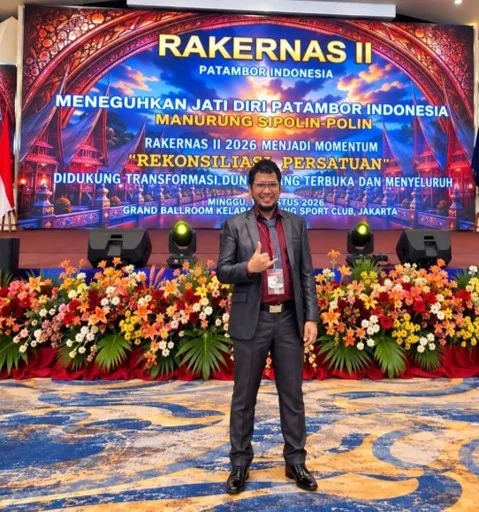
The study involved Lukman Hakim Sangapan, Hapzi Ali, Adler Haymans Manurung, and Dody Kurniawan.
The research used a quantitative approach involving 220 respondents. Data analysis was performed using the Structural Equation Modeling based on Partial Least Squares (SEM-PLS).
The results show that unique resources and technology usage have a positive and significant effect on work motivation.
Furthermore, work motivation was found to act as a mediating variable in the relationship between resources or technology usage and performance improvement.
These findings demonstrate that technology utilization must be integrated with human resource management.
Technology is not just a tool for operational activities but can also be part of an organizational strategy to boost motivation and improve performance.
In organizational practice, the use of technology must be supported by the ability of human resources to understand, operate, and utilize it optimally.
Thus, technological development and the enhancement of employee competencies are two aspects that must be addressed simultaneously when facing changes in the work environment.
HR Digitalization Presents Opportunities and Challenges
The issue of digital transformation was also addressed in a study titled Challenges and Opportunities of Digitalization in HR Management: Practitioner and Decision-Maker Perspectives.
The research was published on 2025 in the Journal of Business and Economics, Volume 3, Number 2, and involved Lukman Hakim Sangapan, Gerson, Adler Haymans Manurung, and Idel Eprianto.
Unlike the two previous studies, this research used a qualitative approach through case studies, in-depth interviews, and document analysis.
The results identified several challenges in implementing human resource management digitalization.
These challenges include the readiness of technological infrastructure, limited digital skills, and resistance to change within the organizational environment.
This condition shows that the implementation of new technology cannot always run optimally if the organization lacks readiness in terms of systems and human resources.
On the other hand, digitalization presents various opportunities to increase organizational management efficiency.
The use of technology can support recruitment, training, performance evaluation, and employee engagement through more integrated work systems.
The research results show that digital transformation is not achieved solely through the procurement of technological devices and systems.
Organizations must also prepare human resources who possess the necessary competencies, adaptability, and readiness to face change.
Therefore, the success of digital transformation requires attention to both technological aspects and the development of the human capacity that utilizes them.
Academics Encouraged to Produce Impactful Research
Academics and researchers have an important responsibility in strengthening the research culture in Indonesia.
Research should not be oriented solely toward fulfilling academic obligations or achieving journal publications, but should also be directed toward contributing to the development of knowledge and solving societal problems.
Lukman Hakim Sangapan, an academic and researcher in management and economics, views research as an essential instrument for understanding changes in the organizational environment and finding more effective management approaches.
In management studies, employee productivity, competency, work motivation, leadership, and organizational culture are interconnected aspects that shape organizational performance.
Therefore, research needs to be developed through appropriate methodologies, the use of accountable data, and analysis capable of producing conclusions based on empirical evidence.
Strengthening the research culture also requires collaboration between universities, the government, the industrial sector, and the community.
This synergy is necessary so that research results can be utilized more broadly in policy development, productivity enhancement, and innovation strengthening.
Cross-sector collaboration can also help bridge practical needs in the workplace with knowledge development conducted through academic activities.
Thus, research has the potential to provide benefits not only for the advancement of science but also for strengthening organizational capacity and community development.
Artificial Intelligence Opens New Opportunities for Research
The development of Artificial Intelligence (AI) also presents new opportunities in research activities.
This technology can be utilized to help researchers manage information, identify data patterns, support analysis processes, and accelerate various stages of academic work.
In research activities, the use of digital technology allows for more efficient information management processes.
However, the use of AI must still consider research ethics, data validity, transparency, and academic integrity.
The technology should be positioned as a supporting instrument that strengthens the researcher's capabilities, rather than replacing critical thinking or scientific responsibility.
Researchers remain responsible for ensuring that the data used is accountable and that the conclusions produced are consistent with the research evidence.
The ability to integrate technology with human competence is a key requirement for facing the developments in the research world and the digital industry.
Scientific Research as a Strategic Investment for Indonesia's Future
Strengthening national research requires a long-term commitment from all stakeholders.
Universities need to continuously improve research quality, the government needs to strengthen support for research and innovation activities, and the industrial sector needs to expand collaboration with academics.
Relevant and applicable research results are expected to contribute to public policy development, corporate productivity improvement, the strengthening of micro, small, and medium enterprises (MSMEs), and the development of human resource quality.
Ultimately, Indonesia's competitiveness in the digital era depends not only on the ability to adopt technology but also on the capacity to generate knowledge, create innovation, and develop adaptive human resources.
Scientific research must therefore be positioned as a strategic investment for the nation's future.
Through a quality research culture, cross-sector collaboration, and responsible technology utilization, Indonesia has the opportunity to strengthen the foundation of innovation and increase its competitiveness amidst global competition.
About the Author
Lukman Hakim Sangapan, S.Kom., M.M., CIGS., CDMM., CBDS., CAIPS. is an academic, management practitioner, researcher, and writer with a focus on the development of management, economics, business, finance, human resources, and digital transformation.
He completed his Bachelor's degree in Information Systems at STMIK Perbanas and a Master's degree in Management with a concentration in Strategic Management at Universitas Bhayangkara Jakarta Raya.
Currently, Lukman is pursuing a Doctorate in Management with a focus on Human Resource Management at the same university.
In his professional journey, Lukman has experience in information technology, operational management, and organizational development.
He is also active in institutional activities, including serving as the Director of Information Technology at PT Manurung Capital Indonesia and Secretary General of the Koperasi Konsumen Usaha Manurung Indonesia Sejahtera.
In the academic field, Lukman has experience teaching Economic Statistics and Applied Economic Statistics for the undergraduate programs in Accounting 1 and Management 1.
His research focus includes employee productivity, leadership, human resource competency, strategic management, digital marketing, technology transformation, and quantitative research methodology.
Lukman is also active in writing books and scientific publications. Several of his books discuss risk management, capital markets, human resources, Structural Equation Modeling (SEM), and anti-corruption from a legal perspective.
Based on the profile information provided, Lukman has written seven books.
Additionally, based on the publication list updated on November 5 2026, there are 74 scientific works published, including those indexed by Copernicus, Sinta, and international publications and Scopus.
Lukman is also involved in several professional and scientific organizations, including the Indonesian Journal Managers Association (APJI), the Indonesian Economic and Accounting Research Association (AREAI), the Indonesian Association for Management, Entrepreneurship, and Business Research (ARIMBI), and the Indonesian Association of Legal Researchers and Educators (APPIHI).
Through academic activities, research, publications, and organizational development, Lukman is committed to promoting the use of knowledge and innovation to improve human resource quality, organizational productivity, and Indonesia's competitiveness amidst the development of the digital economy.
Publication References
Sangapan, L. H., Carlos, G. J., & Manurung, A. H. (2025). The Influence of Work Discipline, Employee Innovation, and Work Motivation on Employee Performance. Journal of Educational Management and Social Sciences, 6(2), 974–984.
Sangapan, L. H., Ali, H., & Manurung, A. H. (2024). The Influence of Unique Resources and Technology Usage on Performance Improvement through Work Motivation. Journal of Digital Management and Marketing, 2(4), 333–351.
Gerson, Sangapan, L. H., Manurung, A. H., & Eprianto, I. (2025). Challenges and Opportunities of Digitalization in HR Management: Practitioner and Decision-Maker Perspectives. Journal of Business and Economics, 3(2).






Comments 0
Write a Comment Share your response